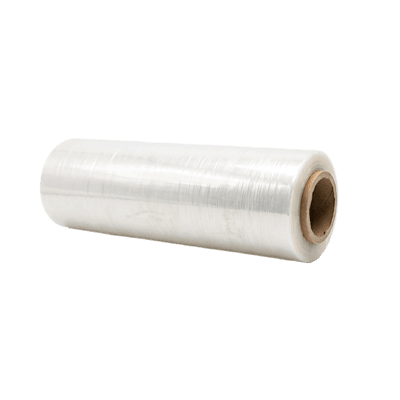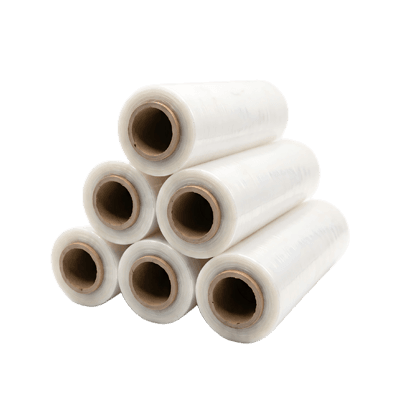
Pallet Wrap Cost Reduction: How to Cut Stretch Film Cost on the Line and at Purchase
By Tuosheng Packaging · Last updated October 2026
Pallet wrap cost reduction rarely starts with a cheaper price per kilogram. Most of the money goes on the wrapping line: pre-stretch that never reaches its setting, extra wraps nobody asked for, film breaks, half-used rolls in the bin. The rest goes on how the film is bought, packed and shipped. A few cents off the price per kg is usually the smallest saving on the list.
Below are eight ways to cut stretch film cost, cheapest to try first. We’re Tuosheng Packaging, a stretch film manufacturer in Suzhou, China, making hand and machine film from 15 to 50 µm. Two of the eight come from what our own customers do when cost comes first.
Quick answer: how to reduce pallet wrap cost
- Weigh the film used on 5–10 pallets first, so you know your starting cost per pallet.
- On the wrapping line: check actual pre-stretch, cut unneeded wraps, reduce film breaks, stop throwing away roll ends, then trial thinner film or pre-stretched hand film.
- When you buy: match the film grade to the pre-stretch your wrapper really runs, ship rolls without cartons where you can, and negotiate price last.
- Change one thing at a time, and never trade a lower film cost for loads that shift in transit.
Where Does Pallet Wrap Money Actually Go?
Pallet wrap cost per pallet is the weight of film applied to each pallet, times the price per kg of net film, plus the film that’s wasted along the way. Each part can be reduced, but by different people: the warehouse controls how much film goes on and how much is wasted, and purchasing controls the price and the landed cost.
| Where the cost hides | How you notice it | Usual cause |
|---|---|---|
| Pre-stretch below setting | Rolls run out faster than expected; film on the load looks thick | Worn or dirty pre-stretch rollers; film grade doesn’t suit the carriage |
| Too many wraps | Heavy “rope” bands at top and bottom; same program for every load | One wrap program for all products |
| Film breaks | Frequent restarts; film tails on the floor | Film and machine settings mismatched, damaged roll edges, sharp load corners |
| Roll ends and damaged rolls | Partly used rolls in the scrap bin | Rolls changed early, dropped rolls, poor storage |
| Film thicker than needed | Gauge chosen years ago and never tested | “We’ve always used 23 µm” |
| Inconsistent hand wrapping | Every operator wraps differently | No pre-stretch on hand rolls, no standard method |
| Packing and freight | Landed cost per roll higher than expected | Cartons and pallets nobody downstream needs |
How Do You Measure Pallet Wrap Cost Before Cutting It?
To measure pallet wrap cost, weigh the film applied to a set of typical pallets, then multiply the average grams per pallet by your price per kg of net film. Weigh the roll before and after a run, or cut the film off a wrapped pallet and weigh it. Record 5–10 pallets of the same product, plus the number of film breaks in that shift.
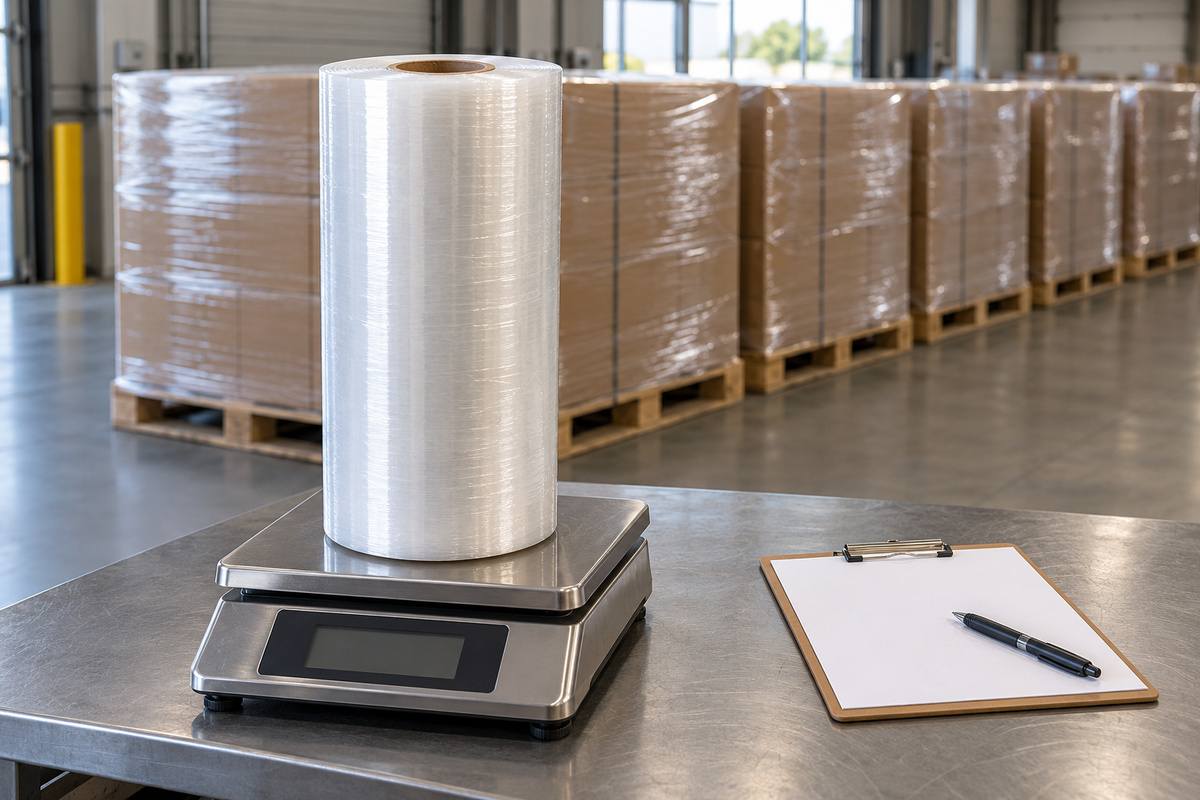
That number is your baseline. Without it, every saving is a guess. The full method, formulas included, is in our guide to calculate stretch film usage, yield and cost per pallet.
What Are the 8 Ways to Reduce Pallet Wrap Cost?
The eight ways to reduce pallet wrap cost fall into two groups: five on the wrapping line, three when you buy the film. Start at the top. The early items cost little to try and are easy to reverse.
| # | What to change | Where | Cost to try | How to check the saving is real |
|---|---|---|---|---|
| 1 | Get pre-stretch to its setting | Line | Low: maintenance | Mark test; grams per pallet |
| 2 | Cut unneeded wraps | Line | Low: wrap program | Grams per pallet; load holds in transit |
| 3 | Reduce film breaks | Line | Low to medium | Breaks per shift |
| 4 | Stop wasting roll ends | Line | Low | Rolls used per week vs pallets wrapped |
| 5 | Trial thinner film or pre-stretched hand film | Line | Samples and trial time | Grams per pallet, breaks, containment |
| 6 | Match film grade to actual pre-stretch | Purchase | None | Price per kg; same grams per pallet |
| 7 | Ship rolls without cartons | Purchase | None, if customers accept it | Landed cost per roll |
| 8 | Negotiate film price | Purchase | Time | Price per kg of net film, same terms |
1. Is your wrapper actually reaching its pre-stretch setting?
A stretch wrapper set to 250% pre-stretch often delivers less on the load. Worn or dirty rollers, a slipping carriage or a film grade that doesn’t suit the machine all keep the film from stretching fully, and every percent you lose means more film per pallet.
Check it with a mark test. Draw lines 10 cm apart on the film before it enters the carriage, wrap a pallet, and measure the spacing on the load. Lines 35 cm apart mean the film stretched 250%. Lines 30 cm apart mean 200%.
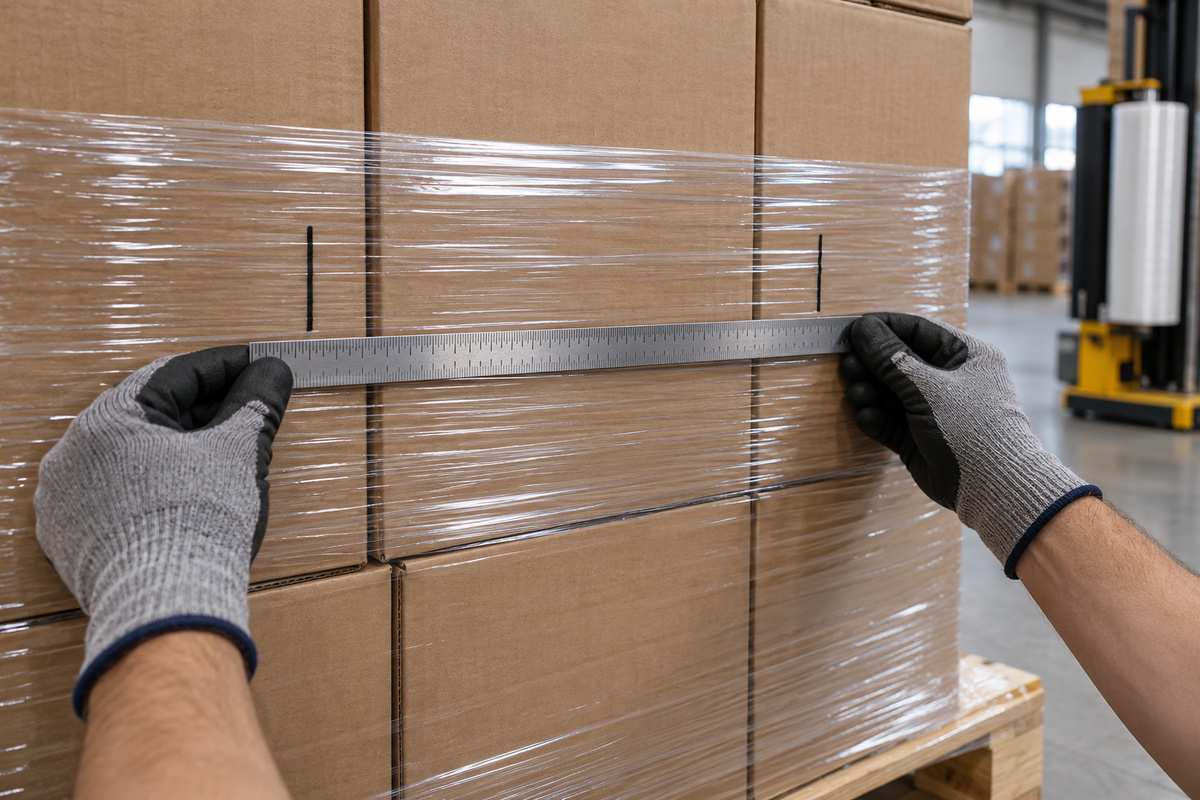
It matters: at 200%, one metre of film covers 3 m of the load; at 300%, it covers 4 m, about 25% less film for the same wrap. Our guide to power pre-stretch vs pre-stretched film explains how the carriage works.
2. Are you applying more wraps than the load needs?
To stop applying more wraps than a load needs, give each type of load its own wrap program. Many lines run one program for every product, so a light, square carton load gets the same wraps and tension as a heavy, uneven one.
Group your loads by weight and shape, and give each group its own program. Keep the bottom wraps that lock the load to the pallet. Cut the extra passes in the middle first, then test. Our guides on how to stretch wrap a pallet correctly and on containment force and pallet stability cover how much the load really needs.
3. How much are film breaks costing you?
Every film break costs the film thrown away, the time to restart, and on an automatic line, a stopped wrapper. A few breaks per shift add up over a year, and they’re often blamed on the film when the cause is the machine or the load.
Count breaks per shift for a week before changing anything. Then work out whether it’s a film fault or a setting, roller or sharp-corner problem. Use our troubleshooting guides for machine stretch film and hand stretch film.
4. Are you throwing away film at the end of every roll?
Roll-end waste is film thrown away before it reaches a pallet, and it comes from handling, not from the film. Operators change rolls early to avoid a break mid-pallet. Dropped rolls with damaged edges get scrapped. Rolls stored near a heater or in the sun lose cling.
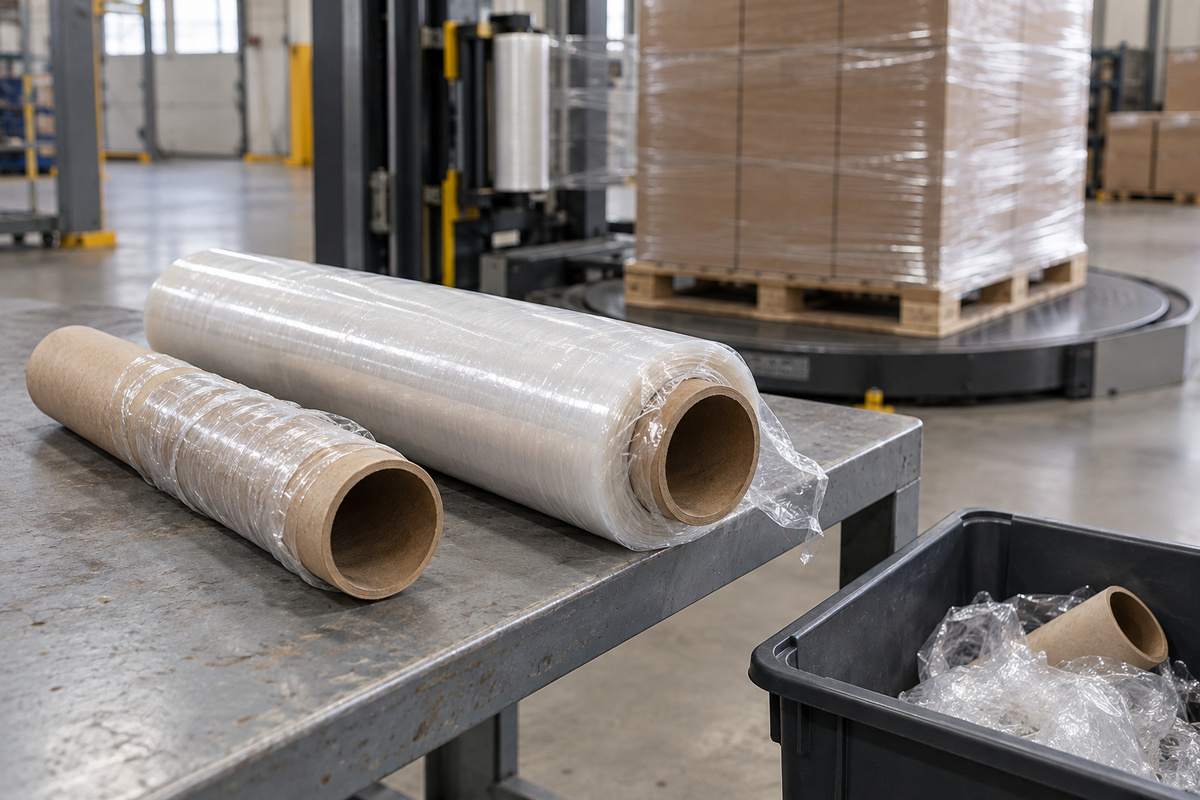
Compare rolls used per week against pallets wrapped. If that ratio moves when nothing else changed, the waste is in handling. Longer machine rolls also mean fewer roll changes: our machine rolls run from 800 to 2,000 m, provided the wrapper takes the roll diameter and weight. Storage rules are in our guide to stretch film roll storage.
5. Can a thinner film or pre-stretched hand film do the same job?
A thinner, higher-performance film can wrap the same load with less plastic, but only a trial on your own pallets will tell you whether it works. Judge it on grams of film per pallet and on whether loads arrive intact, not on thickness. A thinner film that needs extra wraps can end up using just as much.
Step down one grade at a time, for example from 23 µm to 20 µm, and run each step for a week on the same product. Our 60 vs 80 gauge guide helps you pick the next step.
For hand wrapping, the biggest waste is uneven tension, since every operator stretches differently. Pre-stretched hand film takes most of the stretching out of their hands. If your volume justifies a machine, see our guide to stretch wrapper film.
6. Are you paying for more stretch than your wrapper uses?
Buy the film grade your wrapper actually needs, not the highest-stretch grade on the price list. High-stretch mLLDPE grades cost more per kilogram. Some of our grades reach 400% on powered pre-stretch wrappers, but most standard grades run at 200–300%.
What we see: When machine film customers come to us to cut cost, one of the first things they change is the grade. If the wrapper only runs at 250%, a 400% mLLDPE film is paying for stretch the machine never uses. A standard grade matched to the real pre-stretch costs less per kilogram and wraps the same pallet.
That’s why item 1 comes first. Measure the real pre-stretch, then buy for that number. If you later upgrade the carriage to run higher, move up a grade at the same time.
7. Do your stretch film rolls need cartons at all?
If your rolls go to warehouses rather than store shelves, you may not need cartons. Shipping rolls without them saves the carton cost and fits more film into each container, so the freight cost per roll falls.
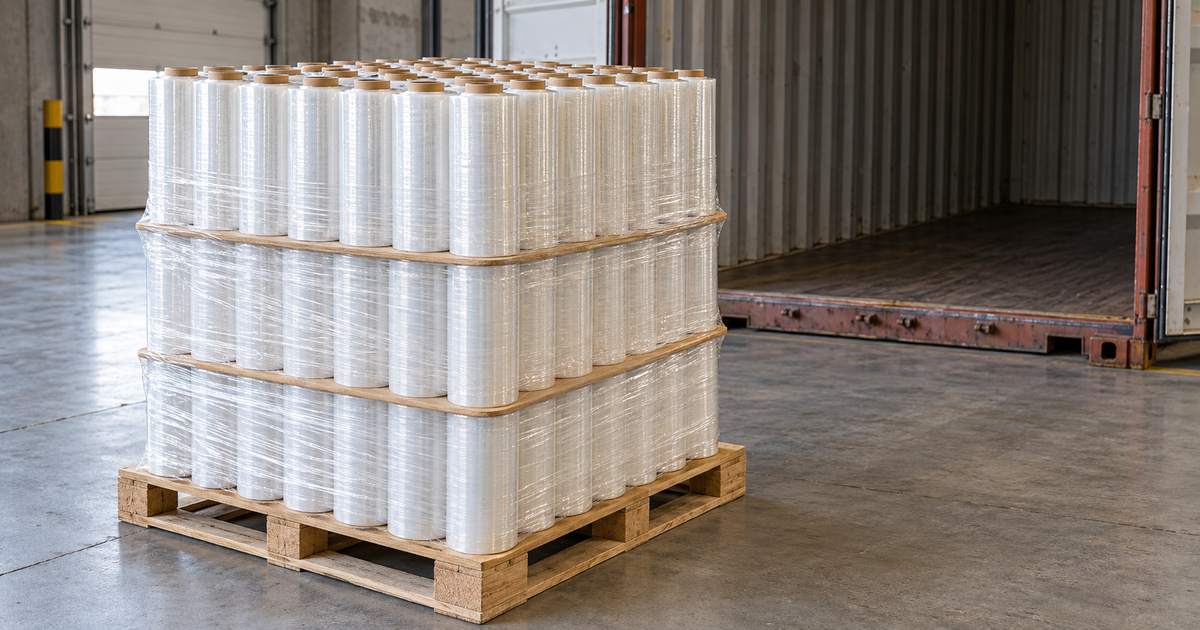
What we see: For hand film customers, packaging is where most of the savings come from. Machine film customers usually combine it with a cheaper grade. Many customers who want the lowest possible cost skip the outer cartons entirely: the rolls are stacked on pallets and held with stretch film. That fits roughly 10–15% more film into a 40 ft container than cartoned rolls. The most extreme option drops the pallets as well and loads rolls straight into the container. That fits at least 20–30% more than cartons, but unloading becomes slow, heavy manual work.
Here’s what that does to freight per roll, as a simple calculation rather than a promise:
| Packing method | Extra film per 40 ft container (vs cartons) | Freight per roll (vs cartons) |
|---|---|---|
| Cartons on pallets (standard) | — | 100% |
| No cartons, rolls on pallets | about 10–15% | about 87–91% |
| No cartons, no pallets (floor-loaded) | at least 20–30% | about 77–83% |
Calculation: freight per roll = 1 ÷ (1 + extra film). Your actual container load is confirmed per order.
Before you switch, check three things:
- Who buys the rolls next. Retail customers usually need cartons. Carton-free suits warehouses, logistics companies and distributors who sell by the pallet.
- How you’ll unload. Floor-loaded rolls are unloaded by hand and re-palletized. Set that labour against the freight saving.
- Protection in transit. Without cartons, the pallet wrap is the only cover, so roll edges need careful handling.
Our standard cartoned packing and container numbers are in the stretch wrap sizes guide. If you import from China, our guide to importing stretch film covers the rest of the landed cost. If your film order doesn’t fill a container, PP strapping can ship in the same one; our guide to PP vs PET strapping covers which strap to order.
8. When does negotiating the film price actually help?
Negotiating the film price helps only after the first seven items are done, and only if you compare quotes on the same basis: price per kg of net film, on the same shipping terms. A lower price per roll can hide a heavier core or a shorter roll, so the “saving” goes straight back to the supplier. Our guide to stretch film quotes lists the traps to check.
What Should You Never Cut to Save on Pallet Wrap?
Never cut the film that holds the load together. The film saved on one pallet is worth very little next to a collapsed load, a rejected delivery or a damaged truck.
- Bottom wraps. They lock the load to the pallet. Cut them and the load slides off the base under braking.
- Containment on heavy or unstable loads. Bottles, drums and uneven stacks need holding force, and thinner film or fewer wraps can drop it below what the load needs. See our guide to heavy-duty stretch wrap.
- Protection at sharp corners. Thinner film on sharp-edged loads trades a small saving for more punctures and breaks.
How Do You Run a 30-Day Pallet Wrap Cost Reduction Plan?
A 30-day pallet wrap cost reduction plan measures first, fixes the line, trials one film change, and only then decides. Keep the same product and the same shift for every measurement, so the numbers stay comparable.
| Week | What to do | What to record |
|---|---|---|
| 1 | Measure the baseline on 5–10 pallets of your main product | Grams per pallet, breaks per shift, rolls per week |
| 2 | Run the pre-stretch mark test; fix rollers; set wrap programs by load type | Same as week 1 |
| 3 | Trial one thinner or better-matched film grade from samples | Same, plus transit damage reports |
| 4 | Compare all three weeks; decide; review packing and freight with purchasing | Cost per pallet; landed cost per roll |
Pallet Wrap Cost Reduction FAQ
How much film can you save by increasing pre-stretch?
It depends on where you start. Going from 200% to 300% pre-stretch means one metre of film covers 4 m instead of 3 m, about 25% less film. That’s the arithmetic; confirm it on your line with a mark test and by weighing the film.
Is thinner stretch film always cheaper per pallet?
No, thinner stretch film isn’t always cheaper per pallet. If it needs extra wraps, breaks more often or lets loads shift, you can end up using as much film, or more. Judge it by grams per pallet and by delivery results over at least a week.
Does recycled (PCR) stretch film reduce pallet wrap cost?
Recycled (PCR) stretch film is mainly a sustainability choice, not a cost one. It may not cost less per kilogram, and it has to be trialled like any other film. See our guide to sustainable pallet wrap.
Can I reduce stretch film use without changing my wrapper?
Yes. Getting pre-stretch up to its setting, setting wrap programs by load type, reducing film breaks and using rolls to the end all work on the wrapper you already have. Start there before buying new equipment.
Can stretch film be shipped without cartons?
Yes, hand and machine stretch film rolls can be shipped without cartons, stacked on pallets and held with stretch film. That fits roughly 10–15% more film into a 40 ft container. It suits buyers who sell by the pallet. Retail customers usually need cartons.
Want to Cut Your Stretch Film Cost?
Send us your wrapper model, its pre-stretch setting, a photo of a typical pallet and the label from your current roll. We’ll recommend a machine stretch film, hand stretch film or pre-stretched film grade, suggest a packing method for your next container, and send a free sample for a trial on your own line.
Recommended Tuosheng Packaging Solution
Tuosheng Packaging manufactures hand stretch film and machine stretch film in Suzhou, China, with customizable thickness, width, roll length and export packing.