Extended-Core Stretch Film: Specifications, Uses and Buying Guide

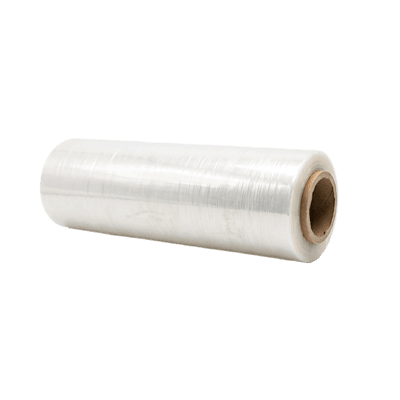
Extended-core stretch film is hand stretch film wound on a core that extends past the edges of the roll, so the core itself works as a built-in handle. It is also sold as extended core pallet wrap or stretch wrap with handles. Operators take a roll out of the carton and start wrapping; there is no dispenser to buy or keep track of. It works well in warehouses that hand-wrap light to medium loads a few times a day. For heavy, irregular or high-volume pallets it is less suitable, because a reusable dispenser or a stretch wrapping machine gives better tension control.
We wrote this guide for two groups of readers: warehouse managers who wrap pallets by hand, and distributors who buy extended-core rolls in bulk. If you only need one part, the headings below are organized by the questions buyers ask us most often. Distributors comparing suppliers can also read our guide to pallet wrap suppliers for distributors.
What Is Extended-Core Stretch Film?
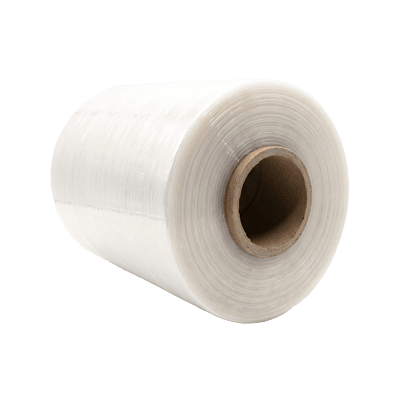
A standard hand stretch film roll is wound on a core that sits flush with, or only slightly beyond, the film edge. To use it comfortably, the operator holds the roll directly, slides on a pair of “hand savers,” or mounts it on a dispenser.
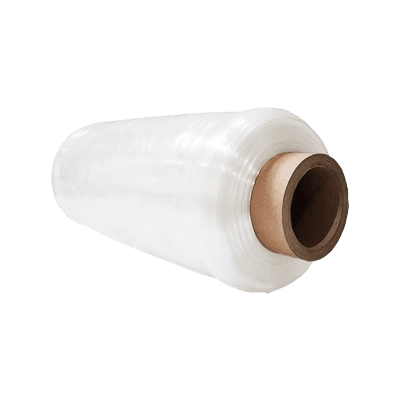
An extended-core roll is wound on a longer, usually narrower core that protrudes from both ends of the roll. The operator grips the exposed core ends with both hands, and the roll turns on the core as the film unwinds. When the roll is finished, the core goes into the recycling bin along with the carton.
How the extended core works as a built-in handle
- Grip: the protruding ends give each hand a fixed place to hold, so the palms stay off the moving film.
- Rotation: the roll spins freely as film pays out, so the operator can walk the pallet without fighting the roll.
- Tension: the operator applies tension by gripping more tightly or by pulling back against the roll. Because tension comes from hand friction, it is less consistent than on a dispenser with a brake.
Typical specifications at a glance
| Specification | Common range (metric) | Common range (US) |
|---|---|---|
| Film width | 300–500 mm (wider rolls exist) | 12–20 in (up to 30 in) |
| Narrow banding widths | 75–125 mm | 3–5 in |
| Roll length | 200–450 m | 700–1,500 ft |
| Thickness | 12–30 µm | 47–120 gauge |
| Core extension | roughly 100–125 mm beyond the film | roughly 4–5 in beyond the film |
| Core diameter | narrower than a standard 76 mm (3 in) core | often around 1–1.5 in |
| Film type | cast or blown LLDPE | cast or blown LLDPE |
| Cling | one-side or two-side | one-side or two-side |
Exact values vary by manufacturer, so always confirm them on the supplier’s specification sheet.
Extended-Core vs Standard-Core Hand Stretch Film
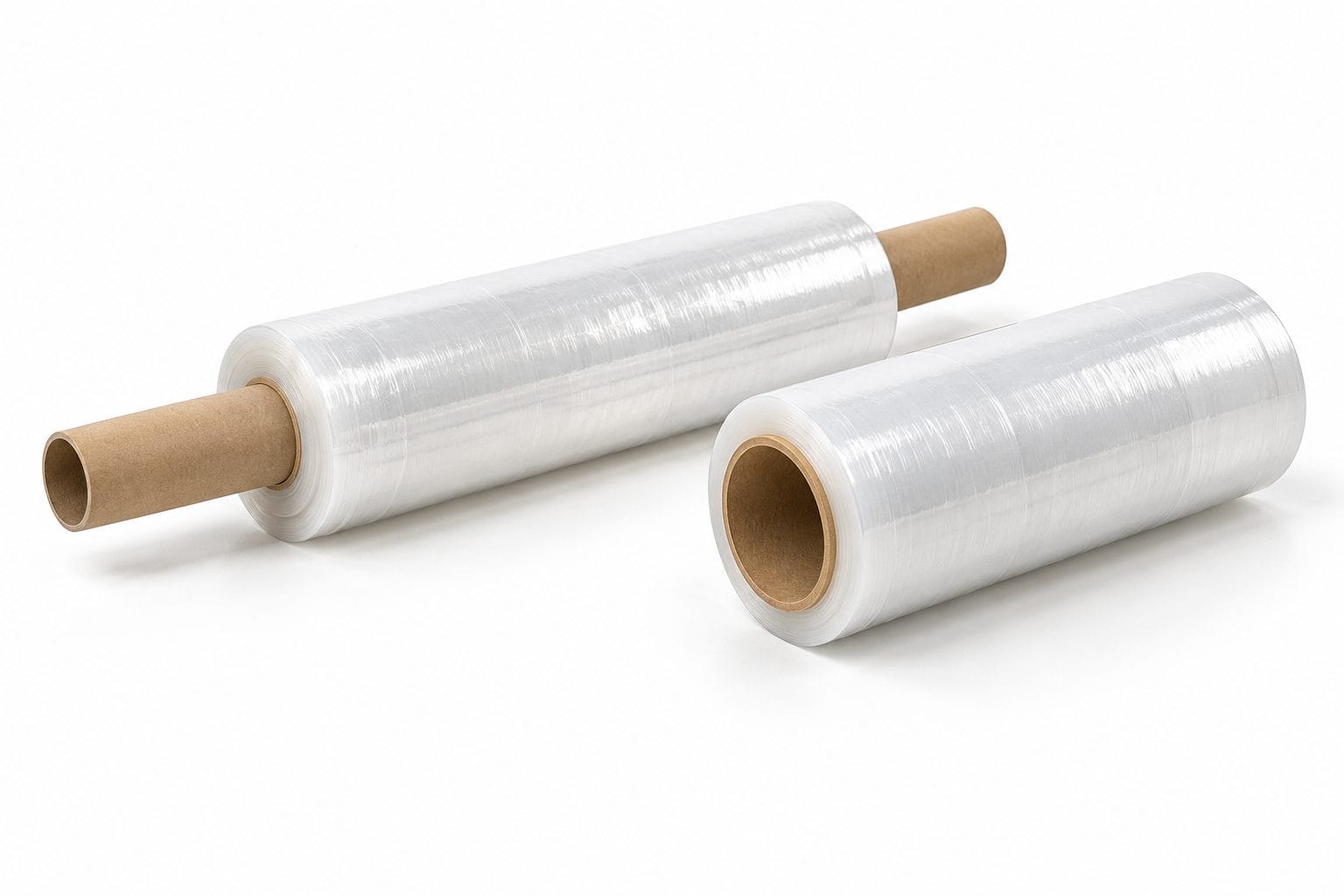
In most cases the film on both rolls is the same. The difference is in the core, which changes how the roll is handled, how much it weighs and what it costs.
| Factor | Extended-core roll | Standard-core roll |
|---|---|---|
| Core | Longer and usually narrower; protrudes from both ends | Flush with the film edge; typically 76 mm / 3 in |
| Tools needed | None | Hand savers or a dispenser for comfortable use |
| Start-up cost | Lowest: buy film and start wrapping | Film plus a one-time tool purchase |
| Tension control | By hand grip; varies by operator | Better and more repeatable with a braked dispenser |
| Ergonomics | Good for short sessions; hands and wrists tire on long shifts | A dispenser reduces strain over a full shift |
| Width options | Also offered in wide formats (20 in / 500 mm and above) | Mostly up to 18 in / 450–500 mm |
| Core share of roll weight | Higher, because the core is longer | Lower |
| Cost per kg of film | Usually slightly higher | Usually lower |
| Waste | One core per roll, plus the carton | One core per roll; the tool is reused |
In practice, you pay slightly more per kilogram of film and save on tools and set-up. That usually makes sense when wrapping is occasional or spread across many locations. When one team wraps pallets all day, standard rolls on a dispenser tend to be cheaper.
Extended-Core Rolls vs Standard Film with a Reusable Handle
Once a site’s wrapping volume grows, the question usually comes up: should it keep buying extended-core rolls, or move to standard rolls with a reusable handle or dispenser?
When extended-core rolls make more sense
- Wrapping is occasional. A few pallets a day, or wrapping done by staff who have other main jobs.
- Many wrap points. Docks, branches, trucks or field crews where dispensers would go missing.
- Mixed or temporary labor. No training on dispenser brakes or roll changes is needed.
- Light to medium loads. Cartons and uniform cases that need containment, not heavy load holding.
- Resale to small users. Distributors selling to customers who will not buy a dispenser.
When a reusable dispenser or hand saver is the better choice
- High volume. One or more operators wrapping for most of a shift.
- Heavy or unstable loads. Heavy or irregular pallets need consistent, higher tension and more stretch.
- Cost control per pallet. You want to use the least film per pallet, consistently.
- Ergonomics programs. Your site tracks hand and wrist strain or repetitive-motion injuries.
- Lower film price per kg. Standard rolls usually cost less per kilogram of film.
Cost per pallet: a simple comparison
Compare the two options on cost per pallet, not price per roll:
Cost per pallet = (film used per pallet ÷ net film weight per roll) × price per roll + tool cost per pallet
- Film used per pallet: weigh a roll before and after wrapping 10 pallets, then divide by 10.
- Tool cost per pallet: the dispenser price plus expected replacements over a year, divided by pallets wrapped that year. For extended-core rolls this is zero.
At low volumes the tool cost per pallet is high, so extended-core rolls usually win. As volume rises, the tool cost spreads thin, and the better tension control of a dispenser often reduces film use as well. The volume at which a dispenser starts to pay for itself depends on your loads, your operators and your film price, so run the numbers with your own trial data. Our guide to calculating stretch film usage and cost per pallet shows the method step by step.
| Question | Extended core | Reusable handle or dispenser |
|---|---|---|
| Pallets per day per wrap point | Low to moderate | Moderate to high |
| Number of wrap points | Many, spread out | Few, fixed |
| Risk of tools going missing | High | Low |
| Need for consistent tension | Low to medium | Medium to high |
| Operator time spent wrapping | Short sessions | Long shifts |
How to Specify Width, Thickness, Net Film Weight and Core Extension

Choosing film width for pallet height and load type
- 400–500 mm (16–20 in) is the workhorse width for pallet wrapping. It covers a standard pallet in fewer revolutions and is still easy to handle.
- Narrower rolls (300–380 mm / 12–15 in) are lighter, which helps with tall stacks, overhead reach and smaller operators.
- Wide rolls (up to 30 in / 750 mm) cover tall pallets in fewer passes but are heavy to hold by the core. Trial them before standardizing.
- Banding widths (75–125 mm / 3–5 in) are for bundling cartons, pipes, lumber or long items rather than full pallets.
Thickness: micron vs gauge conversion table
Europe usually specifies thickness in microns (µm); the US uses gauge. One micron is about 3.94 gauge. For a deeper look at matching thickness to load weight, see our stretch film thickness guide.
| Microns (µm) | Gauge (approx.) | Typical hand-wrap use |
|---|---|---|
| 12 | 47 | Light, uniform cartons; cost-sensitive; often a high-performance or “equivalent” film |
| 15 | 60 | Light loads |
| 17 | 67–70 | Light to medium loads |
| 20 | 80 | General-purpose medium loads; the most common hand-film choice |
| 23 | 90 | Medium to heavier loads |
| 30 | 120 | Heavy loads, sharp corners, puncture risk |
Two notes:
- Thinner high-performance films, including pre-stretched film, can match the holding force of a thicker standard film. They are usually less forgiving on sharp corners and rough handling, though, so test them on your actual loads.
- Cast vs blown: cast film is clearer, quieter to unwind and has good cling. Blown film is generally tougher and more puncture-resistant, at the cost of more unwind noise.
Net film weight vs gross roll weight (and why it matters)
Net film weight is the weight of film only. Gross roll weight includes the core. Because an extended core is longer than a standard core, it makes up a larger share of the gross weight. Two rolls with the same gross weight can therefore carry different amounts of film.
You can estimate net film weight from the nominal dimensions (LLDPE density ≈ 0.92 g/cm³):
Net film weight (kg) = width (m) × length (m) × thickness (µm) × 0.00092
| Roll | Theoretical net film weight |
|---|---|
| 400 mm × 300 m × 17 µm | ≈ 1.88 kg |
| 500 mm × 300 m × 20 µm | ≈ 2.76 kg |
| 18 in × 1,000 ft × 80 ga | ≈ 2.60 kg (5.7 lb) |
| 20 in × 1,000 ft × 80 ga | ≈ 2.89 kg (6.4 lb) |
Buyer checks:
- Ask for net film weight and core weight separately on the quote.
- Weigh a sample roll, then weigh the empty core after use. Gross minus core should land close to the theoretical figure.
- Compare offers on price per kg of film, or price per metre at a stated thickness, never on price per roll alone.
Core extension length, diameter and wall strength
- Extension length: the core should protrude far enough for a full grip with a gloved hand, commonly around 100–125 mm (4–5 in) beyond the film. Too short and knuckles rub the film; too long and the core can flex or snag.
- Diameter: a narrower core is easier to grip but must still be stiff enough not to bend. Ask for both inner and outer diameter.
- Wall strength: the core should not crush, flatten or delaminate during wrapping, or when cartons are stacked in transit. Ask how the core is protected in the carton.
- End finish: clean, smooth core ends reduce glove wear and hand discomfort.
Warehouse Trial Checklist: Grip, Unwind, Tension and Load Stability
A spec sheet tells you what a roll should do. A short trial on your own pallets, with the people who will use the film, tells you what it actually does. We recommend one before switching to any new extended-core film.
Trial setup: brief operators on correct pallet wrapping technique first, then use 2–3 operators, at least 10 pallets of your most common load type, and a scale. Record the roll weight before and after the trial.
Grip and handling
- The core ends are comfortable to hold with and without gloves
- The core does not flex, crush or slide out of the roll during use
- The roll weight is manageable for a full pallet without wrist strain
- Operators can start and finish the wrap without setting the roll down
Unwind behaviour
- The film unwinds smoothly with no jerking or sudden release
- Unwind noise is acceptable for the work area
- Layers do not block (stick together) on the roll
- The film tears off cleanly by hand at the end of the wrap
- No edge damage, gels, holes or breaks during the trial
If a trial roll tears, unwinds unevenly or won’t hold its tail, the hand stretch film troubleshooting guide helps find the cause.
Applying tension by hand
- Operators can apply visible stretch without the film breaking
- Neck-down (narrowing of the film as it stretches) stays reasonable
- The film clings to itself so the tail stays put
- Results are similar from operator to operator
Pallet stability checks after wrapping
- The top tier is locked to the load with an overlap at the top
- The load is tied to the pallet with extra wraps at the base
- A firm hand push on the upper corners shows little lateral movement
- The load arrives intact after an internal move or a test shipment
- Film used per pallet (kg or g) and wrapping time per pallet are recorded
What to compare: film weight per pallet, time per pallet, film breaks per roll and operator feedback. A roll that costs slightly more but uses less film per pallet, with fewer breaks, is usually the better buy.
For export or long-haul loads, also look at containment force and pallet stability. Some shippers also use transport stability test methods such as EUMOS 40509, but for most warehouses the in-house trial above is enough to make a decision.
Bulk Purchasing for Distributors: Packaging and Quote Fields
Packaging options

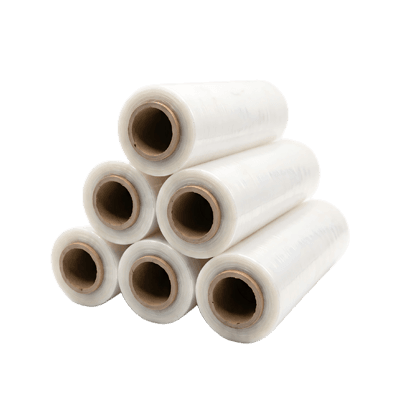
- Rolls per carton usually depend on width. Wide pallet rolls are often packed around 4 per carton; narrow banding rolls (3–5 in / 75–125 mm) often 12–18 per carton.
- Carton labeling: product name, size, thickness, net weight, batch number and barcode. Ask whether private labels or neutral cartons are available.
- Pallet pattern: cartons per layer, layers per pallet, maximum pallet height, and whether pallets are corner-boarded and wrapped.
- Container loading: pallets per 20 ft and 40 ft container, or floor-loaded carton counts if you do not need pallets.
Loading quantities vary with roll size and carton design, so ask your supplier for a loading sheet for each SKU before you build your price list. Once stock arrives, follow good stretch film storage practice so rolls keep their cling and unwind properly.
Quote checklist: fields to confirm before ordering
| Group | Field |
|---|---|
| Film | Type (cast / blown), width, length, thickness (µm and gauge), color or tint, cling (one-side / two-side), stretch performance |
| Weight | Net film weight per roll, core weight, gross roll weight |
| Core | Inner and outer diameter, extension per side, material and wall thickness |
| Packing | Rolls per carton, carton size and gross weight, labeling or private label |
| Logistics | Cartons per pallet, pallet size and height, pallets or cartons per 20 ft / 40 ft container |
| Quality | Tolerances on length, thickness and weight; batch traceability; test report on request |
| Commercial | MOQ, unit price basis (per roll / per kg / per carton), Incoterms (EXW, FOB, CIF, DDP), payment terms, lead time |
| Samples | Sample rolls available, sample cost and shipping, how trial feedback is handled |
Distributor tips:
- Normalize every quote to price per kg of film. This exposes differences in roll length, thickness and core weight.
- Match bulk to the approved sample. Keep a roll from the approved trial and agree before the first order that bulk production will match it.
- Lock the core spec. A change in core length or wall thickness changes both the user experience and the gross weight.
- Vet the supplier, not just the price. Our checklist on how to evaluate a stretch film manufacturer and our guide to importing stretch film from China cover audits, samples and shipping.
- Order a trial quantity first, run the warehouse checklist above with a key customer, then scale up.
FAQ
What is the difference between extended core and standard core stretch wrap?
The film can be the same. An extended core protrudes from both ends of the roll to act as a built-in handle, so no dispenser is needed. A standard core sits flush with the film and is normally used with hand savers or a dispenser.
Do you need a dispenser for extended core stretch film?
No. The extended core is the handle. A dispenser can still give better tension control on heavy or high-volume work, but it is not required.
What gauge or micron is best for hand wrapping pallets?
For general medium loads, 17–20 µm (70–80 gauge) is the most common choice. Go lighter for small uniform cartons and heavier (23–30 µm / 90–120 gauge) for heavy loads or sharp corners. Confirm with a trial on your own pallets, or see what gauge stretch wrap you need for a side-by-side comparison.
How much does a roll of extended core stretch film weight?
It depends on width, length and thickness. A 500 mm × 300 m × 20 µm roll carries about 2.8 kg of film, plus the core. Use the formula in this guide to estimate any size, and ask for net film weight on the quote.
Is extended core stretch film recyclable?
The film is LLDPE (resin code 4), and the core is usually paperboard, so the two can be separated for recycling where local collection exists. See is pallet wrap recyclable? for details, or our GRS-certified recycled stretch film options.
How many rolls of stretch film fit on a pallet or in a container?
It depends on roll size and carton design. Ask your supplier for a loading sheet that lists rolls per carton, cartons per pallet and pallets per 20 ft / 40 ft container for each SKU.
Recommended Tuosheng Packaging Solution
Tuosheng Packaging manufactures hand stretch film and machine stretch film in Suzhou, China, with customizable thickness, width, roll length and export packing.