Stretch Wrap for Furniture Shipping: What Manufacturers and Distributors Should Check
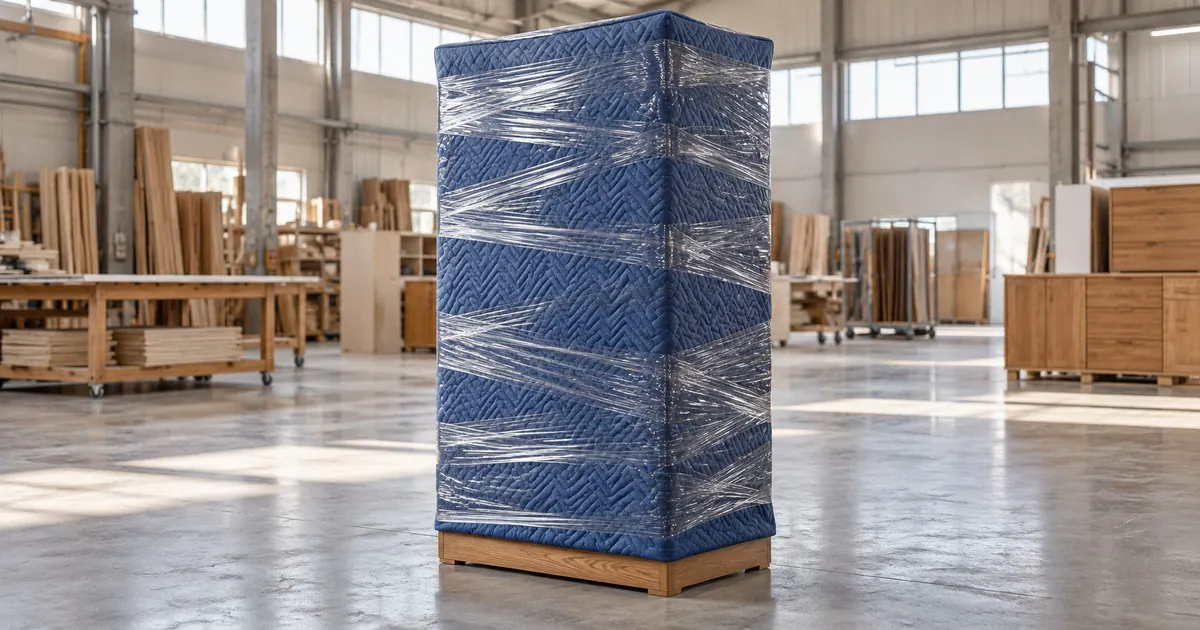
Stretch wrap for furniture holds padding, doors and drawers in place and keeps out dust and rain, but it does not stop scratches. Finished wood and leather need a layer of padding between the surface and the film, because film pressed straight onto them can trap moisture and mark the finish.
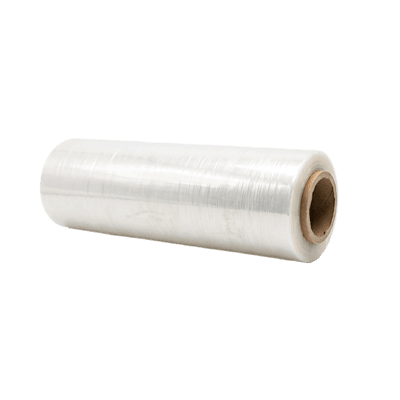
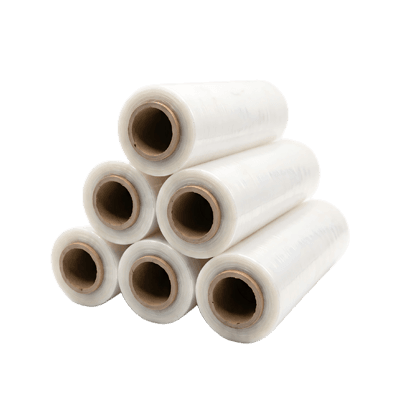
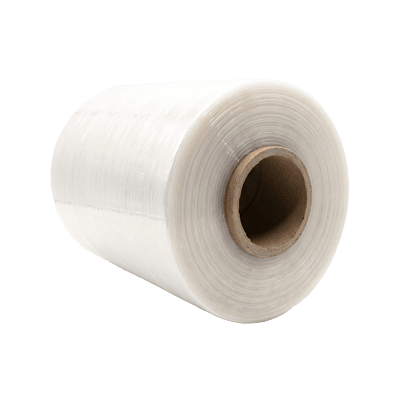
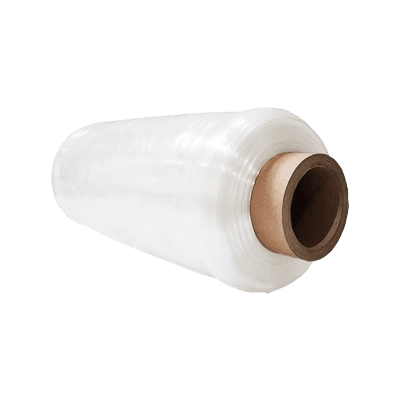
Tuosheng Packaging makes hand and machine stretch film, including narrow rolls from 250 mm for horizontal orbital wrappers. This guide covers what the film should and shouldn’t do on furniture, the damage that shows up under the wrap, and how to wrap single pieces, flat-pack cartons and panels.
Quick answer
- Stretch wrap is the outer layer on furniture: it holds blankets, foam and corner protectors in place and keeps out dust and moisture.
- Stretch wrap does not protect finished surfaces from scratches. ABF Freight’s LTL packaging guide states that stretch film is not designed to prevent damage to fragile or painted surfaces or to protect against abrasion.
- Stretch wrap should never go straight onto finished wood, lacquer or leather; a blanket, foam sheet or paper layer goes between the surface and the film.
- Furniture shipped as LTL freight needs padding, corner protectors, wraps that reach the pallet base and, for heavy pieces, straps, because stretch wrap alone won’t stop a heavy piece from shifting.
What Does Stretch Wrap Do for Furniture, and What Can’t It Do?
Stretch wrap on furniture holds things in place and keeps the piece clean and dry. Scratch and impact protection comes from the padding and corner protectors underneath.
The film is the layer everyone sees, so it’s easy to expect it to do the whole job. ABF Freight, the US LTL carrier, puts it plainly in its packaging guide: stretch film is not designed to prevent damage to fragile or painted surfaces or to protect against abrasion.
| Job | Stretch wrap | Padding (blankets, foam, paper) | Corner protectors | Carton or crate |
|---|---|---|---|---|
| Hold doors, drawers and padding in place | Yes | No | No | Partly |
| Keep out dust and dirt | Yes | Partly | No | Yes |
| Shed rain during loading | Yes, on the wrapped faces | No | No | Partly |
| Stop scratches and abrasion | No | Yes | On edges | Yes |
| Absorb impact | No | Yes | Yes, on corners | Yes |
| Tie the piece to a pallet | Yes, with base wraps | No | Help keep it square | No |
Can You Put Stretch Wrap Directly on Furniture?
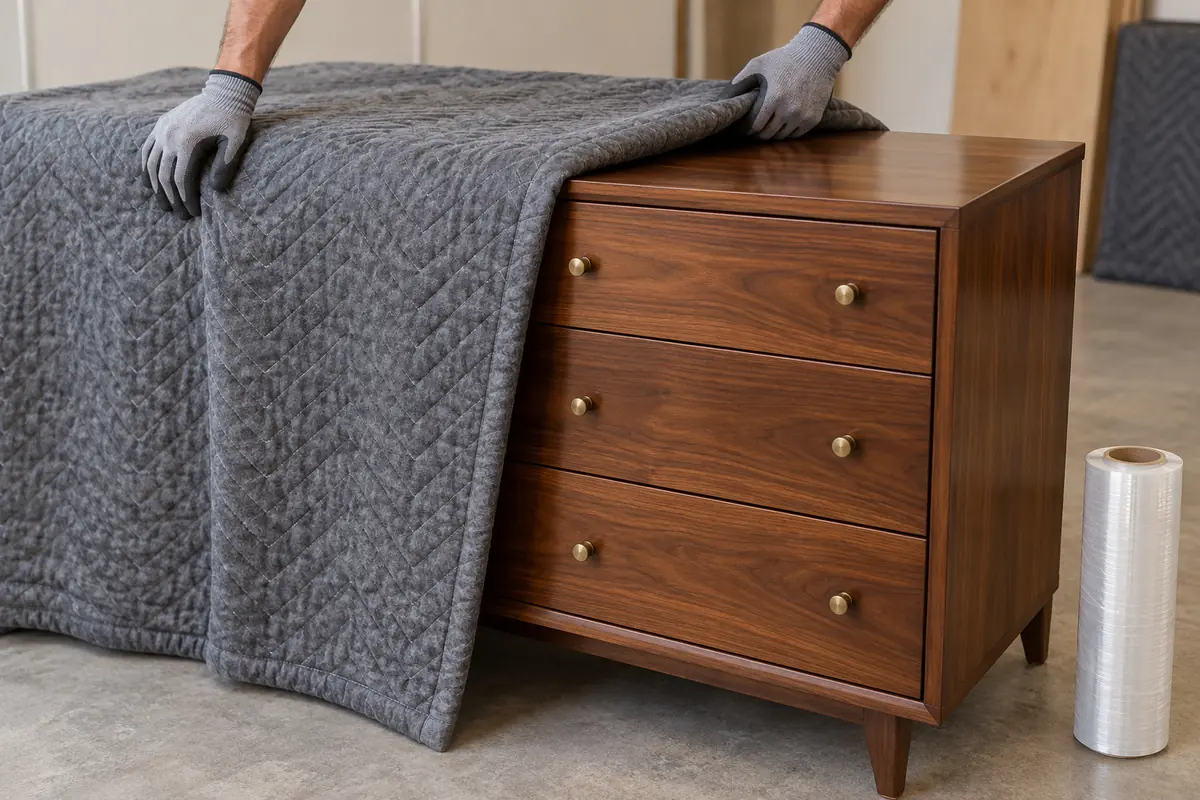
Stretch wrap can go directly on bare metal and plastic parts and on furniture that is already boxed. Finished wood, lacquer and leather need a padding layer first.
Freight and moving packaging guides agree on this: plastic stretch wrap should not touch finished wood or leather. Leather is the most sensitive surface, because it is porous and sweats under plastic, so the first layer on leather should be a dry moving blanket or furniture pad.
| Surface | Wrap directly? | First layer | Why |
|---|---|---|---|
| Finished wood, lacquer, oil finish | No | Blanket, foam sheet or paper | Film can trap moisture against the finish and mark it; a finish that hasn’t cured can cloud |
| Leather | No | Dry moving blanket or furniture pad | Leather is porous and sweats under plastic |
| Fabric upholstery | Short trips only, clean and dry | Blanket or cover recommended | Plastic can hold moisture against fabric in storage |
| Glass and mirrors | Not as the only layer | Corner protectors plus cardboard or foam | Film holds the protection in place; it doesn’t cushion glass |
| Metal, plastic parts, cartons | Yes | None needed | No finish to mark; the film holds parts together and keeps them clean |
Tape is a separate risk: tape on leather or finished wood can pull off color or leave residue. Use stretch wrap to hold blankets closed instead of taping them to the piece.
Why Does Furniture Get Damaged Under Stretch Wrap?
Furniture gets damaged under stretch wrap for three reasons: the film touched the finish, the piece was wrapped before it was dry, or the film was the only protection. These are the five problems to prevent.
What we see in furniture-packing discussions: In the discussions we follow among furniture makers, movers and freight handlers, the same five problems keep coming up.
| Problem | What causes it | How to prevent it |
|---|---|---|
| 1. Clouded or softened finish | A new oil or lacquer finish wrapped before it fully cured, trapping solvent against the topcoat | Let the finish cure as the finish maker directs, then pad the surface before wrapping |
| 2. Mold, mildew or discoloration | Furniture wrapped while damp, or stored sealed in plastic in a humid space | Clean and dry the piece first; don’t store it sealed in plastic for long periods in heat or humidity |
| 3. Marks or residue on the finish | Tape on the finish, or film pressed onto a surface in heat for a long time | Keep tape off finished surfaces and put padding under the film |
| 4. Scratches through torn film | Sharp corners puncture film that went on with no padding | Fit corner protectors and padding before the film goes on |
| 5. Pieces shifting in freight | Film used as the only restraint on heavy or top-heavy pieces | Wrap down to the pallet base, strap heavy pieces and brace them in the trailer |
Problems 1 to 3 are moisture and contact problems. The wrap is waterproof, but a wrapped piece still sweats if it went in damp or rides through big temperature swings; our guide to is stretch wrap waterproof explains why condensation forms inside a container. Problem 5 is a restraint problem, and strapping is the fix; see PP vs PET strapping for which strap to use.
How Should You Wrap Furniture for Shipping?
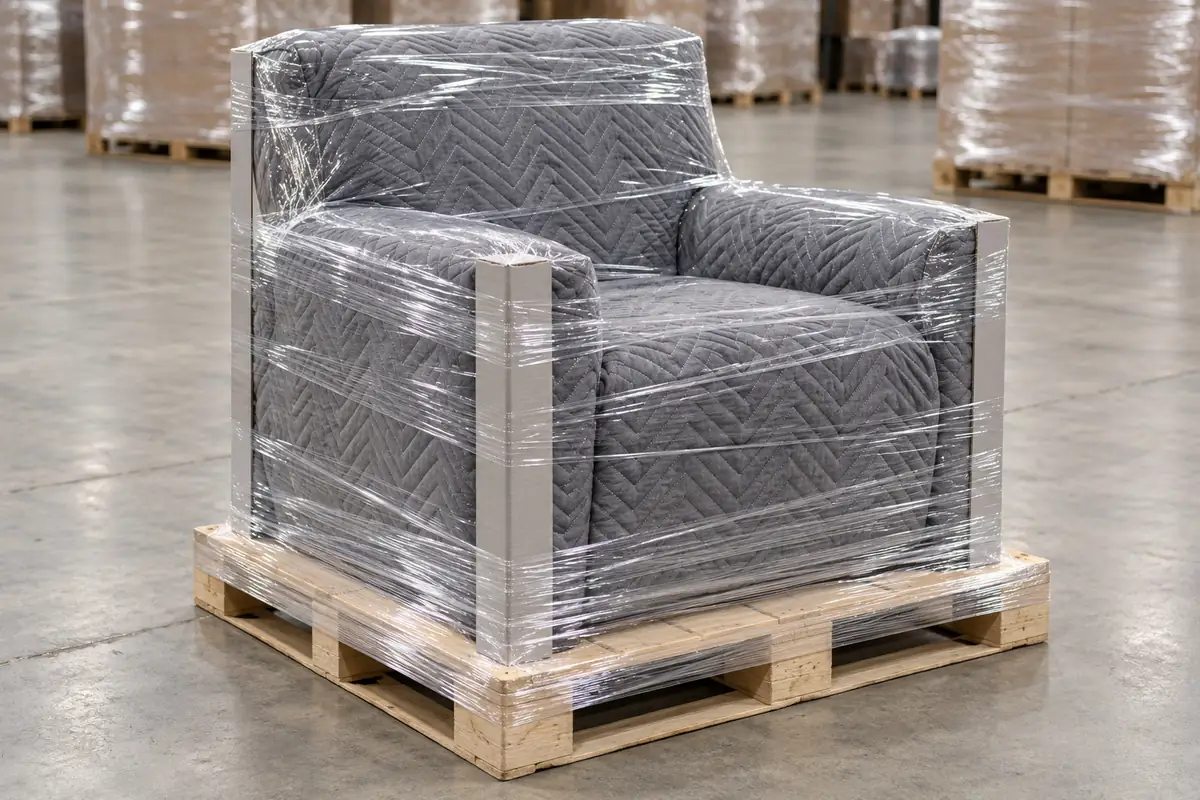
Wrap furniture for shipping from the inside out: clean, take apart, pad, protect corners, then stretch wrap. For freight, finish by wrapping the piece onto a pallet.
- Clean and dry the piece. Dust trapped under the wrap acts like sandpaper on the finish.
- Take it apart where you can. Remove legs, glass and cushions, and bag and label the hardware.
- Pad every finished surface with blankets, foam or paper.
- Fit corner protectors on corners, edges and legs.
- Stretch wrap over the padding, starting at the bottom and overlapping each pass. The film keeps doors and drawers shut, but heavy doors and drawers need ties or straps as well.
- For freight, wrap onto the pallet. Carry the wraps down onto the pallet base, use corner boards, and strap heavy pieces; ABF Freight’s guide notes that corner boards help keep goods aligned and prevent damage from strapping and stretch wrap. For awkward, heavy pallet loads, see our guide to heavy-duty stretch wrap.
- Label the outside of the wrap, never the finished surface.
Flat-pack furniture is simpler, because the carton is the protection. The cartons go on the pallet like any other boxed load, so the stacking rules in our guide to pallet stacking patterns apply, and the stretch wrap ties the stack to the pallet.
Which Stretch Film Works Best for Furniture?
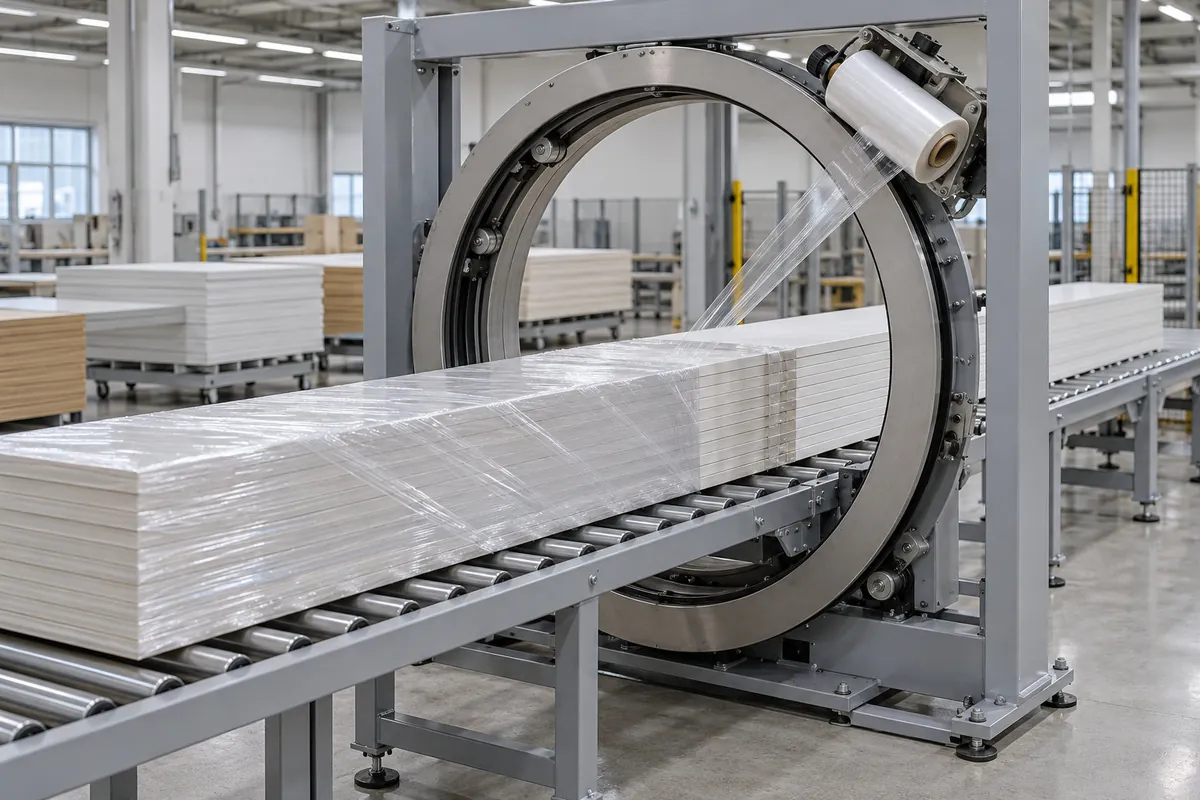
Hand stretch film suits single pieces wrapped by an operator, and machine stretch film suits palletized furniture and flat-pack cartons. Doors, panels and frames run best on a horizontal orbital wrapper with narrow rolls.
| Job | Film | What to check |
|---|---|---|
| Single pieces wrapped by hand | Hand stretch film | A roll width and weight the operator can handle, and cling on both sides |
| Palletized furniture or flat-pack cartons | Machine stretch film | The pre-stretch your wrapper runs, and base wraps that reach the pallet |
| Doors, panels and frames on a horizontal orbital wrapper | Narrow machine rolls | A width that suits the part’s cross-section |
| Pieces that shouldn’t be visible in transit | Black (opaque) stretch film | Opaque film hides the product; it is not padding |
Gauge matters less than the padding underneath. Heavier gauge helps on sharp corners and heavy pieces, and our 60 vs 80 gauge guide covers how to choose.
Moving suppliers sell the same film under three names: “shrink wrap”, “moving film” and “stretch film”. That film is stretch film: it needs no heat and clings to itself. True shrink film is heated until it tightens around the load, a different process explained in our guide to stretch wrap vs. shrink wrap. For hiding branded or high-value pieces, see black stretch film.
What Tuosheng Packaging supplies for furniture packing
Tuosheng Packaging makes hand and machine stretch film in clear and black, with cling on both sides of the film. For horizontal orbital wrappers, Tuosheng supplies narrow rolls from 250 mm (about 10 in) wide, with the same thickness range and 76 mm core as our machine film. Tuosheng does not supply moving blankets, foam or corner protectors, so source those from your packaging supplier.
What Should Distributors Check Before Buying Furniture Stretch Wrap?
Distributors buying furniture stretch wrap should match the roll to how their customers wrap, then test it on real furniture before ordering in bulk.
- Width and roll weight that fit the wrapping method: by hand, on a turntable, or on an orbital wrapper.
- Core size that fits the customers’ dispensers or wrapper.
- A sample test on real pieces, including a padded finished surface and a sharp corner.
- Bulk made to the approved sample. Our guide to comparing stretch film quotes covers the bulk vs approved sample check.
Stretch Wrap for Furniture FAQ
Is stretch wrap safe on wood furniture?
Stretch wrap is not safe directly on finished wood. Put a blanket, foam sheet or paper layer on the wood first and wrap over it, because film pressed onto a finish can trap moisture and mark it.
Can stretch wrap damage leather furniture?
Yes, stretch wrap can damage leather if it goes straight onto the surface. Leather is porous and sweats under plastic, so wrap it in a dry moving blanket or furniture pad first and keep tape off the leather.
Should I use stretch wrap or shrink wrap for furniture?
Stretch wrap is the usual choice for furniture because it needs no heat and holds padding in place. Moving suppliers also sell stretch film under the name “shrink wrap”.
Is stretch wrap enough to protect furniture in freight?
No, stretch wrap alone is not enough for furniture in freight. It holds and covers the piece, but finished surfaces still need padding, corners need protectors, and heavy pieces need straps to the pallet.
How long can furniture stay in stretch wrap?
Stretch wrap is for transit, not long-term storage. Unwrap furniture after delivery, and don’t leave pieces sealed in plastic for long periods in heat or humidity.
Get Stretch Film Matched to Your Furniture Line
Tell us whether you wrap by hand, on a pallet wrapper or on an orbital wrapper, plus the film width and monthly volume. We’ll recommend a hand stretch film or machine stretch film spec, including narrow rolls from 250 mm, and send samples to test on your own pieces.
Recommended Tuosheng Packaging Solution
Tuosheng Packaging manufactures hand stretch film and machine stretch film in Suzhou, China, with customizable thickness, width, roll length and export packing.