
How Stretch Film Is Made: From LLDPE Resin to Finished Rolls
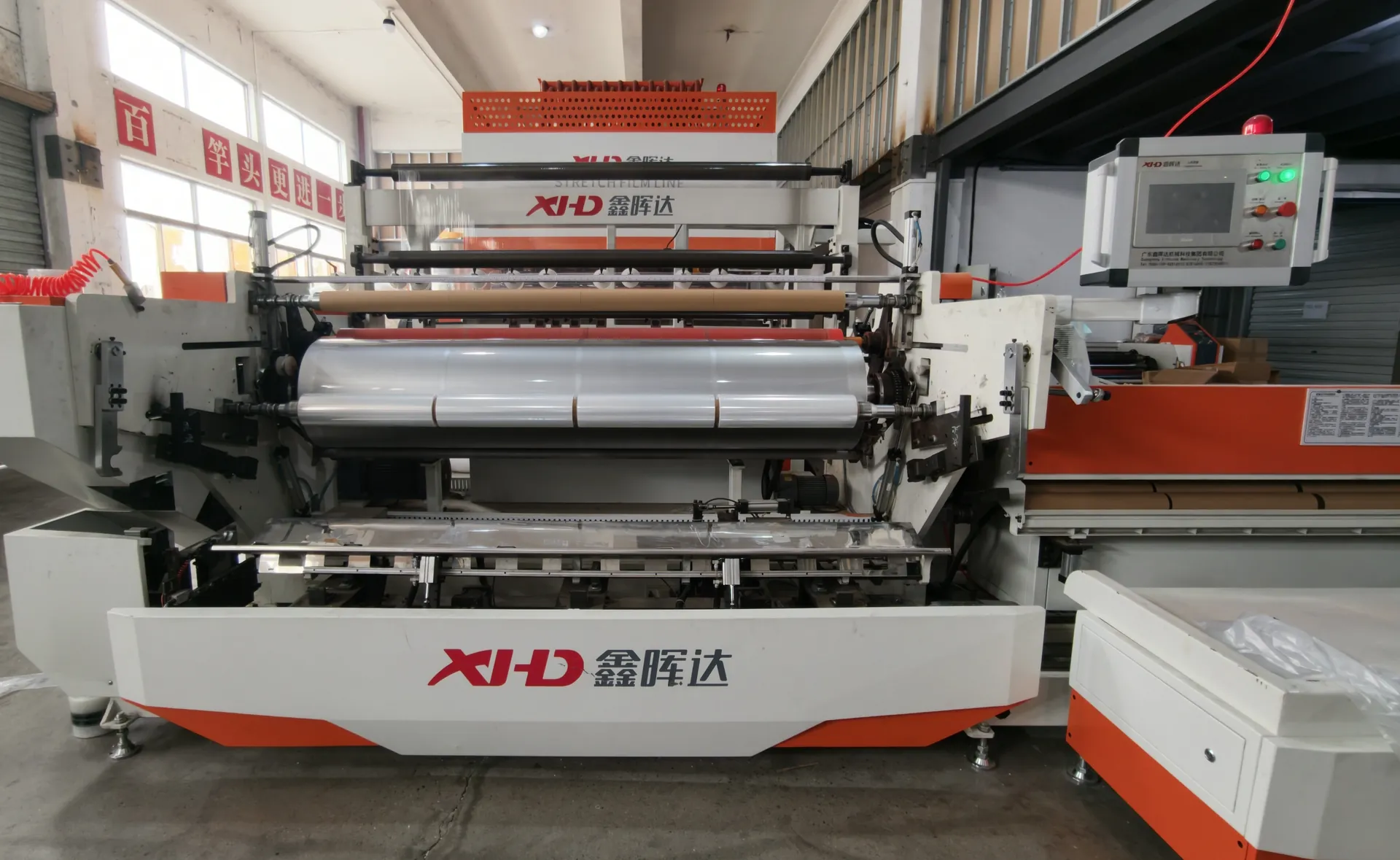
Stretch film is made by melting LLDPE resin, extruding it through a flat die onto a chilled roll, and winding the cooled film straight onto paper cores. At Tuosheng Packaging, both hand and machine film run on a five-layer cast line. Every order is checked for thickness and stretch performance, and finished rolls are spot-checked for net film weight before packing.
Key facts – Making stretch film since 2012 – Process: cast, five-layer co-extrusion – Hand and machine film wound to finished size on the line – 76 mm (3 in) paper cores – Roll weights stated as net film weight, excluding the core
What is stretch film made of?
Stretch film is made mainly from linear low-density polyethylene (LLDPE), which can be stretched several times its length and keeps pulling back on the load. Tuosheng Packaging uses a film-grade LLDPE for both hand and machine film. Machine film also contains metallocene LLDPE (mLLDPE), which allows higher pre-stretch on powered wrappers. For how LLDPE differs from ordinary LDPE, see LLDPE vs LDPE.
Resin arrives as pellets and is checked before it goes into production. Because the film is co-extruded, each layer can be set up for a different job, such as surface cling, or toughness in the core of the film. That is why two films of the same thickness can perform differently on a pallet. To choose between film types and specifications, see the stretch film selection guide.
How is cast stretch film made?
Cast stretch film is made by melting resin in extruders, combining the melt into layers and pushing it through a flat die. The thin molten sheet drops onto a water-cooled chill roll, which sets it in a fraction of a second. The cooled film then runs to the winder.
On our line the process runs in five steps:
- Extrusion. Resin pellets are melted and filtered in the extruders.
- Co-extrusion. The melt streams are combined into a five-layer structure before the die.
- Flat die. The layered melt leaves the die as a wide, even curtain. The die gap and line speed set the film thickness.
- Chill roll. The film is cooled quickly on the chill roll. Fast cooling gives cast film its clarity and quiet unwind.
- Winding. The edges are trimmed, the film is slit across its width into several rolls, and an automatic winder winds each one onto a paper core at the finished length.
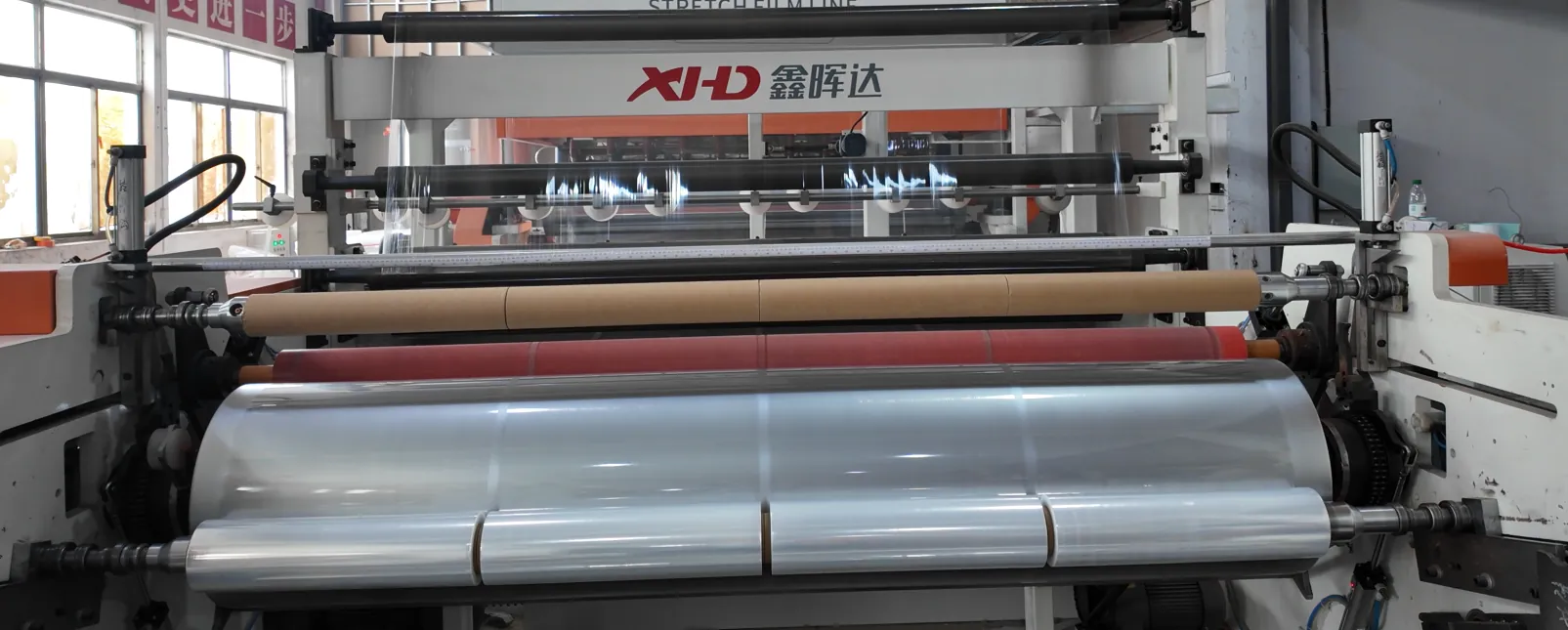
Blown film is made a different way: the melt is blown into a bubble and cooled by air. All of our hand and machine stretch film is cast. For how the two compare on the pallet, see our guide to cast vs blown stretch film.
How are finished hand and machine rolls wound?
Tuosheng Packaging winds hand and machine rolls to their finished width and length directly on the line, not cut later from large master rolls. The line is set to the order’s thickness, width and roll length, and the film is wound onto a 76 mm (3 in) paper core.
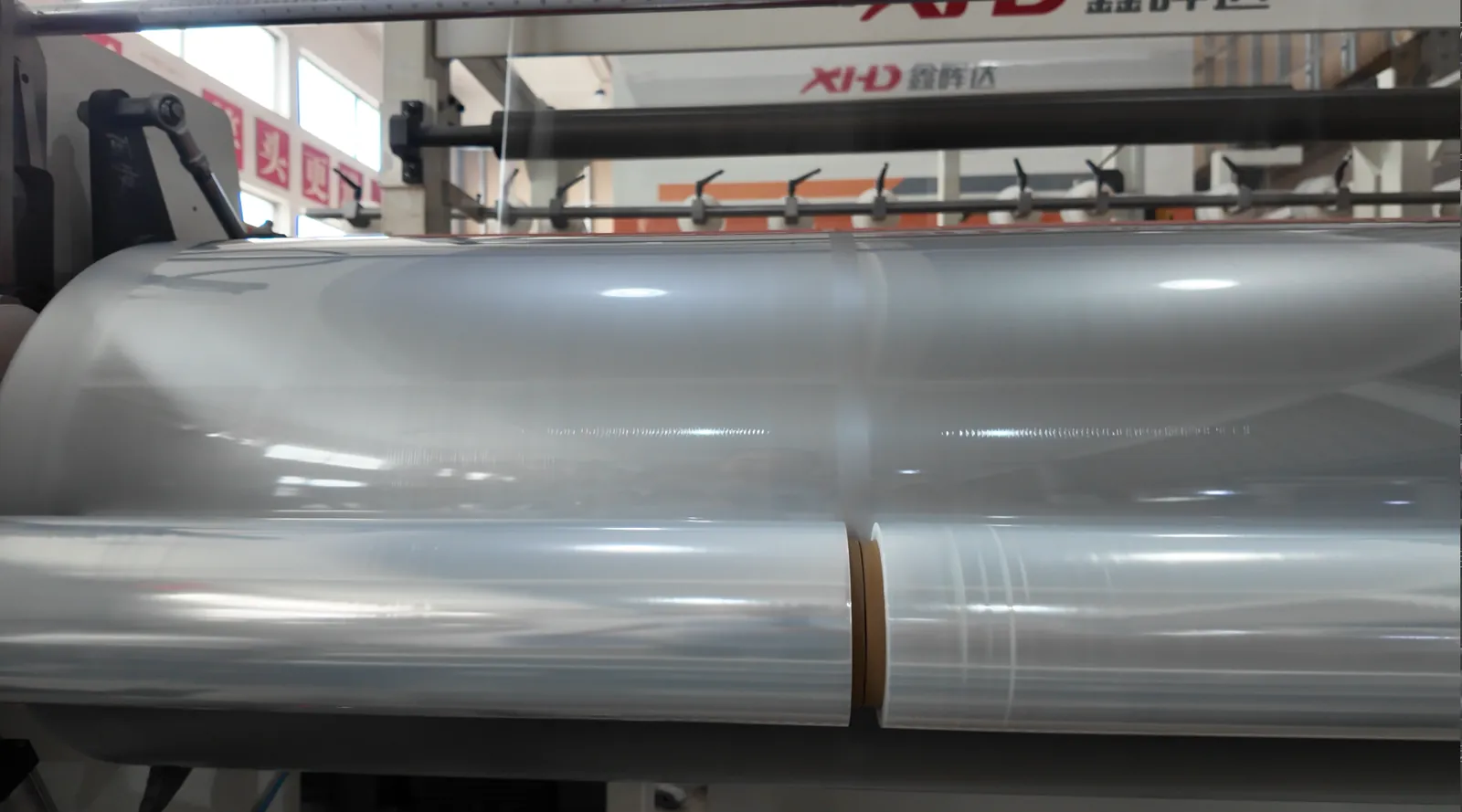
Hand and machine film come off the same type of line. What changes is the specification:
| Hand stretch film | Machine stretch film | |
|---|---|---|
| Common EU size | 500 mm × 250–300 m, 17–23 µm | 500 mm × 1,500 m, 17–23 µm |
| Common US size | 18 in × 1,500 ft (457 mm × 457 m), 60–80 gauge | 20 in (500 mm) × 5,000 or 6,000 ft, 60–80 gauge |
| Usual core weight | 0.3, 0.5 or 0.7 kg | 1 or 1.5 kg |
For the full list of standard roll sizes and roll weights, see our stretch wrap sizes guide. Other sizes are quoted on request.
How is stretch film thickness checked?
Tuosheng Packaging measures the thickness of every order with an in-house thickness instrument and states it as true thickness. Some markets sell film by “equivalent” or “performance” gauge, where the roll is thinner than its label suggests. Our 20 µm film is 20 µm thick, about 80 gauge.
Thickness alone does not tell you how much film you are buying, so compare net film weight as well. A roll that is thinner than stated will also weigh less for the same width and length. For help choosing a thickness, see our stretch film thickness guide and 60 vs 80 gauge stretch wrap.
How is stretch film tested for stretch and strength?
Tuosheng Packaging tests stretch performance on an in-house tensile tester. A strip of film is clamped and pulled until it breaks, which shows how far the film stretches and how much force it carries. Every order is tested this way and compared against its specification before the rolls are packed.
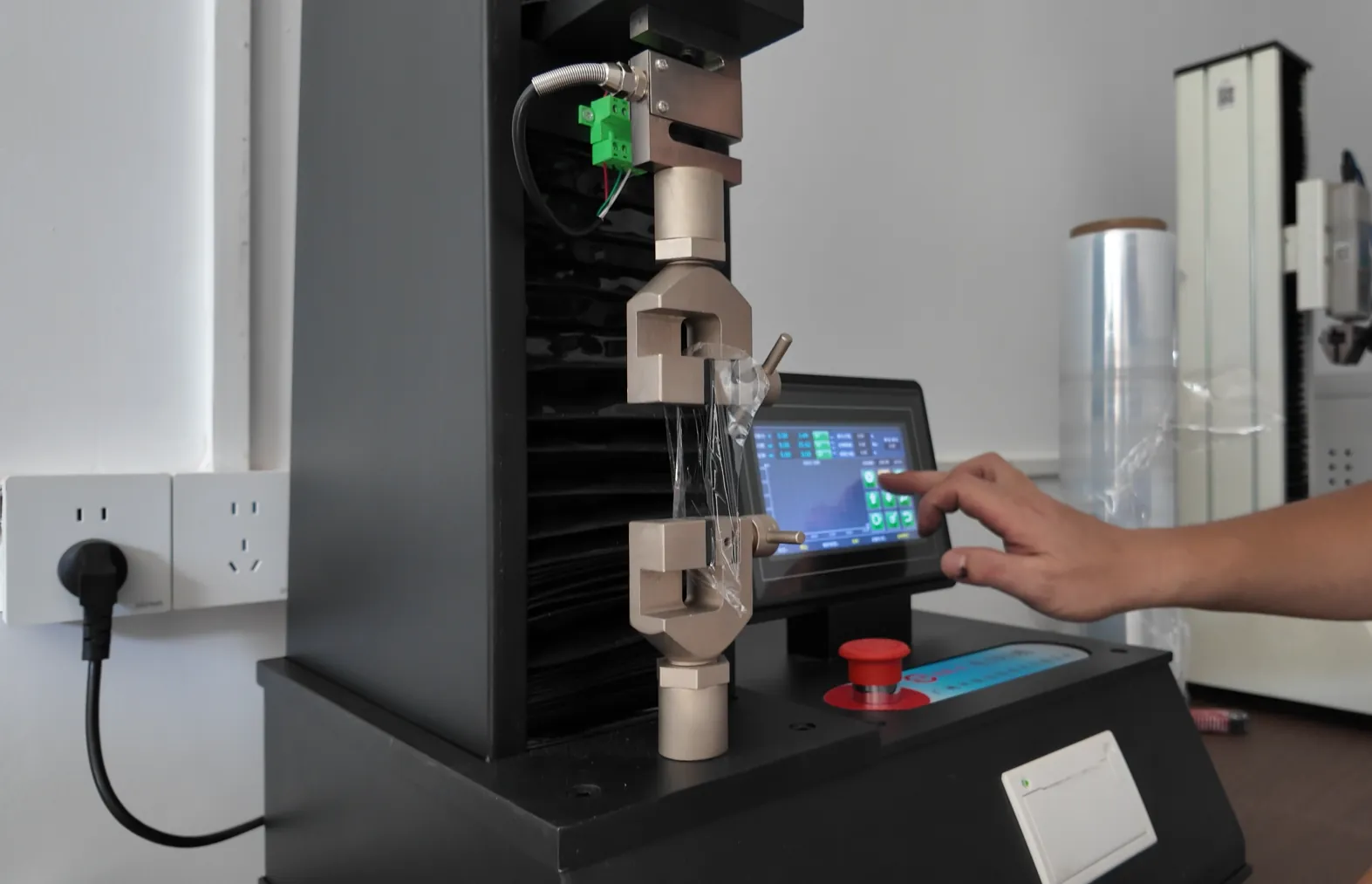
A lab test is a check on consistency, not a substitute for a trial on your own pallets. Load shape, wrapper settings and wrap pattern all affect the result, so we recommend testing a sample roll on your line before a bulk order.
How is net film weight checked?
Net film weight is the weight of the film alone, without the paper core. Tuosheng Packaging finds it by difference. Before production we weigh a sample of the batch’s cores. After winding, finished rolls are spot-checked on the scale and the core weight is subtracted. Roll weights in our quotes are always net film weight.
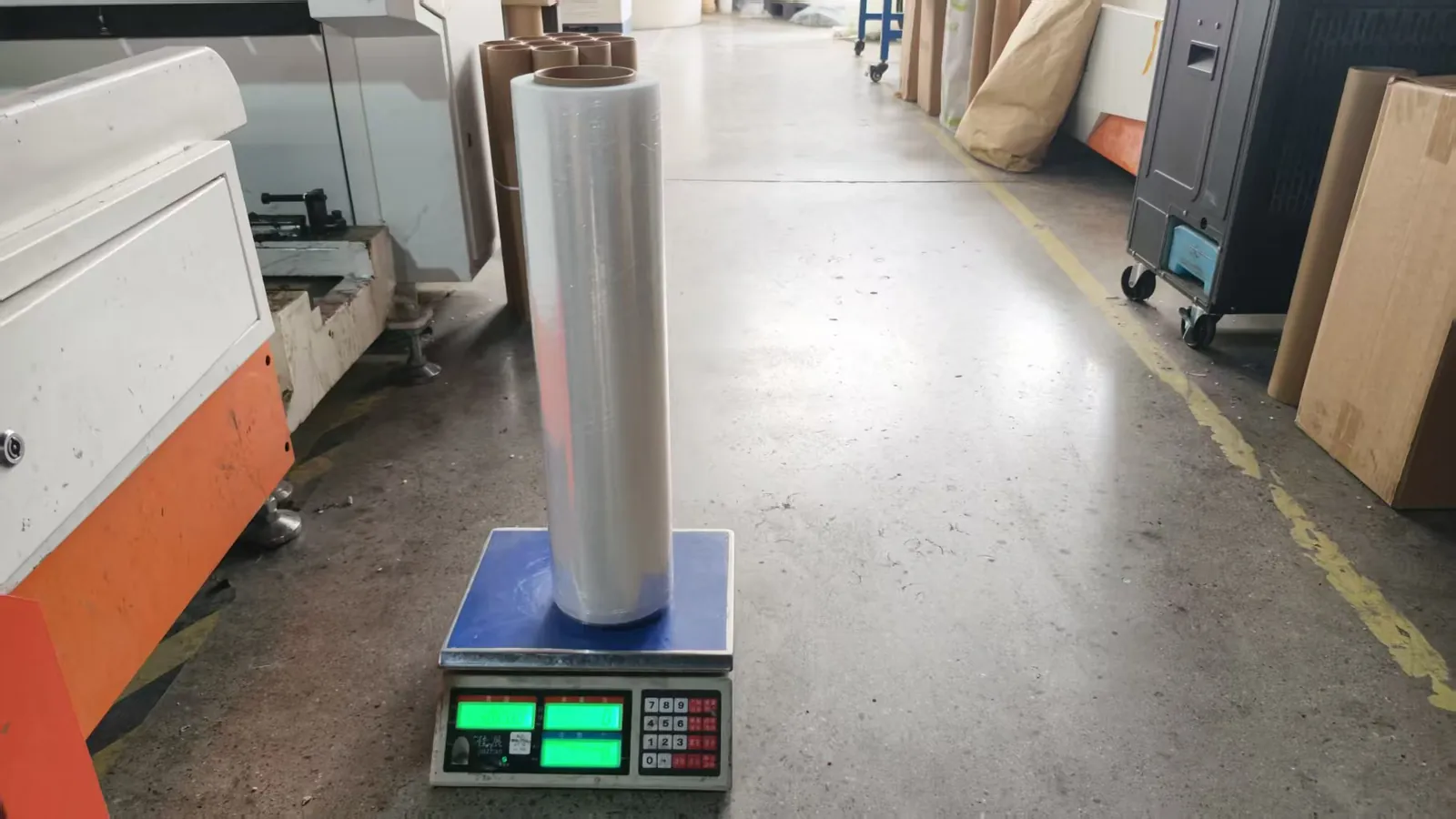
This matters when you compare suppliers. A heavier core adds weight that you pay for but cannot use. Always ask whether a quoted roll weight is net or gross.
How are stretch film rolls packed for export?
Tuosheng Packaging packs hand rolls 4 or 6 to a carton and machine rolls one to a carton, with 64 cartons per pallet. A 20 ft container holds 640 cartons. A 40 ft container holds 20 pallets of hand film or 1,440 cartons of machine film, and the two can be mixed.
Carton marks are printed to each customer’s requirements. We suggest including width, length, thickness and net weight so your warehouse can check deliveries without opening cartons.
Frequently asked questions
Is hand stretch film made the same way as machine film?
Yes. At Tuosheng Packaging both are cast film from the same five-layer process. The differences are the resin blend, since machine film adds mLLDPE for higher pre-stretch, and the specification set on the line: roll length, core weight, thickness and width. See our hand stretch film and machine stretch film pages for the standard ranges.
Can you make stretch film in a non-standard size?
Yes, other widths and lengths are quoted on request. Because the line has to be set up for the size, the minimum order for a custom size is usually a full container. The minimum order for standard sizes is 3 tonnes, and hand and machine film can be mixed.
Can I test a sample before ordering?
Yes. Samples are free. You usually pay the shipping cost up front, and it is deducted from your first bulk order. Send your current roll label or specification so we can match it. For what to check when you compare factories, see how to evaluate a stretch film manufacturer.