Plastic Bag Thickness: Mil, Micron and Which Thickness You Need
Plastic bag thickness is measured in mil in the US (1 mil = 0.001 inch = 25.4 µm) and in microns or millimetres almost everywhere else. Most packing jobs need a 2 mil (about 50 µm) bag; light items can go thinner, and heavy or sharp-edged goods need 3–4 mil or more.
This guide gives a mil to micron chart, the right thickness for six common uses, and what changes the choice. Tuosheng Packaging makes LDPE and HDPE poly bags from 0.01 mm to 0.2 mm in Suzhou, China. If you are new to bag types, start with our guide to what a poly bag is.
Quick answer
- Plastic bag thickness is given in mil (US), microns or millimetres; 1 mil equals 25.4 µm or about 0.025 mm.
- A 2 mil (about 50 µm) plastic bag suits most parts, textiles and general packing.
- Light items and inner bags can use 0.4–1 mil (10–25 µm) HDPE bags, while heavy or sharp-edged goods need 3–4 mil (75–100 µm) or more.
- Bag thickness is quoted for a single layer of film, so a 2 mil bag has two 2 mil walls.
- Bag weight rises in step with thickness: a 4 mil bag uses about twice the plastic of a 2 mil bag of the same size.
How Is Plastic Bag Thickness Measured?
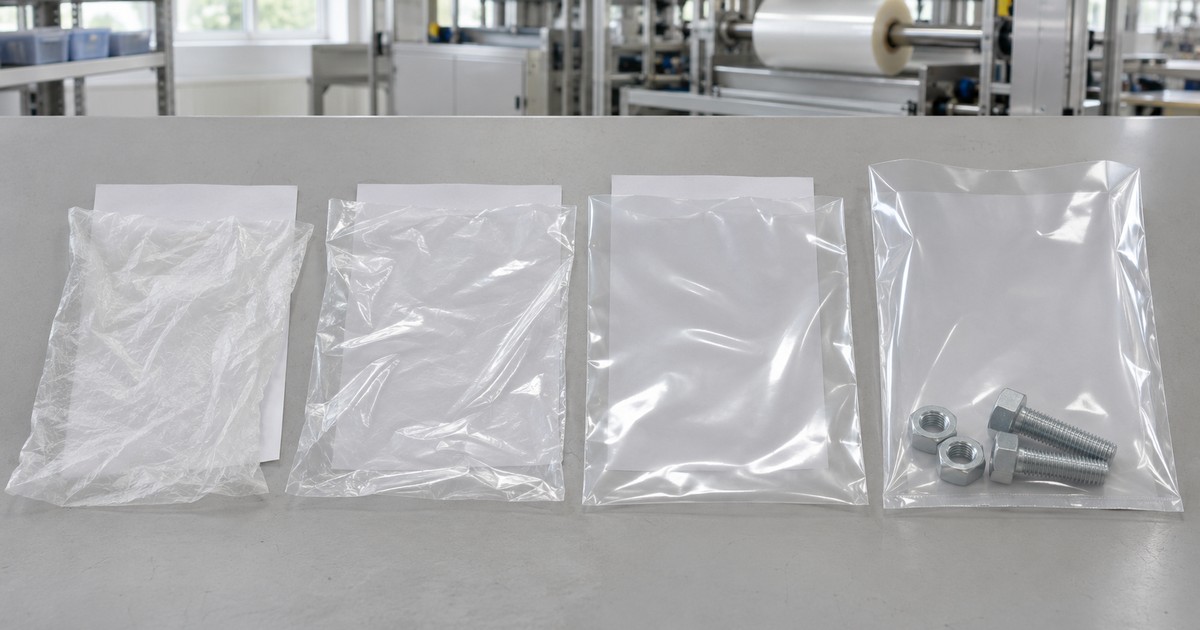
Plastic bag thickness is measured in mil, microns, millimetres or gauge, and all four describe the same thing: how thick one layer of the film is. US suppliers use mil and most other markets use microns or millimetres.
What is a mil?
A mil is one thousandth of an inch (0.001 in), equal to 25.4 microns.
What is a micron?
A micron (µm) is one thousandth of a millimetre, so 50 µm equals 0.05 mm.
What is gauge?
In the US bag trade, gauge is 100 times the thickness in mil, so a 2 mil bag is 200 gauge.
Mil to micron chart for plastic bags
| Mil | Microns (µm) | Millimetres (mm) | Gauge | What it means for you |
|---|---|---|---|---|
| 0.5 mil | 12.7 µm | 0.013 mm | 50 | Very thin; light HDPE inner bags only |
| 1 mil | 25.4 µm | 0.025 mm | 100 | Light items, dust protection |
| 1.5 mil | 38.1 µm | 0.038 mm | 150 | Light, clean goods; single-use dust covers |
| 2 mil | 50.8 µm | 0.051 mm | 200 | The usual starting point for general packing |
| 3 mil | 76.2 µm | 0.076 mm | 300 | Heavier parts, shipping |
| 4 mil | 101.6 µm | 0.102 mm | 400 | Hardware, sharp edges, reused covers |
| 6 mil | 152.4 µm | 0.152 mm | 600 | Heavy-duty bags and liners |
| 8 mil | 203.2 µm | 0.203 mm | 800 | Heaviest bags for abrasive or heavy goods |
To convert mil to microns, multiply by 25.4; to convert microns to mil, divide by 25.4. Stretch film uses gauge differently and is often rated by performance rather than true thickness, so don’t compare bag and stretch film numbers directly; our stretch film thickness guide explains that difference.
What Thickness Plastic Bag Do You Need?
The plastic bag thickness you need depends on the weight of the goods, their edges and how the bag travels. Start at 2 mil (about 50 µm) for general packing, go thinner for light items and go to 3–4 mil or more for heavy, sharp or abrasive goods.
| Use | Thickness | Material | What it means for you |
|---|---|---|---|
| Light items, inner bags, dust protection | 0.4–1 mil (10–25 µm) | HDPE | Lowest weight and cost per bag |
| Parts, components, textiles, general packing | 2 mil (about 50 µm) | LDPE or HDPE | The standard choice for most orders |
| Heavier parts, hardware, sharp edges | 3–4 mil (75–100 µm) | LDPE | Better puncture resistance where it matters |
| Carton liners | About 2 mil (50 µm); 1–1.5 mil for light, clean goods | LDPE or HDPE | Thin enough to fold into the carton |
| Gaylord liners and machinery covers | Up to 8 mil (200 µm) for heavy loads | LDPE | Carries heavy, bulky loads without splitting |
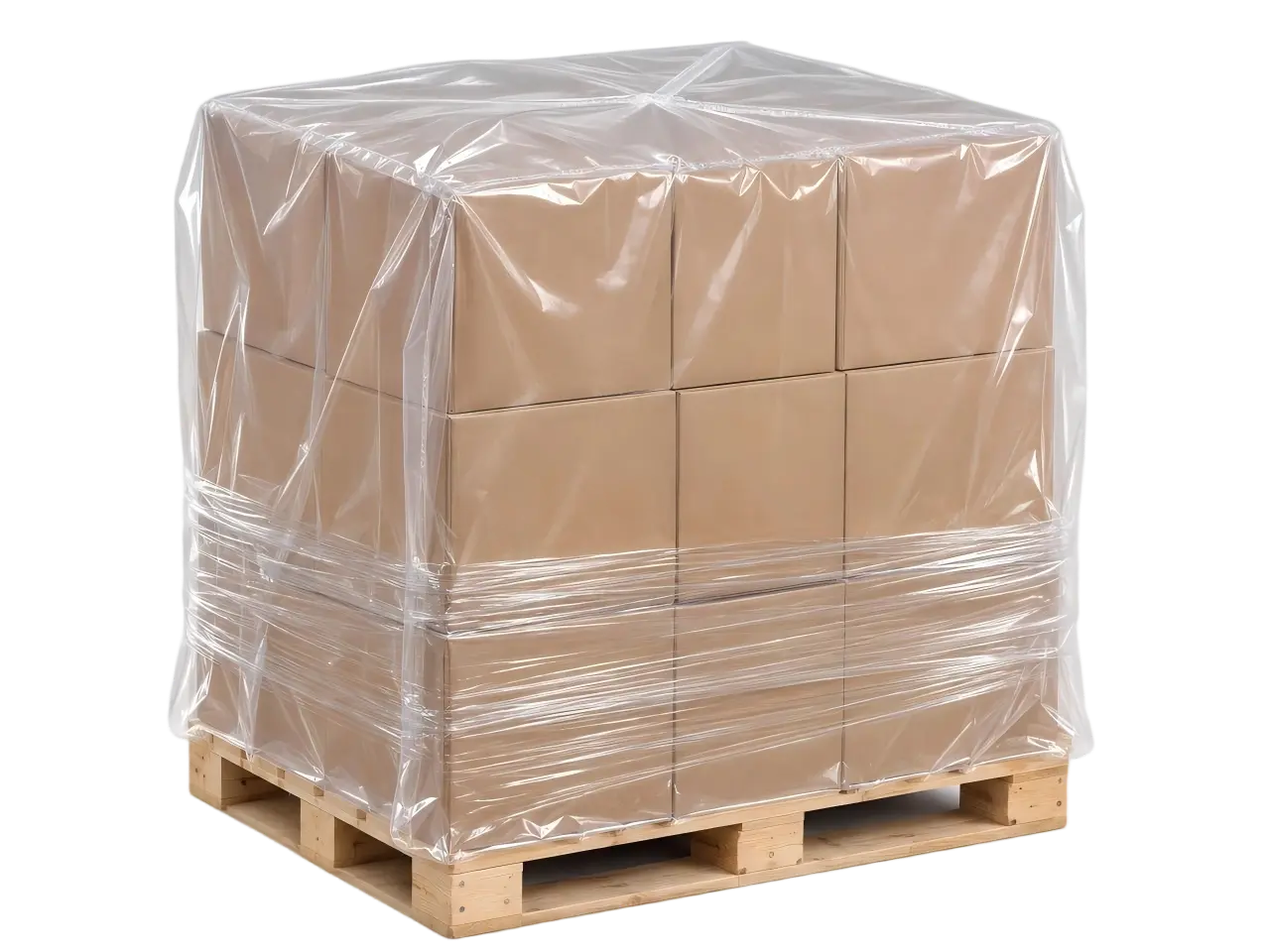
| Pallet covers | 1–1.5 mil for dust, 2–3 mil for shipping, 4 mil+ for reuse | LDPE or HDPE | Match the cover to how rough the trip is |
These are common market references, not fixed rules. The flat poly bags, gusseted poly bags and pallet covers pages list the same ranges by bag type.
2 mil vs 4 mil poly bags: a 4 mil bag is worth the extra plastic when the goods have corners or edges that poke through a 2 mil bag, when bags are reused, or when a full bag is dragged or stacked. For smooth, light goods, a 4 mil bag doubles the plastic without solving a real problem.
The safest way to choose is to test-pack samples with your own product before the bulk order, so a wrong thickness never reaches production.
Does LDPE or HDPE Change the Thickness You Need?
LDPE and HDPE bags need different thicknesses for the same job. HDPE bags are stiffer, so light items can go thinner in HDPE; LDPE bags resist punctures and tears better at the same thickness, so sharp-edged goods are better in LDPE.
Tuosheng makes HDPE bags down to 0.01 mm (10 µm), and HDPE suits light goods where a thin, stiff bag is enough. When you switch materials, retest with your product instead of keeping the same number. Our guide to what a poly bag is compares the two materials in more detail.
Is a Thicker Plastic Bag Always Stronger?
A thicker plastic bag is usually more puncture resistant, but thickness is not the only factor. The material, the blend and the seal matter too, and adding thickness also adds weight and cost to every bag.
- Material: at the same thickness, LDPE resists punctures better than HDPE, and blends with LLDPE are tougher still. Our LLDPE vs LDPE guide explains why LLDPE is the tougher resin.
- Edges: if one sharp corner keeps puncturing the bag, a corner protector or a gusseted bag that fits the shape can fix it more cheaply than doubling the thickness.
- Seals: a bag that splits along the bottom seam has a sealing problem, not a thickness problem. A thicker bag won’t fix it.
Is Plastic Bag Thickness Quoted per Layer or for Both Layers?
Plastic bag thickness is quoted for a single layer of film. A 2 mil bag is made from 2 mil film, so each of its two walls is 2 mil, and the two walls together measure about 4 mil.
Tuosheng quotes thickness per layer, the same way US suppliers quote mil. If a quote doesn’t say, ask whether the figure is for one layer or both, and write the unit next to every number.
How Does Thickness Change Bag Weight and Cost?
Bag weight rises in step with thickness: double the thickness and a bag of the same size uses twice the plastic. A thicker bag therefore costs more per piece, and if bags are priced by weight, doubling the thickness halves the number of bags you get per kilogram.
You can estimate the weight of a flat bag with one line:
Bag weight (g) = width (cm) × length (cm) × 2 × thickness (cm) × density (g/cm³)
LDPE has a density of about 0.92 g/cm³ and HDPE about 0.95 g/cm³. Thickness in centimetres is the micron figure divided by 10,000, so 50 µm is 0.005 cm.
| Bag (30 × 40 cm, flat) | Thickness | Weight per bag | Bags per kg |
|---|---|---|---|
| HDPE | 25 µm (about 1 mil) | About 5.7 g | About 175 |
| LDPE | 50 µm (about 2 mil) | About 11 g | About 90 |
| LDPE | 100 µm (about 4 mil) | About 22 g | About 45 |
These are estimates; gussets, seals and printing change the real weight a little. The point is the ratio. Tuosheng quotes bags per piece, and going from 2 mil to 4 mil doubles the plastic in every piece, so a “just to be safe” upgrade has a real cost. Test-pack first, then pick the thinnest bag that passes. The same idea applies to stretch film; see how to calculate stretch film usage and cost per pallet.
How Do You Check Bag Thickness When Samples Arrive?
Check plastic bag thickness with a micrometer or film thickness gauge on a single layer, at several points across the bag, and average the readings. Then weigh ten bags and use the weight formula above to cross-check the average thickness.
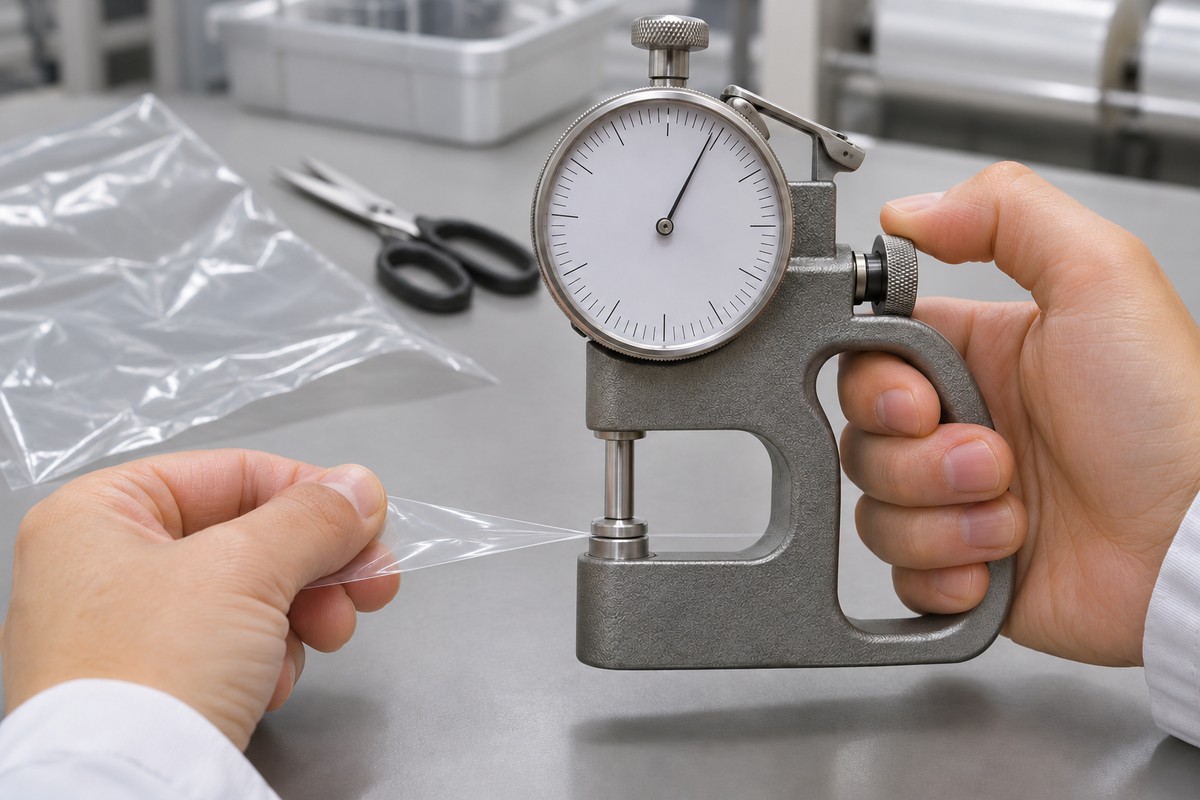
- Cut the bag open and measure one wall only, away from seals and folds.
- Take at least five readings across the width and length.
- Compare the results with the sample you approved, not with a number in a catalogue.
Tuosheng checks bag thickness with a thickness gauge, and bulk bags are made to the sample you approve, so keep one approved sample to check the first shipment against.
Plastic Bag Thickness FAQ
How thick is 2 mil plastic?
2 mil plastic is 0.002 inch thick, which is 50.8 µm or about 0.05 mm. A 2 mil bag is the usual starting point for general packing.
How many microns is 1 mil?
1 mil equals 25.4 microns. To convert mil to microns, multiply by 25.4.
Is a 4 mil plastic bag heavy duty?
A 4 mil (about 100 µm) plastic bag is a heavy-duty bag for hardware, sharp-edged parts and reused covers. Bags of 6–8 mil are used for the heaviest or most abrasive loads.
What does 50 micron mean on a plastic bag?
A 50 micron plastic bag is made from film 50 µm (0.05 mm) thick per layer, about 2 mil.
What is the thinnest plastic bag Tuosheng can make?
Tuosheng makes HDPE bags down to 0.01 mm (10 µm), for light items and inner bags. LDPE bags are usually made thicker for the same job.
Get the Right Bag Thickness
Tuosheng Packaging manufactures LDPE and HDPE poly bags in Suzhou, China, from 0.01 mm to 0.2 mm (about 0.4 to 8 mil), with 0.05 mm (about 2 mil) as standard. Bags are made to your size and thickness, quoted per layer, and can ship in the same container as stretch film; see importing stretch film from China for mixed loads.
Send us the product, its weight and a photo, or the bag you use now, through the poly bags page. We will suggest a thickness and send samples to test.
Recommended Tuosheng Packaging Solution
Tuosheng Packaging manufactures poly bags, pallet covers and poly tubing in Suzhou, China, made to your size, thickness and printing, and shipped with stretch film in one container if you need both.