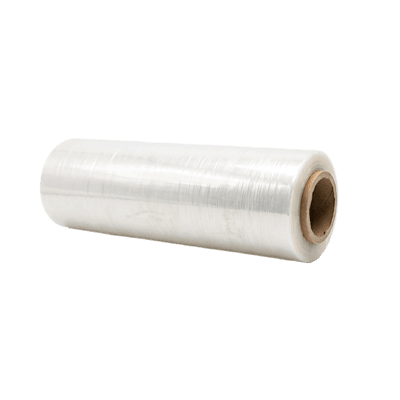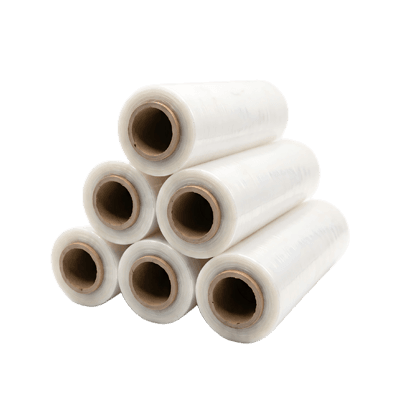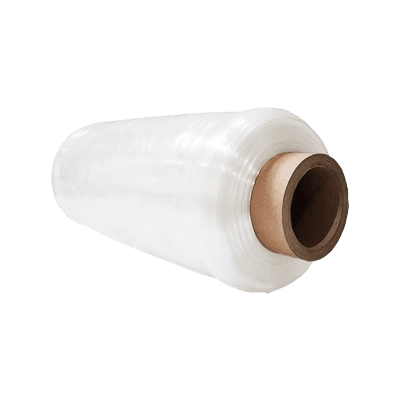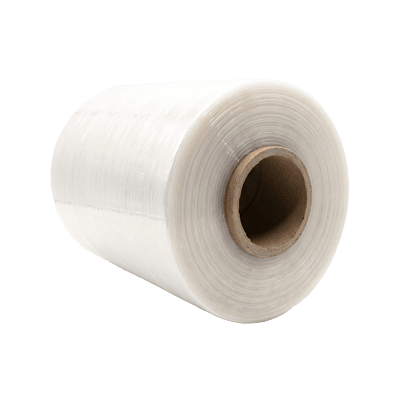
Stretch Film HS Code: 3920.10 for LLDPE Pallet Wrap
Standard LLDPE stretch film uses HS code 3920.10. This heading covers non-cellular polyethylene film that is not reinforced, laminated, supported or combined with other materials.
Hand stretch film, machine stretch film and pre-stretched film use the same six-digit code when their material and construction are the same. Width, roll length, thickness, core size and wrapping method do not change the six-digit classification.
The first six digits are used internationally. Customs authorities then add national digits for duty assessment and trade statistics, so the complete code varies by importing country.
| Product | Six-digit HS code | Classification basis |
|---|---|---|
| Standard LLDPE or LDPE stretch film | 3920.10 | Non-cellular polyethylene film |
| Non-cellular polypropylene film | 3920.20 | Film made from polymers of propylene |
| PVC film | 3920.43 or 3920.49 | Depends on plasticizer content |
| Foamed, reinforced or backed film | Not automatically 3920.10 | The construction changes the classification |
Why polyethylene stretch film uses 3920.10
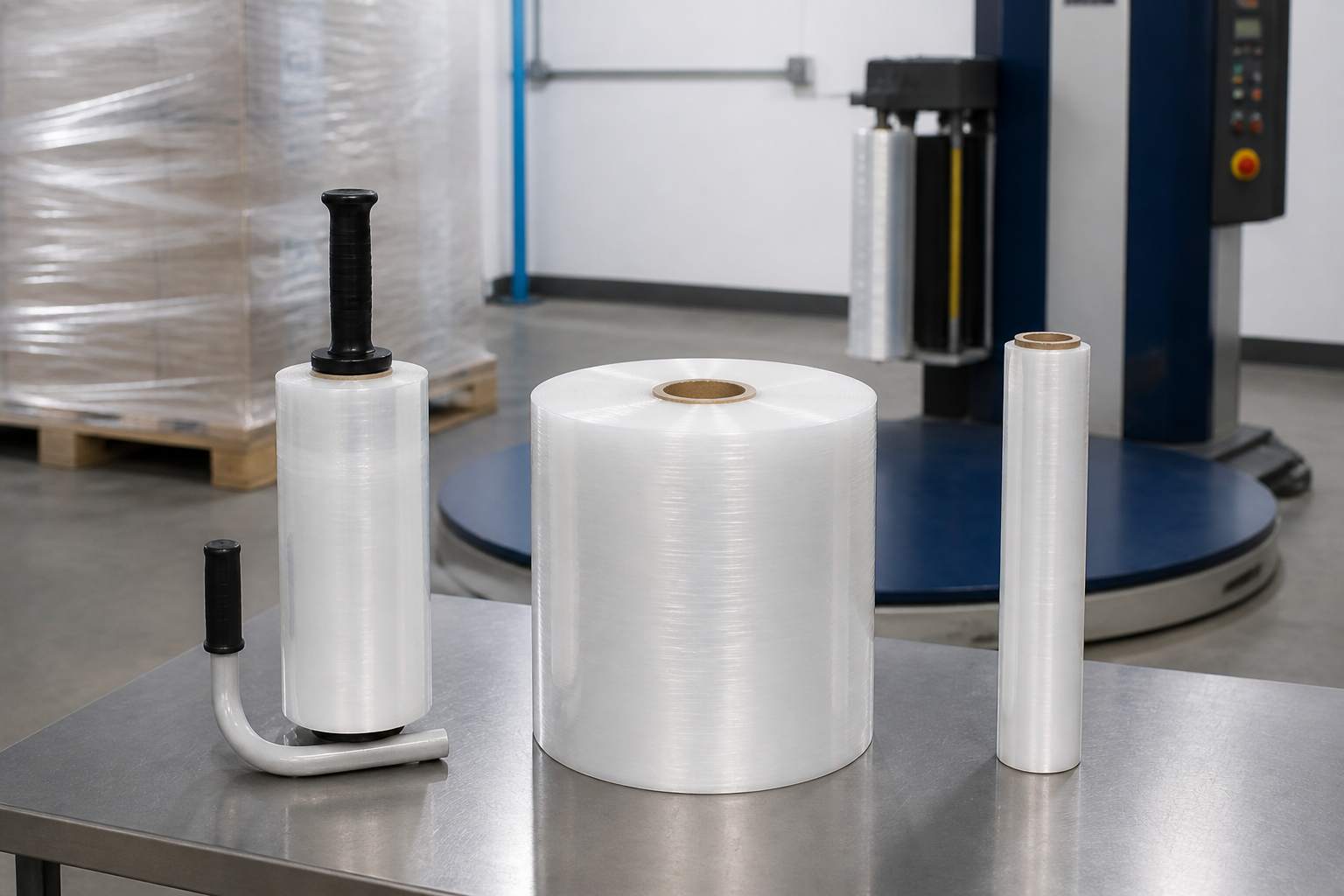
The World Customs Organization’s Chapter 39 places non-cellular plastic film in heading 3920 when it is not reinforced, laminated, supported or similarly combined with other materials. Film made from polymers of ethylene falls under subheading 3920.10.
Standard pallet stretch film fits this description when it is made from LLDPE or LDPE and supplied as unsupported, non-cellular film in rolls. The cardboard core holds the film but does not create a separate classification. For how the two resins differ in the film itself, see LLDPE vs LDPE.
Tuosheng’s product specifications identify LLDPE-based materials for its hand, machine and pre-stretched films. Machine and pre-stretched grades may use LLDPE and mLLDPE formulations. Both materials are polymers of ethylene, so the six-digit heading remains 3920.10 when the finished film meets the structural requirements of heading 3920.
The same principle applies to jumbo stretch film supplied for converting and rewinding. A larger roll does not receive a different six-digit code simply because its width, length or net weight is different.
When 3920.10 does not apply
The name “stretch film” does not determine the HS code on its own. The code changes when the material or construction changes.
Non-cellular polypropylene film falls under 3920.20. PVC film uses a PVC subheading, generally 3920.43 or 3920.49 depending on plasticizer content. Foamed film, bubble material and film supported by paper, fabric, fiberglass or metal require a separate classification.
A mixed-polymer or co-extruded film needs a layer-by-layer material statement. The document should identify each polymer and its percentage by weight. An all-plastic multilayer film should not be classified from a “dominant resin” assumption without reviewing its full construction.
For a standard LLDPE pallet wrap with no non-plastic backing or reinforcement, 3920.10 is the correct international six-digit heading.
Do hand and machine stretch film use the same HS code?
Yes. Hand stretch film, machine stretch film and factory pre-stretched film use HS code 3920.10 when they are made from the same type of non-cellular polyethylene film.
A 500 mm hand roll and a 750 mm machine roll still share the same six-digit code. Roll width, film thickness, length, paper-core size and pre-stretch ratio describe the product specification; they do not change the polymer heading.
Pre-stretching also does not create a new HS code. It changes how the film is prepared and applied, not the polymer from which the film is made.
The code differs only when one product uses another polymer or has a different structure, such as foam, reinforcement or a non-plastic backing.
Does printing or color change the code?
Printing does not change the six-digit heading when the film still meets the requirements of 3920.10. It can change the national subcode.
The EU and UK tariff line 3920 10 24 is specifically for unprinted stretch film. Australia also uses different statistical codes for printed and unprinted polyethylene film. The product specification and invoice should therefore state whether the film is printed or unprinted, even when the printing is limited to a logo, barcode or handling instruction.
Color alone does not change the six-digit heading. Tuosheng’s colored stretch film is made from LLDPE with color additives. It remains under 3920.10 when the finished film continues to meet the material and structural requirements of the heading.
Recycled polyethylene content also does not create a separate six-digit code by itself. The material statement should disclose any other polymers, fillers, coatings, backing or reinforcement introduced with the recycled feedstock.
Stretch film HS codes by country
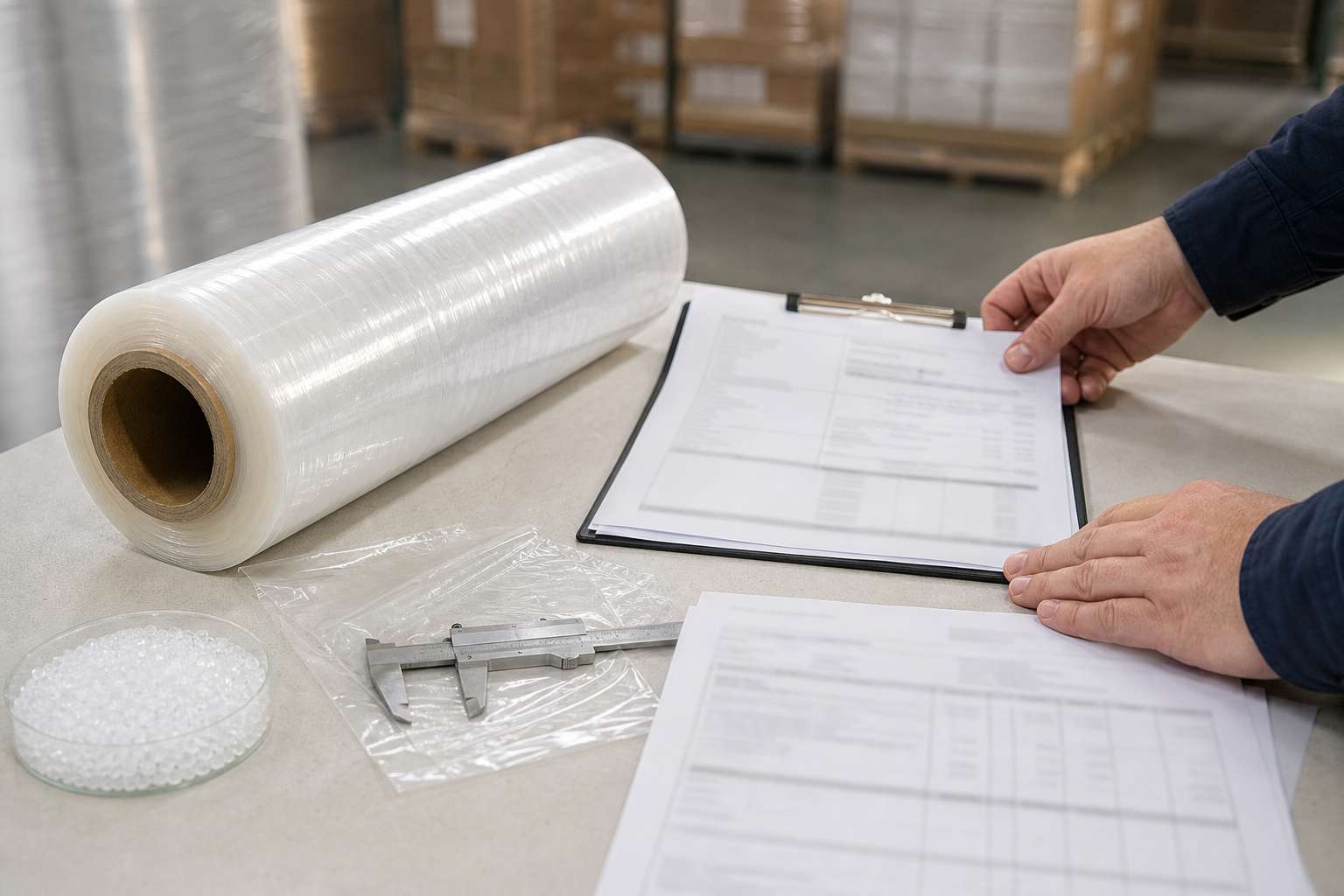
The international code for standard polyethylene stretch film is 3920.10. Each importing market adds national digits.
| Market | Tariff code | Product covered |
|---|---|---|
| International HS | 3920.10 | Non-cellular polyethylene film covered by heading 3920 |
| United States | 3920.10.0000 | Polyethylene film covered by the US tariff line |
| European Union | 3920 10 24 | Unprinted stretch film, thickness not exceeding 0.125 mm and polyethylene specific gravity below 0.94 |
| United Kingdom | 3920 10 24 | Unprinted stretch film meeting the stated thickness and density conditions |
| Australia | 3920.10.00 | Film made from polymers of ethylene |
United States
The US tariff code for polyethylene film under this heading is 3920.10.0000. The US Harmonized Tariff Schedule lists the product by weight in kilograms.
The tariff line identifies the product. The amount paid at import also depends on country of origin, preference eligibility and any additional trade measure in force on the entry date.
Buyers sourcing from China should calculate landed cost separately from the HS classification. Tuosheng’s guide to importing stretch film from China covers order specifications, shipping, documentation and pre-shipment checks.
European Union
The EU uses CN code 3920 10 24 for stretch film that meets all three of these conditions:
- The film is not printed.
- Its thickness does not exceed 0.125 mm.
- The polyethylene has a specific gravity below 0.94.
Film that does not meet these conditions must be placed under the CN line matching its actual thickness, density and print status. Do not force every polyethylene film into 3920 10 24 simply because it is sold as stretch film.
The EU uses eight-digit Combined Nomenclature codes and adds TARIC measures for customs entry. The European Commission’s tariff classification guidance explains the relationship between HS, CN and TARIC codes.
United Kingdom
The UK tariff also includes 3920 10 24 for unprinted stretch film meeting the stated thickness and density conditions. Importers should use the UK Integrated Online Tariff to check the complete commodity code and measures applied to the shipment.
The UK and EU use similar code structures for this product, but the customs entry must use the code and measures shown in the destination market’s tariff system.
Australia
Australia uses 3920.10.00 for film made from polymers of ethylene. The Australian Border Force Chapter 39 tariff then assigns a statistical code according to thickness, density and print status.
| Australian film specification | Statistical code |
|---|---|
| Thickness not exceeding 0.08 mm, printed, embossed or surface-worked | 22 |
| Thickness not exceeding 0.08 mm, other low-density polyethylene film | 20 |
| Thickness not exceeding 0.08 mm, other | 21 |
| Thickness above 0.08 mm, printed | 25 |
| Thickness above 0.08 mm, other low-density polyethylene film | 40 |
| Thickness above 0.08 mm, other | 41 |
A standard unprinted LLDPE stretch film with a thickness of 0.08 mm or less falls under 3920.10.00 with statistical code 20 when it meets the Australian description for other low-density polyethylene film.
The six-digit heading may appear as 3920.10 on supplier documents. The complete national code used for customs entry should match the destination tariff and the actual product specification.
How to describe stretch film on a commercial invoice
Descriptions such as “plastic film” and “stretch wrap” leave out the details needed to check the tariff line. The invoice should identify the polymer, film structure and measurable specifications.
Use this fill-in format:
LLDPE stretch film for pallet wrapping; non-cellular; unreinforced; unprinted; all-plastic co-extruded construction; thickness ___ mm; specific gravity ___; roll width ___ mm; roll length ___ m; net film weight ___ kg per roll; cardboard core; country of origin: China; HS code 3920.10.
Replace the blank fields with the values from the product specification. If the film is printed, single-layer, colored or made with recycled material, change the description to match the supplied product.
Do not copy sample dimensions, density or roll weight from another shipment. A customs description should match the purchase order, product data sheet, invoice and packing list.
The invoice description should cover the following information:
- Product name and intended use
- Polymer type
- Non-cellular structure
- Reinforced or unreinforced status
- Printed or unprinted status
- Single-layer or co-extruded construction
- Thickness and specific gravity
- Roll width and length
- Net film weight without the paper core
- Country of origin
For EU and UK entries under 3920 10 24, keep a specification or test report showing thickness, specific gravity and print status. The document should identify the product or production batch it covers.
What to request from the supplier before shipment
Ask the stretch film supplier for the following information before the final documents are issued:
- Polymer name and full material composition
- Recycled-material content, where applicable
- Layer structure and print status
- Confirmation that the film is non-cellular and unreinforced
- Details of any coating, backing or non-plastic material
- Thickness, width, roll length and specific gravity
- Net film weight stated separately from paper-core weight
- Country of origin
- Product data sheet and relevant batch documents
- Matching descriptions across the invoice, packing list, bill of lading and certificate of origin
Net film weight deserves particular attention. A roll’s gross weight includes the film and paper core. Using gross roll weight as the amount of film can distort purchasing comparisons and create inconsistencies between the quotation and shipping documents.
For broader supplier checks, use the stretch film manufacturer evaluation checklist before approving a factory or placing a bulk order.
Send the product specification and draft invoice description to the importer’s customs broker before the supplier issues the final documents. Any correction can then be made before the container is shipped.
Common stretch film classification mistakes
Using the wrapping machine code for the film
A pallet wrapping machine and a roll of stretch film are separate products. The machine is classified as machinery, while standard polyethylene stretch film uses heading 3920.10.
Classifying the product from its use
Pallet wrapping, furniture protection and package bundling describe how the film is used. They do not change the polymer heading. A standard LLDPE film remains under 3920.10 across these applications.
Copying another country’s complete code
The first six digits may be the same, but the national digits are not interchangeable. A US ten-digit code should not be copied onto an EU, UK or Australian customs entry.
Leaving out thickness or density
Thickness and density are part of the EU and UK subcode structure. Missing values make it harder to confirm whether the film belongs under 3920 10 24.
Treating every printed film as unprinted stretch film
Printing may leave the six-digit heading unchanged, but it can move the product to another national subcode. State the print status on the product specification and invoice.
Using gross roll weight as net film weight
The paper core is included in gross roll weight. State the net film weight separately so that the quotation, packing list and shipment records describe the same quantity of film.
Tuosheng Packaging can prepare the quotation and corresponding product specification for the shipping documents. The importer or customs broker assigns the final national tariff code used for customs entry.
Frequently Asked Questions
What is the HS code for stretch film?
The internationally harmonized code for standard polyethylene stretch film is 3920.10. This six-digit code applies globally for non-cellular, unreinforced PE film. Each country adds extended digits. The U.S. uses 3920.10.0000, and the EU uses 3920 10 24 for film meeting specific thickness and density criteria. Confirm the full national code with your customs broker before importing.
What is the HS code for LLDPE stretch film rolls?
LLDPE stretch film rolls use HS code 3920.10 at the international level. The paper core, roll width and roll length do not change the six-digit heading.
What is the HSN code for stretch film?
The six-digit HSN heading for standard polyethylene stretch film is 3920.10. Countries that use an eight-digit HSN or tariff system add national digits to this heading.
Is stretch film classified differently from shrink film?
If both are non-cellular polyethylene without reinforcement, they share HS code 3920.10. The heat-shrink vs. cold-stretch application method isn’t a classification factor. If the shrink film is made from PVC or another non-PE polymer, the code changes because the material changed.
Do hand and machine stretch film have the same HS code?
Yes. Hand stretch film, machine stretch film and pre-stretched film use 3920.10 when their polymer and film construction are the same.
Is pallet wrap classified as stretch film?
Yes. Pallet wrap is a common name for stretch film. Standard non-cellular polyethylene pallet wrap uses HS code 3920.10.
Does printed stretch film use the same HS code?
Printed polyethylene stretch film remains under the six-digit heading 3920.10 when its material and construction meet the heading requirements. Printing can change the national subcode, so the invoice must state whether the film is printed or unprinted.
Does colored stretch film need a different HS code?
No. Color does not change the six-digit heading when the film remains a qualifying polyethylene product. Other polymers, coatings, backing and reinforcement must still be disclosed.
Does recycled stretch film need a different HS code?
Recycled polyethylene film remains under 3920.10 when its composition and structure meet the heading requirements. Request a material breakdown if the recycled feedstock contains other polymers or fillers.
Is stretch film classified differently from shrink film?
The application method does not determine the heading. Non-cellular polyethylene stretch film and non-cellular polyethylene shrink film can both fall under 3920.10. A PVC or non-PE shrink film uses a different polymer subheading.
Recommended Tuosheng Packaging Solution
Tuosheng Packaging manufactures hand stretch film and machine stretch film in Suzhou, China, with customizable thickness, width, roll length and export packing.