Table of Contents
- What Does GRS Certification Mean for Recycled Stretch Film?
- How Should Buyers Verify Scope Certificates and Transaction Certificates?
- How Does Recycled Stretch Film Perform in Pallet Wrapping?
- Hand and Machine Recycled Stretch Film: Which Specifications Matter?
- How Should Procurement Teams Select a GRS Recycled Stretch Film Supplier?
- Final Buyer Checklist and Next Step
For B2B packaging buyers, switching from virgin stretch film to recycled material is not simply an environmental decision. The more important procurement question is whether the film provides verifiable recycled content, reliable pallet containment, suitable equipment compatibility, and consistent documentation across repeated orders.
That is why GRS certified recycled stretch film has become relevant to procurement managers, supply chain teams, and warehouse operators evaluating more sustainable pallet wrapping materials.
The Global Recycled Standard (GRS) provides a third-party framework for verifying recycled content while also covering environmental management, social responsibility, chemical restrictions, and chain-of-custody controls. However, certification alone does not prove that a particular stretch film will perform correctly on a specific pallet load or wrapping machine.
Buyers still need to evaluate recycled content percentage, gauge thickness, tensile and tear behavior, load containment, clarity, pre-stretch performance, and roll specifications. They also need to understand the difference between a supplier’s Scope Certificate (SC) and a shipment-specific Transaction Certificate (TC).
This buyer’s guide explains how to evaluate recycled PE stretch film from both a compliance and operational perspective, with a focus on the questions that matter before approving a supplier or placing an order.
What Does GRS Certification Mean for Recycled Stretch Film?

GRS is designed to provide traceability and third-party verification for products containing recycled material. For polyethylene stretch film, the research basis used for this guide identifies a minimum recycled content threshold of 20% for GRS product certification.
A different threshold applies to official GRS product labeling. The research also identifies a 50% minimum recycled content requirement for using the official GRS logo on product packaging.
This distinction is important during supplier evaluation. A recycled stretch film containing 20% or 30% recycled material may fall within the GRS certification framework while still not qualifying for the official GRS product logo. Buyers should therefore avoid using the presence or absence of a logo as the only verification step.
GRS Covers More Than Recycled Content
A recycled-content claim answers only one part of the sustainability question. GRS certification is broader because it covers four core areas:
- recycled material identification and traceability;
- environmental management;
- social responsibility and fair labor requirements;
- restrictions on chemicals within certified production workflows.
For procurement teams, this makes GRS more useful than an unsupported statement such as “made with recycled plastic.”
At the same time, buyers should keep the scope of certification in perspective. A supplier’s GRS status does not automatically mean that every product, production line, or shipment supplied by that company is certified. The proposed product still needs to fall within the relevant certification scope, and the specific commercial transaction needs appropriate documentation.
PCR and PIR Are Material Sources, Not Performance Guarantees
Recycled stretch film may include post-consumer recycled (PCR) or post-industrial recycled (PIR) polyethylene.
PCR resin comes from plastic that has already completed a consumer or commercial use cycle and has subsequently been collected and reprocessed. PIR generally comes from industrial scrap or production waste reclaimed before reaching an end user.
For a buyer, the key issue is not the chemistry of the recycling process. It is whether the proposed film has a documented recycled content percentage, traceable material origin, appropriate certification, and suitable technical performance for the intended pallet-wrapping application.
Commercial post consumer recycled stretch film is available with different recycled-resin ratios. The research used for this guide identifies commercial examples containing approximately 20–30% PCR. These figures are useful reference points, but they should not be treated as universal specifications for every recycled stretch film on the market.
How Should Buyers Verify Scope Certificates and Transaction Certificates?

For procurement teams responsible for sustainable pallet wrap compliance, one of the most important tasks is separating general supplier certification from shipment-specific evidence.
A supplier may state that it is GRS certified, but buyers should still verify whether the relevant stretch film is within scope and whether the order can be supported by the required chain-of-custody documentation.
Two documents are central to this process: the Scope Certificate and the Transaction Certificate.
| Document | What it verifies | What it does not prove |
|---|---|---|
| Scope Certificate (SC) | That a facility or organization is certified for defined products, processes, and activities within its approved scope | That every shipment from the supplier automatically contains certified recycled material |
| Transaction Certificate (TC) | That a specific certified transaction or shipment is connected to the applicable certified material and chain-of-custody records | That unrelated products or shipments from the same supplier are certified |
Check the Scope Certificate Before Supplier Approval
The SC should be treated as the first verification gate.
Before approving a supplier of GRS certification stretch wrap, procurement teams should confirm that the certificate is current and that the proposed stretch film falls within the applicable product and processing scope.
Useful checks include:
- supplier or facility identity;
- certificate validity;
- certification body;
- relevant product categories;
- processes or activities within scope;
- whether the recycled stretch film being quoted is included.
A valid Scope Certificate establishes that the organization operates within an approved certification scope. It does not, by itself, prove that a particular shipment delivered against a purchase order contains certified recycled material.
This is a common point of confusion in B2B sourcing and one of the areas where unsupported sustainability claims can arise.
Request Transaction Documentation for the Relevant Order
The Transaction Certificate provides order- or shipment-level chain-of-custody evidence.
For buyers sourcing GRS-certified recycled stretch film, the practical verification sequence should therefore be:
- obtain the supplier’s current Scope Certificate;
- confirm that the relevant stretch film falls within its certified scope;
- specify the required recycled content percentage in the purchasing documents;
- confirm before ordering whether a Transaction Certificate is required and available for the transaction;
- match the final TC against the relevant supplier, product, quantity, and commercial documentation;
- retain both SC and TC records for procurement and sustainability reporting.
Buyers should not assume that transaction documentation can always be arranged retroactively long after shipment. Documentation expectations should be discussed during the contracting and ordering process.
If a supplier can provide a Scope Certificate but cannot explain how Transaction Certificates are handled for applicable orders, the recycled-content claim requires additional verification before it is accepted.
How Does Recycled Stretch Film Perform in Pallet Wrapping?
Certification verifies traceability. It does not automatically verify pallet-wrapping performance.
Stretch film is a functional load-containment material. Whether it contains virgin linear low-density polyethylene (LLDPE), PCR, PIR, or a combination of recycled and virgin resin, the selected grade still needs to perform under the buyer’s actual wrapping conditions.
Important criteria include:
- load containment;
- tensile behavior;
- tear and puncture resistance;
- film consistency;
- gauge thickness;
- clarity;
- pre-stretch behavior;
- breakage during application.
Evaluate the Actual Load, Not Recycled Content Alone
Adding recycled material can affect film characteristics depending on resin quality, recycled percentage, film structure, gauge, and manufacturing control. Buyers therefore should not assume that all recycled films perform identically to high-grade virgin LLDPE across every heavy-load or high-stretch application.
The correct comparison is application-specific.
A meaningful trial should consider:
- pallet dimensions and weight;
- load shape and regularity;
- sharp edges or puncture risks;
- required containment force;
- wrap count;
- top and bottom wraps;
- film tension;
- pre-stretch ratio;
- transport and storage conditions;
- breakage and rewrap frequency.
The key procurement question is not simply, “Does this film contain 30% PCR?”
A better question is:
Can this recycled-content film maintain the required load containment under our actual wrapping conditions?
Suppliers should therefore recommend recycled film grades based on the intended load and application rather than recycled content percentage alone.
Check Clarity and Barcode Readability
PCR content may also change the visual appearance of stretch film.
The commercial evidence used in the research for this guide indicates that incorporating up to approximately 30% PCR can slightly increase film opacity compared with virgin material while still maintaining sufficient transparency for optical barcode scanning in the referenced products.
That finding should not be treated as a universal guarantee for every PCR formulation.
Warehouses that scan labels through wrapped film should include barcode readability in the approval trial. The test should use representative labels, the normal number of film layers, the existing scanner hardware, and the actual wrap pattern used in the warehouse.
This turns “good clarity” from a marketing description into a measurable operational requirement.
Hand and Machine Recycled Stretch Film: Which Specifications Matter?
Recycled stretch film must match the wrapping method as well as the pallet load.
Hand wrapping and automated machine wrapping use different roll formats and operating conditions. A film that performs well as a manual roll should not automatically be assumed to behave the same way on a powered pre-stretch carriage.
The research used for this guide provides the following commercial reference specifications:
| Application | Example gauge | Width | Roll length | Primary use |
|---|---|---|---|---|
| Hand recycled stretch film | 15 μm | 50 cm | 300 m | Manual pallet wrapping |
| Machine recycled stretch film | 17–35 μm | 50 cm | 1,000–2,500 m | Automated or machine wrapping |
These are reference examples rather than universal standards. Final specifications should be confirmed against the supplier’s technical data sheet and the intended wrapping equipment.
Hand Rolls: Focus on Manual Handling and Containment
A 15-micron hand roll can be suitable for manual pallet wrapping where operators require lightweight rolls and shorter roll lengths.
When evaluating recycled hand stretch film, buyers should focus on:
- ease of unwinding;
- cling;
- tear behavior around pallet corners;
- operator ability to create repeatable tension;
- film usage per pallet;
- resulting load containment.
The trial should compare the recycled grade with the existing film under equivalent load and wrapping conditions.
If the recycled film requires additional wraps, breaks more frequently, or creates inconsistent containment, the nominal recycled-content percentage alone does not justify the change.
Machine Rolls: Verify Wrapper and Pre-Stretch Compatibility
Machine film requires a more controlled compatibility check because the film interacts directly with powered wrapping equipment.
The commercial reference range in the research includes machine films of approximately 17–35 microns, 50 cm width, and roll lengths of approximately 1,000–2,500 metres.
Automated wrapping equipment can apply higher and more repeatable pre-stretch than manual wrapping, but this does not mean every PCR film can replace a virgin machine film without validation.
Before approving a recycled machine film, verify:
- gauge and thickness tolerance;
- roll width and dimensions;
- core and roll-weight compatibility;
- tensile and puncture behavior;
- target pre-stretch ratio;
- carriage and tension settings;
- film breakage;
- containment after wrapping.
The research does not support one universal maximum pre-stretch percentage for recycled stretch film across all high-speed wrappers. That value depends on the film grade and the equipment.
A controlled machine trial is therefore more reliable than relying on a generic stretch percentage from a brochure.
How Should Procurement Teams Select a GRS Recycled Stretch Film Supplier?
A strong supplier evaluation combines documentary verification with technical validation.
A vendor may have legitimate GRS credentials but offer a film that is not well matched to the buyer’s wrapper or pallet profile. Conversely, a film may perform well mechanically while lacking the certification documents required for a sustainability program.
Both parts of the evaluation need to pass.
Use a Practical Supplier Qualification Checklist
Before approving a supplier, request enough information to evaluate certification, film performance, and quality consistency.
Certification and traceability
- current Scope Certificate;
- certified product scope;
- recycled content percentage;
- confirmation of Transaction Certificate procedures for applicable orders.
Film specification
- PCR and/or PIR content;
- gauge and thickness tolerance;
- width and roll length;
- tensile, tear, or puncture data where relevant;
- recommended pre-stretch range;
- hand or machine application;
- compatibility with the intended wrapper.
Operational validation
- representative film samples;
- manual or machine wrapping trial;
- load-containment assessment;
- breakage observations;
- barcode readability test where required.
Quality consistency
- batch-to-batch specification controls;
- inspection documentation;
- process for handling film-performance complaints or out-of-specification material.
This is particularly important for recycled stretch film because buyers are purchasing both a packaging function and a documented sustainability attribute.
Watch for Greenwashing and Unsupported Commercial Claims
Several supplier claims should trigger additional verification.
Be cautious if a vendor:
- presents a Scope Certificate as proof that every shipment is certified;
- cannot explain Transaction Certificate procedures;
- promotes the official GRS logo for a product below the applicable labeling threshold;
- makes recycled-content claims that do not match the certification documents;
- claims a PCR film will perform identically to virgin film on every wrapper without trial data;
- gives a fixed pre-stretch capability without relating it to film grade or equipment;
- extends GRS chemical or environmental claims beyond the certified workflow.
Pricing should also be handled carefully.
The research supplied for this article does not establish a reliable universal price premium for GRS-certified recycled stretch film compared with virgin film. It also does not provide verified market-wide MOQ or lead-time benchmarks for customized widths or gauges.
Those figures should therefore come from supplier quotations rather than from generic SEO claims.
A more useful commercial comparison includes the quoted film price, film consumption per pallet, breakage and rewrap rate, application performance, required documentation, and any machine-setting changes needed for the proposed grade.
Final Buyer Checklist and Next Step
For a procurement team evaluating GRS certified recycled stretch film, certification should be treated as one part of the purchasing decision rather than as a substitute for technical qualification.
Before issuing a purchase order, confirm:
- the required recycled content percentage;
- whether the supplier holds a valid Scope Certificate covering the relevant product;
- whether a Transaction Certificate is required and available for the applicable order;
- whether any GRS logo claim meets the applicable recycled-content threshold;
- whether the film uses PCR, PIR, or a defined combination;
- the required gauge, width, roll length, and application format;
- load-containment, tensile, tear, and puncture requirements;
- hand-wrap or machine-wrapper compatibility;
- the intended pre-stretch ratio where applicable;
- barcode readability if pallet labels must be scanned through the film;
- batch consistency and quality-control expectations;
- pricing, MOQ, lead time, and certification-document requirements stated directly in the supplier quotation or contract.
Frequently Asked Questions
Is 20% recycled content enough for GRS certification?
The research basis for this guide identifies 20% recycled material as the minimum threshold for GRS product certification. The threshold for using the official GRS logo on product packaging is higher, at 50%.
Does a Scope Certificate prove that my shipment is GRS certified?
No. A Scope Certificate verifies the approved certification scope of a supplier or facility. Shipment-specific chain-of-custody evidence requires the relevant Transaction Certificate.
Can PCR stretch film still work with barcode scanners?
The commercial evidence cited in the research indicates that PCR content can slightly increase opacity while still allowing barcode scanning in the referenced products. Buyers should still test their own labels, wrap pattern, film layers, and scanners before approval.
Can recycled machine stretch film replace virgin film without changing wrapper settings?
Not automatically. Gauge, pre-stretch behavior, tension, film strength, carriage compatibility, and pallet geometry should be validated through a controlled trial.
Discuss Your Recycled Stretch Film Requirements with Tuosheng Packaging
If your sourcing project requires recycled-content stretch film, GRS-related documentation, or a comparison between hand and machine wrapping specifications, Tuosheng Packaging can review your application requirements before quotation.
For a more useful recommendation, provide your pallet dimensions and weight, current film gauge, roll size, wrapping method, machine model if applicable, target recycled content, required certification documentation, and any recurring problems such as film breakage, excessive film use, or barcode visibility.
Rather than selecting recycled stretch film by recycled percentage alone, the goal should be to identify a film specification that fits the load, wrapping process, and documentation requirements of the purchasing program.
Contact Tuosheng Packaging to discuss a recycled stretch film specification, sample evaluation, and quotation based on your actual pallet-wrapping conditions.
Need Help Choosing the Right Stretch Film?
Every packaging application has different requirements. Share your wrapping method, load type and specifications, and Tuosheng Packaging can help recommend a suitable stretch film solution for your business.
Suggestions based on product type, wrapping method and performance needs.
Support for thickness, width, roll size, color and packaging requirements.
Working with distributors, wholesalers and industrial packaging buyers.
Recommended Tuosheng Pack Solution
For buyers looking for reliable stretch film solutions, Tuosheng Pack supplies hand stretch film, machine stretch film, pre-stretched film and specialty packaging films with customizable thickness, width, roll length and packaging options.
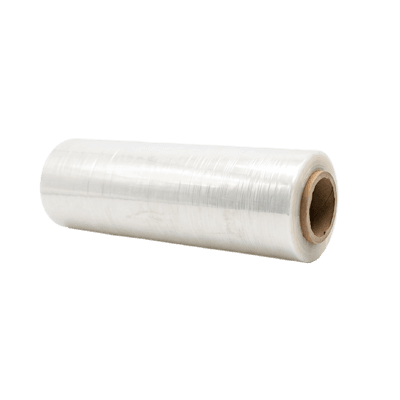
Hand Stretch Film
Flexible manual wrapping solution designed for warehouses, logistics and general pallet applications.
Learn More →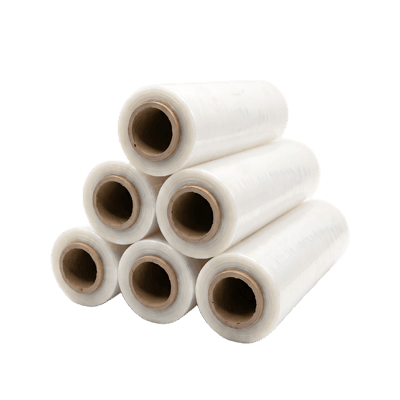
Machine Stretch Film
High-performance film designed for automated pallet wrapping operations with consistent load stability.
Learn More →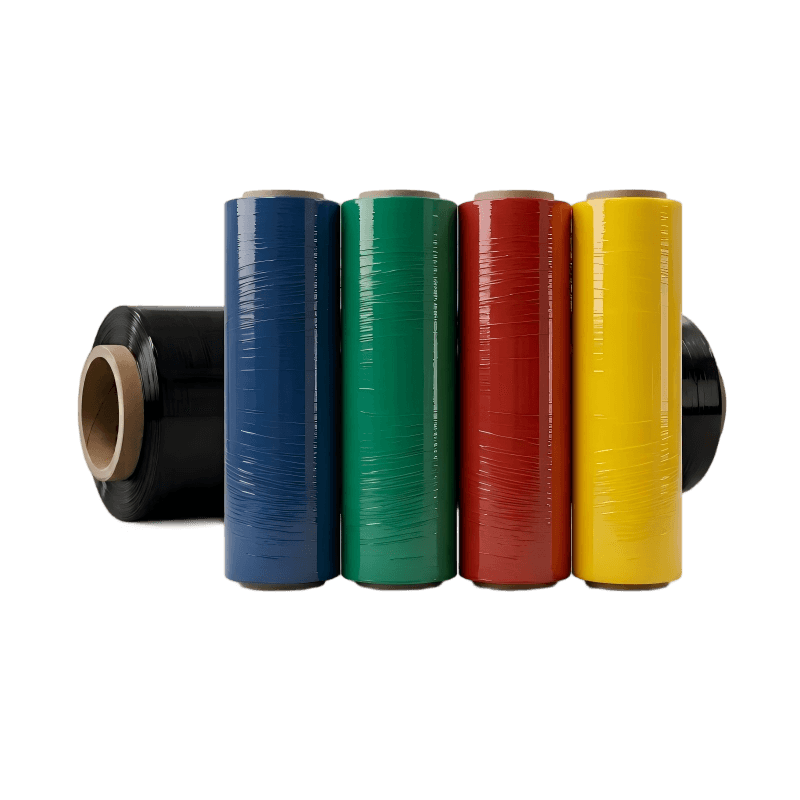
Colored Stretch Film
Custom color options for product identification, privacy protection and branded packaging needs.
Learn More →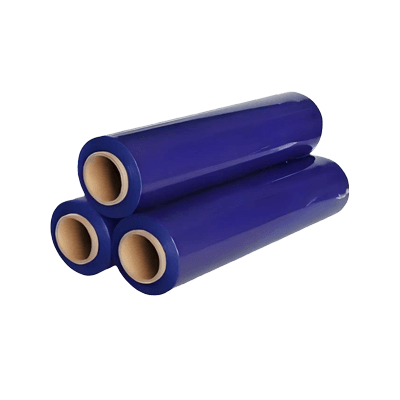
VCI Shrink Film
Specialty packaging film providing corrosion protection for metal products during storage and transportation.
Learn More →