PPWR and Stretch Film: What EU Buyers Should Ask Suppliers
An EU buyer assessing stretch film under the Packaging and Packaging Waste Regulation (PPWR) needs evidence for the exact film, the actual transaction and the intended wrapping job. A general “PPWR compliant” statement cannot show who holds the legal duties, what a recycled-content percentage represents, whether the film can enter the waste stream at its destination, or whether it will secure the buyer’s pallets.
Before issuing a purchase order, identify the film by grade and specification, confirm the parties’ roles, request the applicable declaration and technical evidence, and run a matched pallet trial. Keep regulatory acceptance separate from operational acceptance. One concerns documents and legal scope; the other concerns film use, breaks, wrapping settings and load stability.
This guide covers ordinary non-food-contact hand and machine pallet wrap. It was checked against the rules and official guidance available on 9 September 2026. It is practical procurement guidance, not legal advice.
Start with the rule and date that apply to the order
The PPWR generally applied from 12 August 2026, but its requirements do not all start on that date. The Regulation itself contains later dates and “whichever is later” triggers. A supplier assurance should therefore name the requirement, the product scope and the relevant date. “Ready for 2030” is too vague for a purchase file.
For current material controls, Article 5 requires substances of concern in packaging to be minimised and keeps the combined limit for lead, cadmium, mercury and hexavalent chromium at 100 mg/kg, subject to the stated conditions and derogations. Ask for a report that identifies the tested film or material, the test method, the date and the issuing laboratory. The PFAS thresholds in Article 5(5) concern food-contact packaging; buyers should not apply them automatically to ordinary outer pallet wrap.
Packaging minimisation also needs careful dating. Article 10 applies from 1 January 2030 and limits packaging weight and volume to what is needed for functionality. Transitional essential requirements under the previous packaging directive continue through 31 December 2029. A thinner film can reduce material use, but gauge alone does not prove compliance or suitability. The film still has to contain the load with the approved wrap pattern.
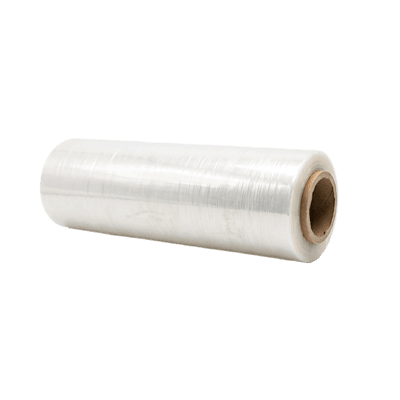
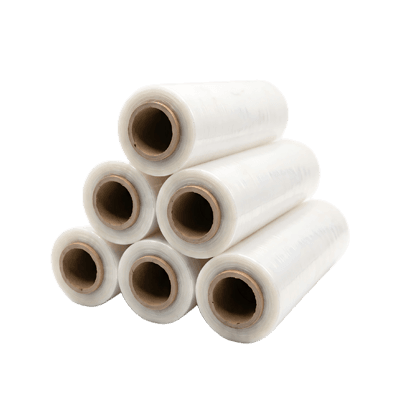
When preparing a specification, start with the actual wrapping method and load. Tuosheng’s stretch film product range provide a practical entry point for hand, machine and pre-stretch formats, while the stretch film selection guide lists the load and roll details buyers can use in an RFQ.
Turn supplier claims into an evidence request

The following matrix is designed for supplier qualification. A missing item does not always mean rejection; it tells the buyer what must be resolved before approval.
| Ask the supplier | Evidence to request | Gap that should stop approval | Purchasing action |
|---|---|---|---|
| Who is the manufacturer, importer and seller for this order? | Legal entity names, branding arrangement, Incoterms, importer identity and film-specific declaration of conformity where applicable | The responsible party or declaration owner is unclear | Map the transaction before relying on any compliance statement |
| Which exact film do the documents cover? | Grade, material, thickness, width, roll format, production site, document revision and intended use | Reports cannot be linked to the quoted film | Add document identifiers to the specification and purchase order |
| What does the recycled-content percentage mean? | PCR/PIR split, origin, chain-of-custody records, calculation basis and batch or order linkage | A percentage appears without source or calculation scope | Treat the claim as unsubstantiated until records match the order |
| What supports the recyclability claim? | Full film structure, dated assessment and method version, plus destination collection instructions | The supplier relies only on “PE” or a private certificate | Check both design evidence and local collection acceptance |
| Which reuse provision applies to our route? | Route description, operator scope, exemption basis and annual calculation method | A 100% wrapping exemption is presented as removing every reuse duty | Review Article 29(1), the route and the operator’s annual scope |
| Will the film work on our pallets? | Comparable film data and a matched trial record | No agreed test load, settings or pass criteria | Approve only after the trial meets the buyer’s limits |
Confirm who owns each PPWR document
Under Articles 15 and 16, the manufacturer carries out the conformity assessment, prepares technical documentation and issues the EU declaration of conformity for the requirements that apply. Material and packaging suppliers must provide the manufacturer with the information needed to demonstrate conformity. Importers have their own verification and record-keeping duties under Article 18. A purchasing company becomes an importer only when the facts of its transaction place it in that role.
The European Commission’s August 2026 PPWR FAQ gives a stretch-wrap example. For unbranded wrap sold on a roll and placed on the market by its physical producer, the FAQ treats the roll as packaging and that producer as the manufacturer. Branding, contract manufacturing and transaction structure can change the analysis, and national guidance has not always described rolled film in the same way. Record the actual arrangement instead of copying a role statement from another order.
The same FAQ treats pallets, pallet collars, wrappings and straps as separate transport-packaging types for conformity assessment and declarations. A declaration for the stretch film does not replace the buyer’s work to validate the completed pallet load. It also does not mean the supplier must disclose every confidential production record. The useful request is a film-specific declaration supported by enough traceable information to show that the quoted product is covered.
At minimum, the purchasing file should connect the declaration and supporting evidence to:
- the manufacturer and, where relevant, the importer;
- the film grade, construction, dimensions and intended use;
- the applicable PPWR requirements and referenced specifications;
- the assessments or tests used, with dates and document revisions;
- the production site or other traceability reference used by the supplier.
For available supplier certificates and test-report categories, buyers can review Tuosheng’s certifications and quality-assurance page. The scope and date of each document still need to match the proposed order.
Check recycled content beyond the percentage on the datasheet

For plastic packaging in the “other plastic packaging” category, Article 7 sets a 35% minimum recycled-content target from 1 January 2030 or three years after the Article 7(8) implementing act enters into force, whichever is later. The corresponding 2040 target is 65%. The Commission FAQ uses ordinary non-contact-sensitive, non-PET pallet wrapping film as an example of this category, but the classification of the actual film and use must be confirmed.
These targets concern recycled content recovered from post-consumer plastic waste. Production scrap cannot simply be relabelled as post-consumer recycled content. PPWR calculations are also based on an average for each manufacturing plant, year, packaging type and format. A compliant average is not necessarily a promise that every roll contains the same percentage.
As of the review date, the Commission’s official Article 7 initiative record still described two implementing acts and one delegated act to be adopted by 31 December 2026. These measures are intended to set calculation and verification rules, technical-document formats, sustainability criteria and conditions for third-country material. Contract wording should allow the evidence package to follow the final rules once adopted.
Ask the supplier to state:
- the percentage of post-consumer recycled material and any post-industrial recycled material separately;
- the source and chain of custody for the recycled feedstock;
- the plant, year, packaging type and format used for the calculation;
- how the claim is linked to the quoted grade, order or batch;
- which certificate and transaction records will accompany an eligible order;
- how a change in material source, formulation or production site will be reported.
A certification scheme can support traceability within its scope. It is not a PPWR product approval and does not prove pallet performance. Tuosheng describes its available documentation and order conditions on its GRS-certified stretch film page. Buyers should confirm the current certificate scope and any order-level transaction documentation before production.
Separate recyclability design from collection at destination
A supplier may have evidence that a film is designed to be compatible with a PE recycling stream. The warehouse still needs to know whether the used film will be collected and accepted where it becomes waste. These are two different checks.
PPWR recyclability requirements are staged. The design-for-recycling gate applies from 1 January 2030 or 24 months after the relevant delegated act enters into force, whichever is later. The recycled-at-scale gate follows from 1 January 2035 or five years after the relevant implementing act enters into force, whichever is later. From 2038, packaging must meet the permitted A or B performance grades. Before the delegated design criteria take effect, the Commission’s June 2026 guidance says manufacturers continue to work with the existing essential requirements and related harmonised standards; the future PPWR grade system should not be claimed early.
For the quoted film, request its full structure, including layers, coatings, inks, additives and adhesive or cling system where relevant. The assessment should state the method and version used and identify the exact product it covers. A scheme result cannot guarantee collection across the EU.
Then ask the receiving warehouse or waste contractor whether it accepts that film. Confirm how clear and coloured film are separated, the allowed contamination level, and whether labels, tape or strapping must be removed. Keep that destination evidence with the supplier’s design evidence. National EPR registration and labelling duties also need a separate check for each destination market.
Read the pallet-wrapping reuse exemption narrowly
Article 29 contains more than one reuse rule. Article 29(1) sets a 40% reuse target from 1 January 2030 for listed transport-packaging formats used within the EU. Compliance is calculated across annual equivalent units for the relevant formats, not as 40% recycled content in a film roll and not necessarily as 40% of every film SKU.
Commission Delegated Decision (EU) 2026/429 exempts pallet wrappings and straps used to stabilise and protect palletised products from the 100% reuse requirements in Article 29(2) and (3). Those paragraphs concern transport within the same company or linked or partner enterprises in the EU, and transport between enterprises within one Member State. The operative exemption does not remove Article 29(1). Buyers should therefore record the route and the economic operator using the wrap before accepting a blanket “pallet wrap is exempt” statement.
The small-operator exemption also has two combined conditions: the operator must be a microenterprise and must make no more than 1,000 kg of packaging available in the Member State during a calendar year. An SME label alone is insufficient. The detailed reuse-calculation method is due by 30 June 2027, and the duty to demonstrate achievement begins on 1 January 2030 or 18 months after that implementing act enters into force, whichever is later.
Approve the film through a matched pallet trial

Documentary compliance cannot show how a different film behaves on a specific load or wrapper. A purchasing specification should therefore contain a second approval gate: a trial that compares the proposed film with the current film under controlled, practical conditions.
Use the same representative product, stack pattern, pallet, corner protection and handling route. Begin with recorded baseline settings. After reasonable optimisation, record the approved machine or hand-wrap settings and identify the film batch, machine and operator. The trial should capture:
- net grams of film per completed pallet;
- film breaks and restarts over a stated number of pallets;
- visible load movement after the agreed handling sequence;
- rewraps, damaged units and other rework;
- any barcode or label-readability requirement;
- the final wrap pattern and settings needed to repeat the result.
Film cost per pallet can be calculated as net grams used divided by 1,000, multiplied by the film price per kilogram. Keep downtime, rework and damaged-product costs as separate lines. This prevents a low roll price or a low gauge from hiding higher usage or disruption.
There is no universal trial size or pass limit for every warehouse. Set the acceptance limits before testing and choose them from the risks of the actual load and route. Published standards for selecting stretch film and evaluating mechanically handled unit loads can support the test design, but a standard reference is not a substitute for the buyer’s own acceptance criteria.
The purchase order should also require notification before changes to recycled-content level, formulation, nominal gauge, manufacturing site or other agreed characteristics. Article 15 requires conformity to be reconsidered when design, characteristics or referenced specifications change. Operational approval should follow the same discipline: a material change can trigger document review, another pallet trial, or both.
Frequently asked questions about PPWR stretch film
Does PPWR apply to pallet stretch film?
Yes. The PPWR generally applies to packaging from 12 August 2026. The European Commission’s PPWR FAQ treats unbranded stretch wrap sold on a roll for stabilising palletised products as packaging. Manufacturer and importer roles depend on the branding and transaction. Buyers should match each supplier statement to the relevant requirement and start date.
What are the PPWR recycled-content requirements for stretch film?
For a correctly classified non-contact-sensitive, non-PET film in the “other plastic packaging” category, the target is 35% post-consumer recycled content from 1 January 2030 or three years after the Article 7(8) act enters into force, whichever is later. The PPWR framework uses plant, year, packaging type and format averages. Request the calculation scope and its link to the ordered film.
Is PPWR pallet wrap exempt from reuse targets?
The exemption has a limited scope. Commission Delegated Decision (EU) 2026/429 exempts qualifying pallet wrappings and straps from the 100% requirements in Article 29(2) and (3). Article 29(1)’s 40% reuse target remains. Document the transport route, the operator using the wrap and the annual calculation scope before accepting an exemption claim.
What compliance documents should EU buyers request from a stretch film supplier?
Request the applicable EU declaration of conformity, the covered film’s identity and specification, relevant test reports, recycled-content records where claimed, and document revision dates. Importers should verify the records assigned to their role. Tuosheng’s certifications and quality-assurance page shows available document categories. Confirm that each supplied document covers the quoted product and order.
Does a GRS certificate make stretch film PPWR compliant?
No. GRS can support recycled-material traceability within the certificate and transaction scope. It does not provide PPWR product approval, confirm collection across every EU market or prove pallet performance. Verify the applicable certificate scope, material percentage, chain-of-custody evidence and order-level documents. Tuosheng describes available options on its GRS-certified stretch film page. The proposed film should still pass a matched pallet trial.
Set a clear release gate before the purchase order
Release the order when the responsible parties are identified, the film-specific documents match the quotation, recycled-content and recyclability claims have traceable scope, the reuse position fits the buyer’s route, and the matched trial meets the agreed limits. Record unresolved points as conditions in the purchase order instead of relying on email assurances.
For a product-specific review, send the current roll label, film dimensions, pallet photos, load weight, wrapper details, destination markets, target recycled content and required documents through Tuosheng’s contact and quotation page. That information is enough to begin a specification and sample discussion without treating a general certificate as approval for the final order
Recommended Tuosheng Packaging Solution
Tuosheng Packaging manufactures hand stretch film and machine stretch film in Suzhou, China, with customizable thickness, width, roll length and export packing.