How to Choose Stretch Film for Beverage Pallets

The best stretch film for a beverage pallet is the one that holds the finished load together on your actual wrapper and delivery route without damaging bottles, cans or their secondary packaging. Start with the package and pallet pattern, then compare stretch film grades at settings your machine can sustain. Measure film use and inspect the load after wrapping and handling. A thinner grade can be the better buy if it passes the same acceptance checks with less material; a thicker grade can still be the right choice when the load or equipment needs it.
There is no defensible gauge, pre-stretch percentage or number of wraps for every beverage pallet. A pallet of filled cans in trays differs from one of PET water bottles in shrink bundles, and an empty-container load is another case again. The selection method below gives purchasing, warehouse and logistics teams a way to specify a trial, diagnose failures and compare the cost per accepted pallet.
What makes bottled and canned beverage pallets difficult to wrap?

The film surrounds a unit load: the containers, secondary packs, layers and pallet together. If cartons slide against each other or the bottom layer leans, adding more film may hide the problem at the wrapper while leaving the delivered load unstable. In a bottled-water transport study, loads shifted sideways before losing containment on turns. A later comparison in the same work found that changing the wrap pattern reduced upper-load sway in a lab test at similar film mass. Those observations apply to the tested water pallets; they do not set a wrap recipe for every beverage format.
Record the load you actually ship before requesting a film recommendation. Filled containers carry liquid mass; empty containers require a separate check of how their packs support them. Weigh the finished pallet instead of inferring its mass from the container material. Include the container and multipack type, pallet footprint and height, layer pattern, overhang, pallet condition and transport route. A tray with exposed corners puts a different surface against the film from a fully enclosed carton. A mixed or uneven load needs its own assessment. Photos of the front, side, base and top help the film supplier see where the wrap must hold layers together and where it may snag.
| Load being wrapped | What to inspect on the finished pallet | What the film trial must establish |
|---|---|---|
| Filled aluminum cans in trays or cartons | Whether layers slide, cans or trays deform, and any exposed contact points | The load stays stable without unacceptable package deformation or film damage |
| Empty cans | The support given by trays, dividers or other secondary packaging | The lighter, less supported configuration passes its own damage criteria |
| Filled PET bottles | Whether bottles or bundles lean, especially at the lower layers | The pattern and wrap contain the load through handling and the intended route |
| Glass bottles | How the bottles are protected inside cases, trays or cartons; any exposed hard edges | The wrap holds the load without tearing at its actual contact points or allowing breakage |
The table identifies checks, not proven differences in required film thickness. A 2026 study of filled beverage cans found a buckling behavior under axial compression that differed from empty-shell behavior. It does not establish how much sideways wrap pressure a can pallet can tolerate. For that decision, inspect the real pack after wrapping and after a representative handling test.
Which stretch film specifications matter for beverage pallets?
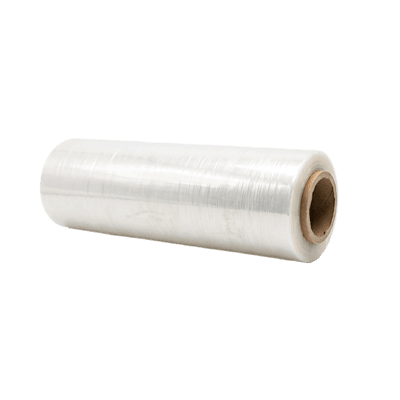
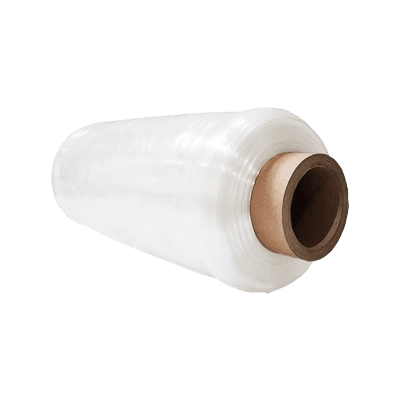
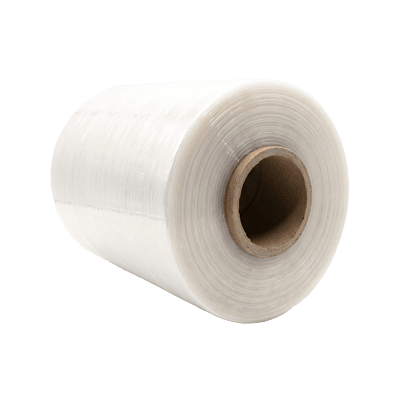
For an automated beverage line, start with a stretch film grade that fits the wrapper and the load. Compare thickness, width, roll configuration and core size, then check the grade’s operating range against your machine. Tuosheng Packaging’s machine stretch film specifications provide a starting point for selecting a trial roll. Confirm its resistance to damage at pallet corners, its ability to hold layers together and its performance on your carriage under actual line conditions.
Ask each supplier for data on the specific grade and thickness offered. Compare results obtained with the same test method, film conditioning and units. Useful questions are: What puncture and tear results were measured? How much pre-stretch can the grade tolerate on a compatible machine? How does it behave at the film-to-load tension used on your line? Does its cling keep the tail secure without sticking to the product? Can the supplier identify the test conditions and thickness tolerance? Use a consistent unit when comparing quotations; Tuosheng’s stretch film thickness guide explains gauge, mil and micron conversions.
For a puncture comparison, ASTM D5748-26 measures how a stretch-film specimen resists penetration by a probe under a standard low-rate test. It can help compare candidate samples. The test itself does not reproduce every tray edge, pallet corner or event in a distribution route, so run the candidates on the real load as well. If a supplier proposes a thinner grade than your current film, ask for method-matched film data and an accepted-pallet trial at your line settings. Reduced thickness alone does not establish a saving.
An ASTM guide for selecting and applying stretch film can help a buyer and seller agree on purchasing specifications. It does not supply a universal beverage-pallet film grade. Put your current film alongside the proposed grade in a trial so both face the same pallet construction, wrapper and acceptance criteria.
How do you set film thickness, pre-stretch and containment force without damaging the load?
These three terms answer different questions. Thickness, usually stated in microns (µm), describes the film before it is applied. Pre-stretch describes how much the wrapper stretches film between its rollers before it reaches the pallet. Film-to-load tension is the force applied as the film goes onto the load. Containment force is the holding force left on the wrapped load. Film tension at the machine is therefore not a direct reading of what the finished pallet will withstand. Tuosheng’s containment force guide explains these measurements in more detail.
Start with the existing film and settings as a baseline. Weigh the film consumed on a pallet, document the programmed and achieved pre-stretch where the wrapper permits it, and record film-to-load settings and wrap placement. Measure the finished load at consistent top, middle and base positions using the same method and timing for every candidate. Then check for crushed cans, deformed bottles or trays, loosened layers and film splits. A reading at one corner should not be treated as a whole-pallet pass.
If a lighter stretch film cuts material use, keep it only when it survives the same line and load tests. Raising pre-stretch may change how much film comes off the roll, but it may also change how the film behaves after application. EUMOS explains that stretch-film performance on a pallet depends on the load type and wrapping pattern in its discussion of stretch-wrapping film standards. Set pre-stretch from the grade’s operating range and measurements on your beverage pallet.
Wrap placement matters as much as the number shown on a setting screen. Inspect whether the base connects the load to the pallet and whether the middle and upper layers are sufficiently tied together. If a layer can slide inside an apparently tight outer sleeve, test a different distribution of wraps before simply increasing tension. The bottled-water research cited above shows that changing a pattern can alter sway even when film mass stays similar. Choose the pattern by observed load movement and package condition, then document it so operators can repeat it.
How should you trial stretch film for cans, PET bottles and glass on each wrapper type?
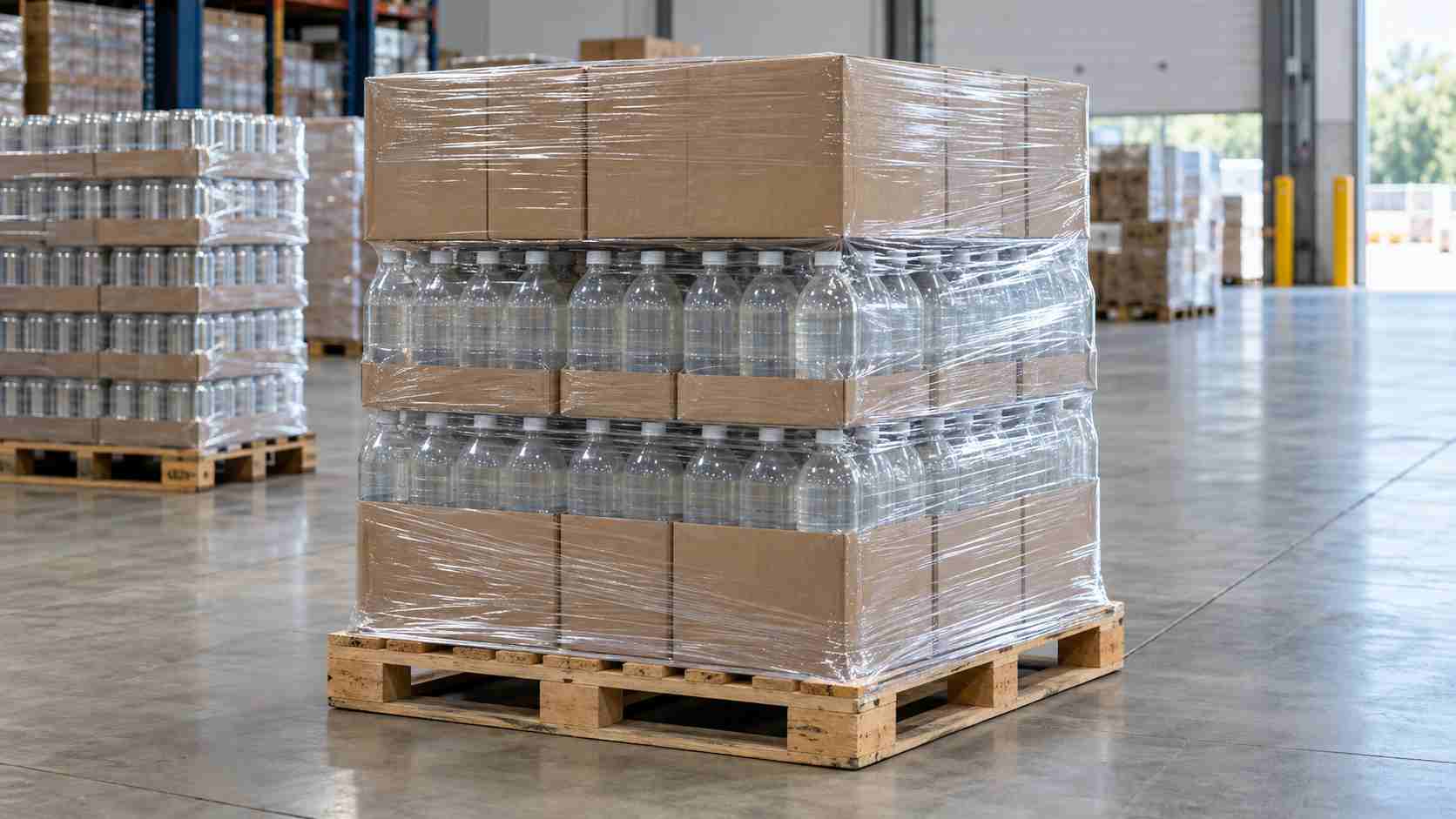
Use a decision matrix to decide what to measure, then fill in the winning settings from your own trial. We don’t publish one micron-and-wrap-count table for cans, PET and glass, because the right settings depend on your containers, packs and wrapper.Begin with one representative, correctly built pallet for each container and secondary-pack format. If your operation ships both empty and filled containers, treat them as separate loads.
| Wrapper and load | First checks on the line | Compare between candidate films |
|---|---|---|
| Turntable with cans, PET or glass | The pallet rotates: watch for lean or movement during acceleration and stopping; inspect film contact points | Completed-load damage, achieved settings, film use and post-wrap stability |
| Rotary arm with cans, PET or glass | The arm travels around a stationary pallet: check carriage clearance and the available controls | The same load checks, with the actual arm settings recorded |
| Rotary ring with cans, PET or glass | The carriage moves around a stationary pallet: check whether the proposed grade runs at the intended line rate | Film breaks, achieved settings, film use and completed-load stability |
The wrapper type determines how the film is delivered and which controls the operator can use. It does not, by itself, determine the correct gauge. For each machine, ask for the model and film-carriage details, then confirm that the proposed film width, roll format and operating range are compatible. Record actual production speed; a short, slow demonstration may miss stops and breaks that matter during a full shift.
Give the trial a simple pass/fail definition before starting. For cans, include unacceptable can or tray deformation. For PET, include bottle or bundle lean and layer movement. For glass, include breakage and the condition of the cases or trays. For every load, include film splitting, tail security, pallet attachment and any shift after handling. The exact tolerance belongs to the shipper’s product and customer requirements, not to a generic film category.
If your team hand-wraps a damaged pallet for rework, evaluate that activity separately and specify hand stretch film for that task. A hand-applied repair does not demonstrate that the automated recipe will work on new production pallets.
Why does beverage pallet film tear, loosen or crush packages?
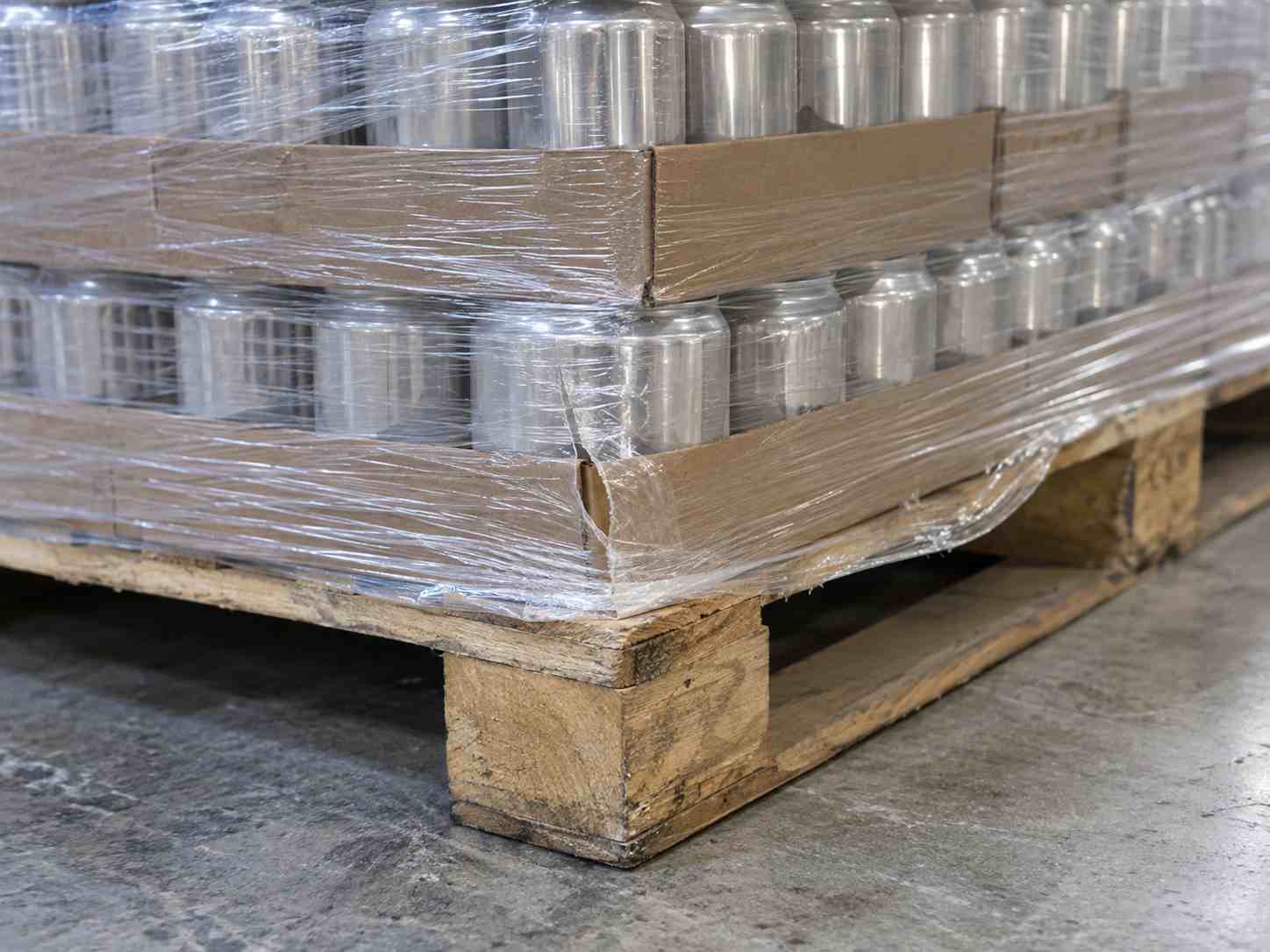
A recurring film break is a location and timing clue. Mark where the split begins, photograph the pallet before removing the wrap, and note whether it happens during application, while moving the pallet or after delivery. Examine the contact point for an exposed tray edge, carton corner, pallet defect or overhang. If the film is intact at the wrapper but the load arrives loose, inspect layer movement and wrap placement before choosing a thicker roll.
Use the failure you see to choose the next controlled change:
| Symptom | Check first | Next comparison in the trial |
|---|---|---|
| Film splits repeatedly near the base | Pallet edge, overhang, film path and the first wraps | Correct the contact or pallet condition, then compare film puncture behavior and base-wrap placement |
| Layers move inside the wrap | Pallet pattern, secondary-pack support and where wraps cross layer boundaries | Compare wrap distribution and measured finished-load stability |
| Cans or trays deform after wrapping | Film-to-load setting, contact points and package support | Reduce the applied setting in a controlled trial and reassess stability and damage |
| Film looks sound but loads shift in transit | The actual route, handling events and accepted-load criteria | Test the full pallet under a route-relevant procedure |
These are diagnostic checks, not proof that a particular rim or corner caused the failure. Do not change several settings at once: if film grade, tension and wrap count all change together, you will not know which change helped. Keep a short trial record with photos and operator notes, including restarts and wasted film.
Vibration is useful for comparing alternatives, but it has limits. ASTM D5415-95(2025) says its vibration method can compare films and wrap cycles while noting that a direct correlation with field performance has not been established. Its scope does not specifically cover every handling event. The bottled-water transport study found movement during turns that a single-axis vibration comparison did not reveal. Match the final validation to the journey the pallet will actually take.
How do you test beverage pallet stability and calculate cost per accepted pallet?
First agree on what counts as an accepted pallet: no unacceptable container damage, package damage or load movement after the agreed handling and transport assessment. Then compare film candidates using the same load build, wrapper and route. A film that costs less per roll may use more material or generate more rework; a premium roll may use less material yet still fail the load. The purchase decision follows the accepted result.
For European load-unit rigidity assessment, EUMOS 40509:2020 describes a dynamic test using an acceleration bench and criteria for pallet deformation. For a relevant full-truckload route, the 2026 ISTA 3E overview covers unitized loads of similar packaged products and says the shipper must define product damage and acceptable package condition before testing. Other routes may need a different procedure. These sources guide whole-load validation; they do not prescribe a beverage film thickness, pre-stretch setting or universal containment-force target.
Use a worksheet for a defined trial period:
Cost per accepted pallet = (film applied to trial pallets × delivered film price + cost of separately measured setup and break waste + rewrap labor + attributable damage cost) ÷ number of accepted pallets.
Keep units consistent. If film use is measured in kilograms, use the delivered price per kilogram and count separately measured waste only once. Include film and attributable losses from rejected pallets in the numerator; use accepted pallets only in the denominator. Record the tested pallet count and the route or lab method beside each result. Calculate any savings from the measured results for the stretch film grade and load tested.
Before requesting a quotation or sample discussion, send the supplier your container and secondary-pack formats, filled or empty status, pallet dimensions and mass, line and carriage model, current film specification, current film use per pallet, common break or damage points, delivery route and acceptance criteria. Ask for candidate-grade data with test methods and for a trial plan on your actual wrapper. Those details make a useful answer possible and give purchasing, operations and logistics the same basis for approval.
For a Tuosheng Packaging film trial or quotation discussion, send your load and wrapper record along with photos of the finished pallet. Confirm the proposed grade and settings on your line, then compare the cost of pallets that pass your agreed checks.
What else should you check before ordering stretch film for beverage pallets?
Can one stretch film grade be used for different beverage products?
One grade may suit several beverage products if it passes trials on each pallet format. Check filled and empty containers separately, and record settings for each load. Approval for a canned-drink pallet does not establish suitability for a different bottle, tray or stacking pattern.
When should beverage pallet wrapping settings be rechecked?
Review the wrapping settings when the film grade, container, secondary packaging, pallet pattern, wrapper or delivery conditions change. Compare the revised load with your approved configuration. Changes that affect film contact, package support or load movement warrant a fresh trial before routine use.
How do you compare stretch film quotes when roll weights differ?
Compare delivered price per kilogram of net film, excluding the paper core and packaging. Then multiply that price by measured film use per pallet. Include waste and rework in the final comparison, and count only pallets that meet the same acceptance criteria.
Is one successful pallet trial enough to approve a film change?
One successful trial provides limited evidence of repeatability. Evaluate representative loads and operating conditions before bulk approval. For testing within its full-truckload scope, the ISTA 3E overview recommends repeat testing with fresh samples to assess representative performance. Agree the trial plan and acceptance criteria before testing.
Recommended Tuosheng Packaging Solution
Tuosheng Packaging manufactures hand stretch film and machine stretch film in Suzhou, China, with customizable thickness, width, roll length and export packing.