Is Pallet Wrap Recyclable? A Practical Guide to Stretch Film Recycling
Pallet wrap is recyclable, but tossing it into a general recycling bin backfires. Most clear industrial stretch film is polyethylene. Commercial film recyclers know how to reprocess it. The real question for a factory or logistics operation is whether you can keep the used film clean, separate it from other waste and build enough volume for an approved recycler to collect.
For procurement managers, this goes beyond the waste room. Film specification, contamination control and collection volume all affect disposal cost and recovered-material value. A workable program begins with purchasing and ends with a recycler that has agreed to accept the prepared film.
Is Pallet Wrap Recyclable? The Short Answer
Yes. Standard polyethylene pallet wrap is recyclable, and many commercial film-recycling programs accept it when it is clean and correctly prepared. It gets accepted when it’s:
- made primarily from polyethylene
- clean and dry
- separated from paper, cardboard and other plastics
- free from food, oil, chemicals and heavy adhesive
- collected in the format and quantity the recycler requires
That doesn’t mean every local recycling service will take it. Collection infrastructure varies by country, city and contractor. A recycling symbol or a polyethylene material label tells you what the film is made from. It doesn’t guarantee that a nearby facility accepts loose flexible film.
For a warehouse, the safest rule is simple: don’t launch a collection program until a recycler has approved the material, contamination limits, storage method, minimum quantity and pickup format.
What Is Pallet Wrap Made Of?
Most pallet stretch wrap is manufactured from linear low-density polyethylene (LLDPE), sometimes with other compatible PE grades or performance additives. The material stretches around a pallet, clings to itself and maintains tension during handling. Once recovered and reprocessed, PE film can become feedstock for new film products, bags, liners, composite products and other non-food-contact applications.
Hand film, machine film and factory pre-stretched film can all enter a PE film stream when their actual composition meets the recycler’s requirements. Roll width, core size and the way the film was applied do not decide recyclability. Material composition and contamination do.
Buyers who need a wider explanation of LLDPE, cast and blown construction, recycled resin and product formats can use the complete stretch film selection guide.
The most recyclable-looking roll can still create a rejected bale if it’s mixed with labels, PET strapping, cardboard or dirty floor waste. Material composition decides recyclability, but warehouse control decides whether a batch gets accepted.
Why Pallet Wrap Usually Does Not Belong in Curbside Recycling
Flexible film behaves differently from bottles and rigid containers in a mixed recycling facility. Loose sheets wrap around screens, shafts and other sorting equipment, causing stoppages and manual cleaning. In the United States, the EPA directs plastic bags and wraps away from household recycling bins and toward drop-off or specialist collection programs, while telling users to check local rules. The same practical principle applies internationally: local acceptance takes priority over the number printed on the plastic. See the EPA guidance on recycling plastic bags, wraps and films.
Large factories and distribution centers have a better route than household drop-off. They generate one material in concentrated volume at predictable unpacking points. When that film is captured before it touches the floor and kept separate, a commercial recycler receives a much cleaner load than a municipal mixed stream can provide.
Do not put industrial pallet wrap into a cardboard baler, mixed-plastics container or general recycling compactor unless the waste contractor has expressly approved that combination. A bale containing both cardboard and film may be rejected by both paper and plastic processors.
How to Recycle Stretch Wrap in a Factory or Warehouse
A successful stretch wrap recycling program doesn’t need a complicated environmental-management project. It needs a clear material specification, collection points that match the workflow and a recycler agreement that operators can follow.
1. Start with a short waste audit
Measure used stretch film for two representative weeks. Record:
- kilograms or pounds generated per day and per month
- the departments and unloading points that generate it
- clear, colored and printed film volumes
- visible labels, tape, strapping, moisture and product residue
- current disposal frequency and cost
- available indoor storage space
This gives recyclers enough information to discuss acceptance and collection. It prevents a business from buying baling equipment before knowing whether the recoverable volume supports the investment.
2. Approve the outlet before collecting material
Send the recycler photographs and a simple material description. Ask for written answers to five questions:
- Which PE stretch films are accepted?
- Must clear and colored film be separated?
- Which labels, tapes and residues are prohibited?
- Should the film be loose-bagged, compacted or baled?
- What are the minimum pickup quantity, bale dimensions and storage rules?
Ask how loads are graded, when deductions apply and whether the recycler pays a rebate or charges collection. The commercial answer changes with resin markets, transport distance, cleanliness and volume.
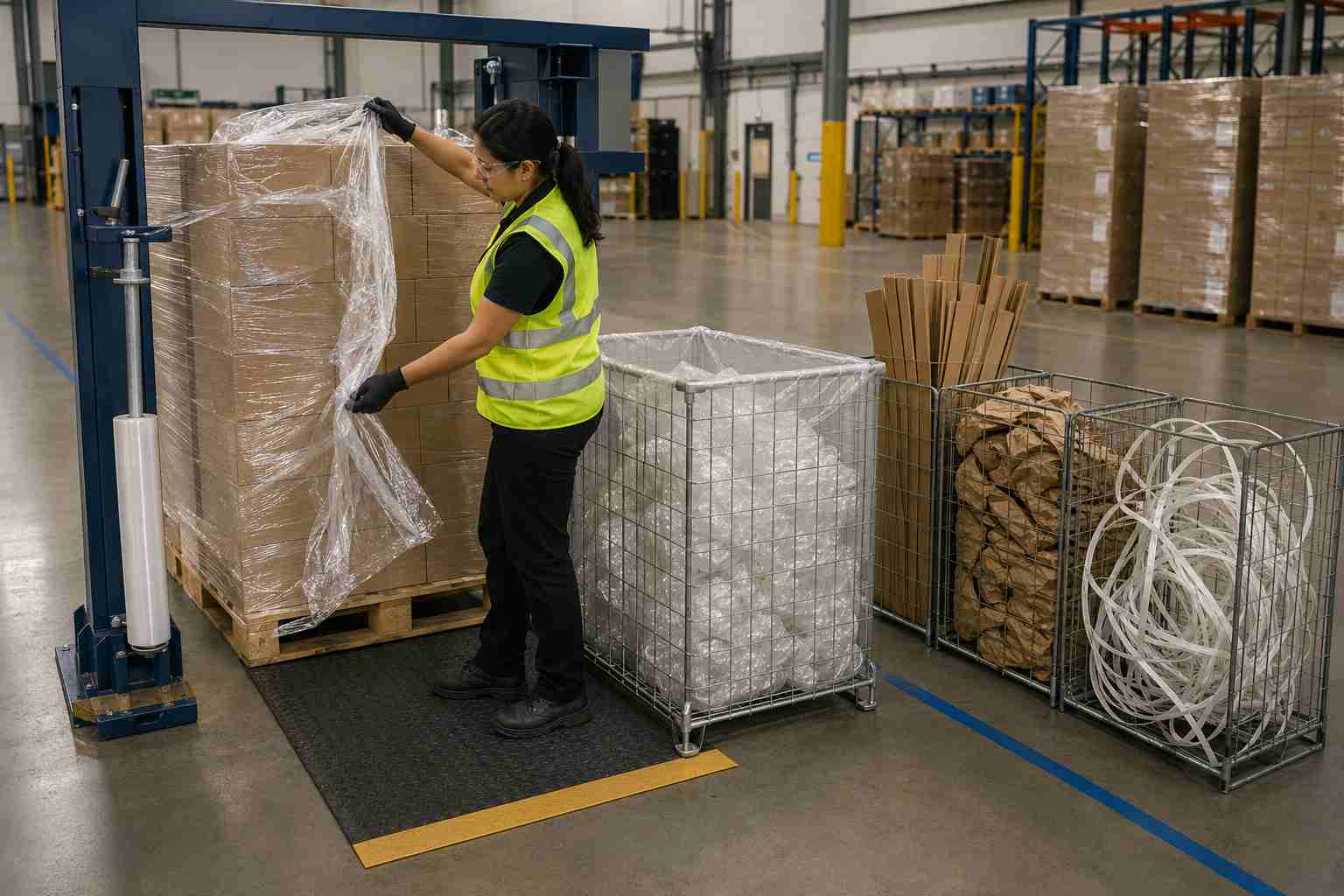
3. Capture film where pallets are unwrapped
Place dedicated collection bags or cages beside goods-in, depalletizing and production-material staging areas. Operators should remove stretch film and place it directly into the marked container. Film left on the floor quickly collects dust, splinters, oil and moisture and becomes difficult to restore to a clean grade.
Use simple visual instructions at each station. Show accepted clear PE film on one side and common contaminants on the other. Train temporary labor and third-party unloading teams as well as permanent warehouse staff. Contamination tends to enter the stream during peak shifts.
4. Remove obvious contamination before storage
Operators should separate cardboard corners, paper sheets, PET or PP strapping, buckles, cable ties and large shipping labels. Where a label can’t be peeled away cleanly, cut out the small affected section with an approved safety cutter rather than discarding an entire sheet of film.
Keep food-soiled, chemically contaminated or heavily oily wrap out of the recycling stream. Do not wash film unless the recycler has requested a washing process. Wet material adds weight, encourages dirt to stick and may be downgraded.
5. Store and track the recovered film
Keep collected film under cover, dry and off the ground. Use separate locations for material grades required by the recycler, such as clear and colored film. Record the weight sent with each pickup and note any rejection or deduction.
What Contamination Makes Pallet Wrap Harder to Recycle?
Recyclers sell consistency. A clean PE stream can be shredded, cleaned, melted and pelletized. Mixed materials create defects, block filters and reduce the uses available for the recycled resin. Procurement and warehouse teams don’t need to master polymer chemistry, but they do need to recognize what lowers bale quality.
| Material found in the collection | Recommended action | Why it matters |
|---|---|---|
| Clean, clear PE stretch film | Keep, subject to recycler approval | Offers the widest range of recycling outlets and end uses |
| Colored or black PE film | Segregate if required | May be recyclable but can reduce the color flexibility and value of the output |
| Paper labels and cardboard | Remove | Fibers and adhesive contaminate the PE stream |
| PET or PP strapping | Remove and collect separately | Different product and polymer stream |
| PVC, degradable film or unknown flexible packaging | Keep out | Incompatible materials can damage recycled-PE quality |
| Oil, food, chemicals, mud or excessive moisture | Keep out | Residue can cause rejection, odor and processing problems |
| Metal clips, staples and buckles | Remove | Can damage size-reduction and extrusion equipment |
The Association of Plastic Recyclers identifies predominantly PE flexible structures as the preferred starting point and flags paper, PET, PVC/PVDC and degradable polymers as problematic for the PE recycling stream. It notes that natural, unpigmented film generally has the broadest reuse potential. Buyers can review the current APR PE Flexible guidance, but the receiving recycler’s specification remains the operating rule for each site.
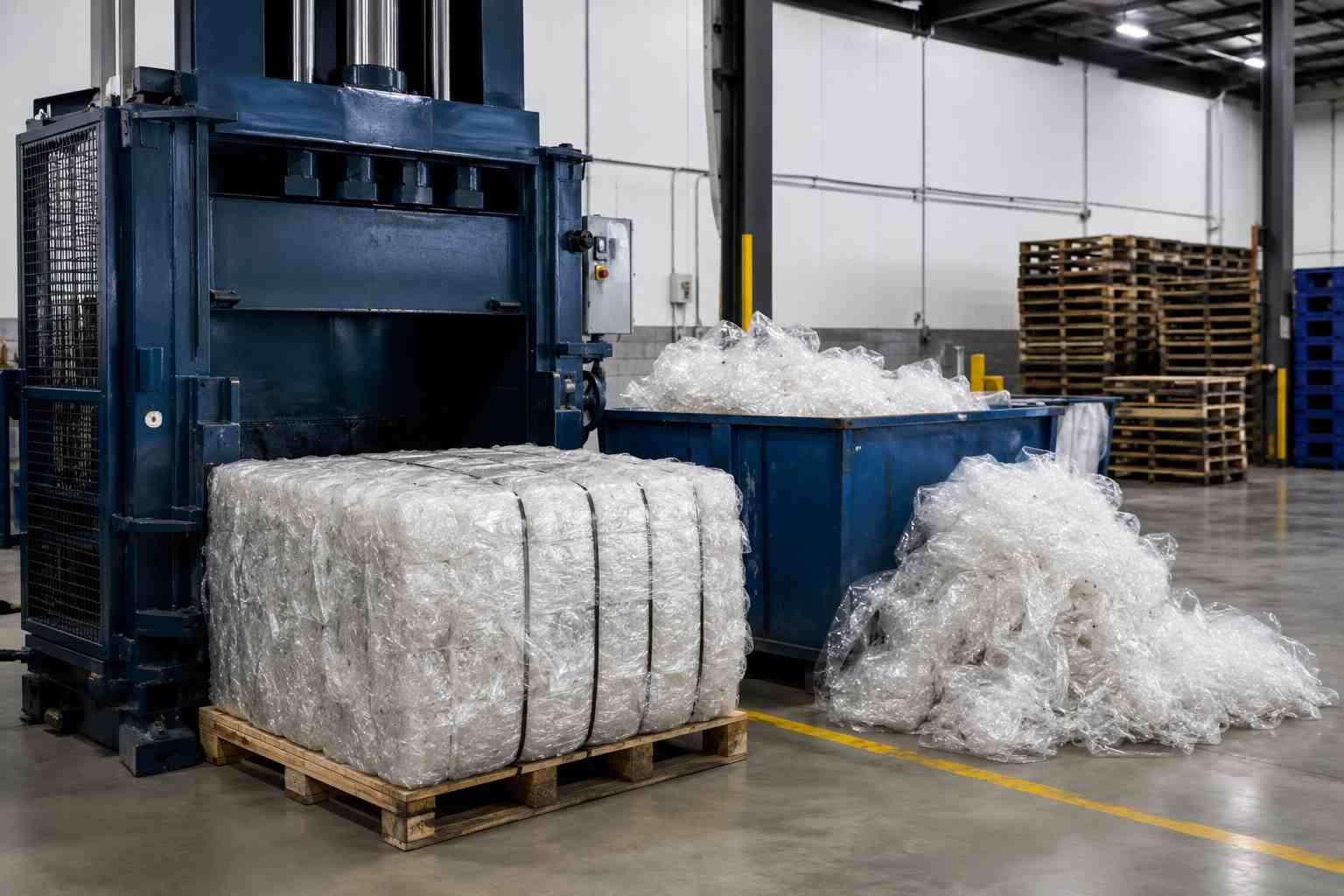
Should a Warehouse Bale Pallet Wrap?
Loose stretch film occupies a lot of trailer and storage volume for very little weight. Baling or compaction can make collection more economical, but a baler isn’t automatically the first purchase.
Start with monthly recoverable weight, recycler distance and the format the recycler accepts. A smaller factory may use clear collection bags and scheduled consolidation through a waste contractor. A regional distribution center producing steady volumes may justify a vertical baler. A high-throughput hub may need a horizontal system integrated into its waste area.
Before approving equipment, obtain the recycler’s required bale size, weight, tying material and contamination limit. Include these costs in the business case:
- equipment purchase, lease and maintenance
- operator time and training
- floor space and safe forklift access
- fire-safety and insurance requirements
- transport and pickup charges
- avoided general-waste fees
- any rebate for accepted film
A useful calculation is:
Net recycling value = avoided disposal cost + material rebate - labor - equipment - transport
Run the calculation with conservative volumes. A clean program that breaks even can still support waste and customer-reporting goals. A dirty program built around an optimistic resale value creates additional cost.
How Procurement Can Reduce Stretch Film Waste Before Recycling
The best recycling project starts with buying and applying less film while keeping every pallet stable. Choosing the thinnest roll isn’t the same as reducing material. If it tears at corners or forces operators to add extra revolutions, total film weight per pallet may increase.
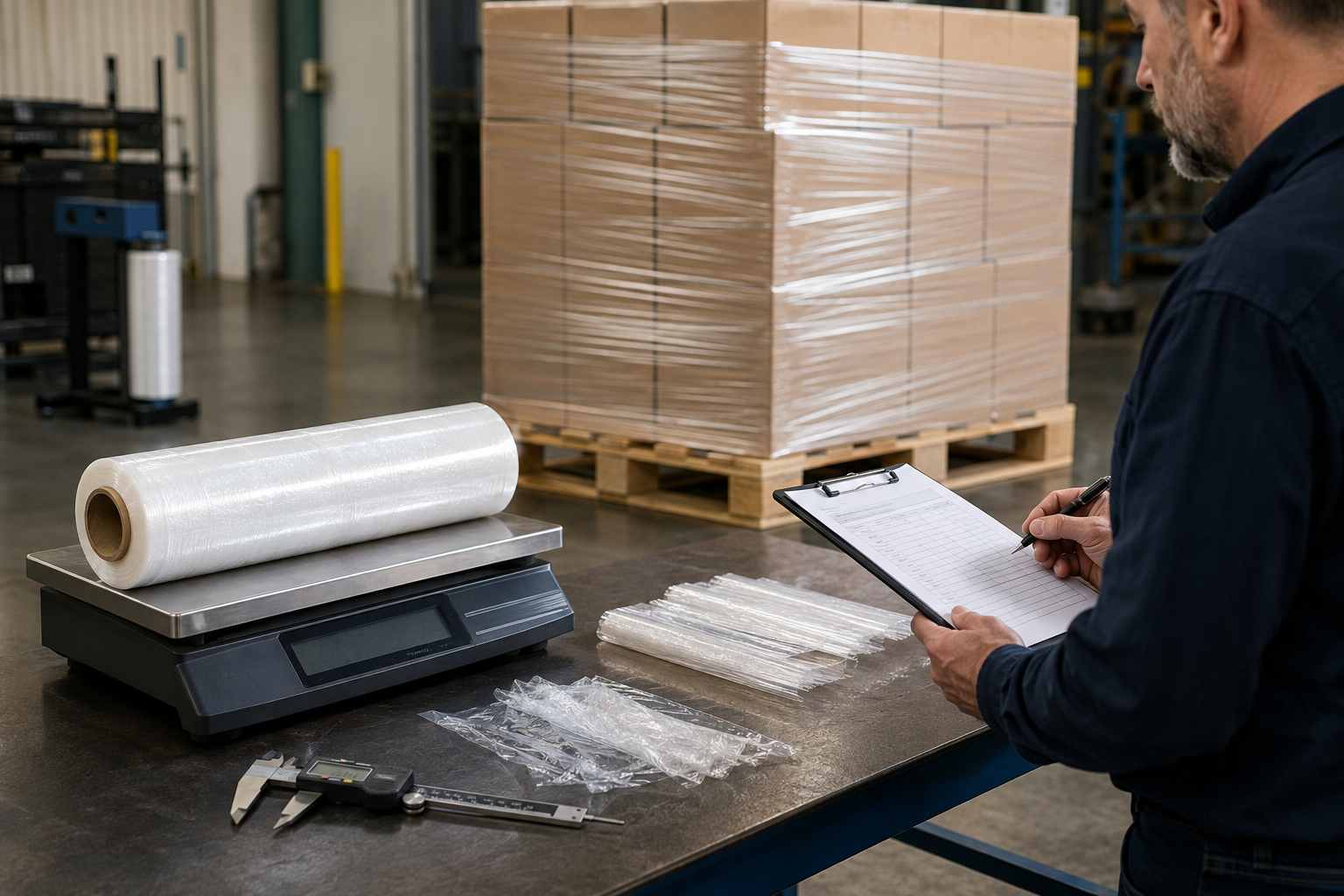
Procurement should manage four numbers:
- net film weight per roll, excluding the paper core
- measured film weight applied per pallet
- film breaks and rewraps per shift
- pallets delivered without containment failure
Compare suppliers on cost per stable pallet, not price per roll. Run candidates on representative loads using the normal equipment, wrap pattern and transport conditions. A reduction is real only when applied film weight falls without increasing breaks, labor, rewrapping or product damage.
Product format affects control. Hand stretch film suits manual and variable-volume operations, while machine stretch film supports repeatable application on powered wrappers. For certain loads, pre-stretch film can reduce operator effort and help standardize consumption. None of these formats should be selected by a sustainability claim alone. The winning specification must still hold the load.
To compare thinner film, recycled-content film and other sustainable pallet wrap options, see what to check before ordering samples for your warehouse.
Add recycling information to the RFQ. Ask suppliers to disclose the base polymer, recycled-content type and percentage, color, printing, additives that could affect the intended recycling route and available traceability documents. Give that information to the recycler when approving the waste stream.
Recyclability, Recycled Content and GRS Documentation
Three claims get mixed together:
- Recyclable means the material can be processed through a suitable recycling route.
- Locally accepted means a real collector or recycler serving the site will take it.
- Recycled content means recycled material was used to manufacture the new roll.
One claim doesn’t prove the others. A PE roll can be technically recyclable but have no local collection route. A film containing recycled resin can still be rejected if it arrives wet or mixed with strapping. GRS certification supports recycled-content traceability. It doesn’t guarantee acceptance by every local recycling program or replace a pallet-performance trial.
Buyers sourcing documented recycled material should check the supplier’s current Scope Certificate, confirm that the proposed product and process fall within scope and agree on transaction-document requirements before placing the order. The GRS-certified recycled stretch film buyer’s guide explains the difference between a Scope Certificate and a shipment-related Transaction Certificate.
For UK procurement, recyclability should be kept separate from Plastic Packaging Tax calculations. From 1 April 2026, the tax rate is £228.82 per tonne for chargeable finished plastic packaging components containing less than 30% recycled plastic. Registration can apply when manufacturing or imports reach the 10-tonne threshold, including packaging with 30% or more recycled content. Check the current HMRC Plastic Packaging Tax guidance for the importing entity and transaction. A recycling symbol is not tax evidence.
Build a Practical Pallet Wrap Recycling Program
Pallet wrap recycling works when procurement, warehouse operations and the recycler use the same material specification. Begin with a waste audit, approve the outlet, collect film at the unwrapping point, remove contamination, keep it dry and measure every shipment. Reduce film use through controlled pallet trials rather than selecting a roll on gauge or price alone.
Tuosheng Packaging Materials is GRS certified and offers recycled-content stretch film options for eligible specifications. GRS-certified stretch film options can be developed around the required load, wrapping method and documentation needs. Transaction Certificate support can be provided for qualifying GRS-certified orders, subject to the applicable certification requirements, certified supply chain and confirmation before production.
For a specification review, send the pallet dimensions and weight, load shape, hand or machine wrapping method, current film details, monthly consumption, target recycled content and required documentation. The result should be a film that performs reliably in use and fits the recycling and compliance route available to the purchasing program.
Frequently Asked Questions
Can pallet wrap go in the normal recycling bin?
Not usually. Flexible film can interfere with equipment used to sort mixed recyclables. Use a commercial film-recycling service or another locally approved route. Follow the collector’s instructions rather than relying only on a resin code.
Is all stretch wrap made from recyclable plastic?
Most conventional pallet wrap is PE-based and can be mechanically recycled when clean and compatible with the receiving stream. Specialty laminates, unknown flexible packaging and films containing incompatible materials need separate review.
Can dirty pallet wrap be recycled?
Minor dust may be acceptable to some processors, but food, oil, chemicals, mud and heavy adhesive contamination commonly reduce value or cause rejection. Separate dirty material at the point of use instead of allowing it to contaminate a clean batch.
Is colored or black pallet wrap recyclable?
Possibly, but clear and colored film have different value and outlet options. Ask whether the recycler requires segregation. Don’t mix black film into a clear-film bale without approval.
Is biodegradable stretch film appropriate for a PE recycling stream?
Not automatically. Degradable polymers can be incompatible with conventional PE mechanical recycling. Keep them separate unless the recycler has explicitly approved the exact material.
Does using recycled-content film guarantee less waste?
No. Recycled content changes the source of part of the resin. It doesn’t measure how much film a warehouse uses. Track applied film weight per pallet, breakage, rewraps and load damage alongside the recycled-content percentage.
Recommended Tuosheng Packaging Solution
Tuosheng Packaging manufactures hand stretch film and machine stretch film in Suzhou, China, with customizable thickness, width, roll length and export packing.