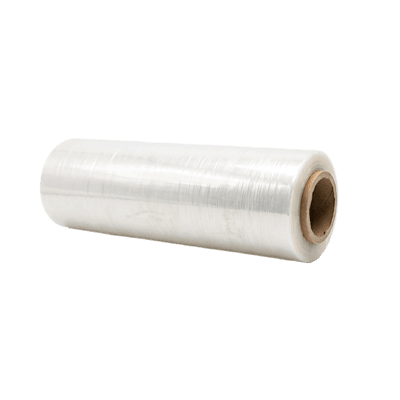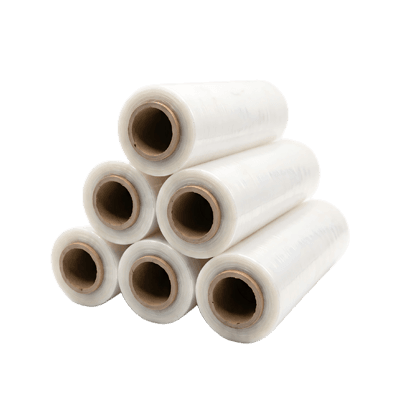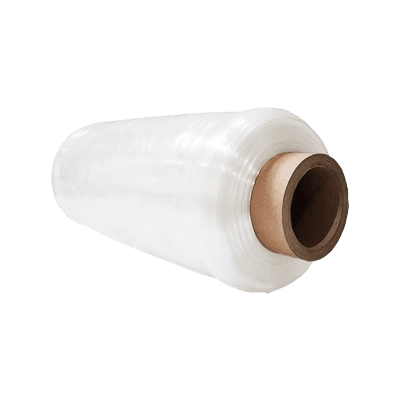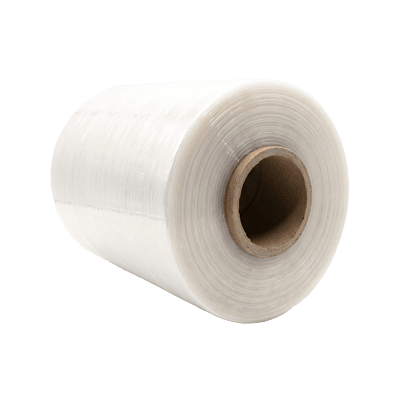
Machine Stretch Film vs. Hand Stretch Film: Which Is Better for Pallet Wrapping?
Quick answer
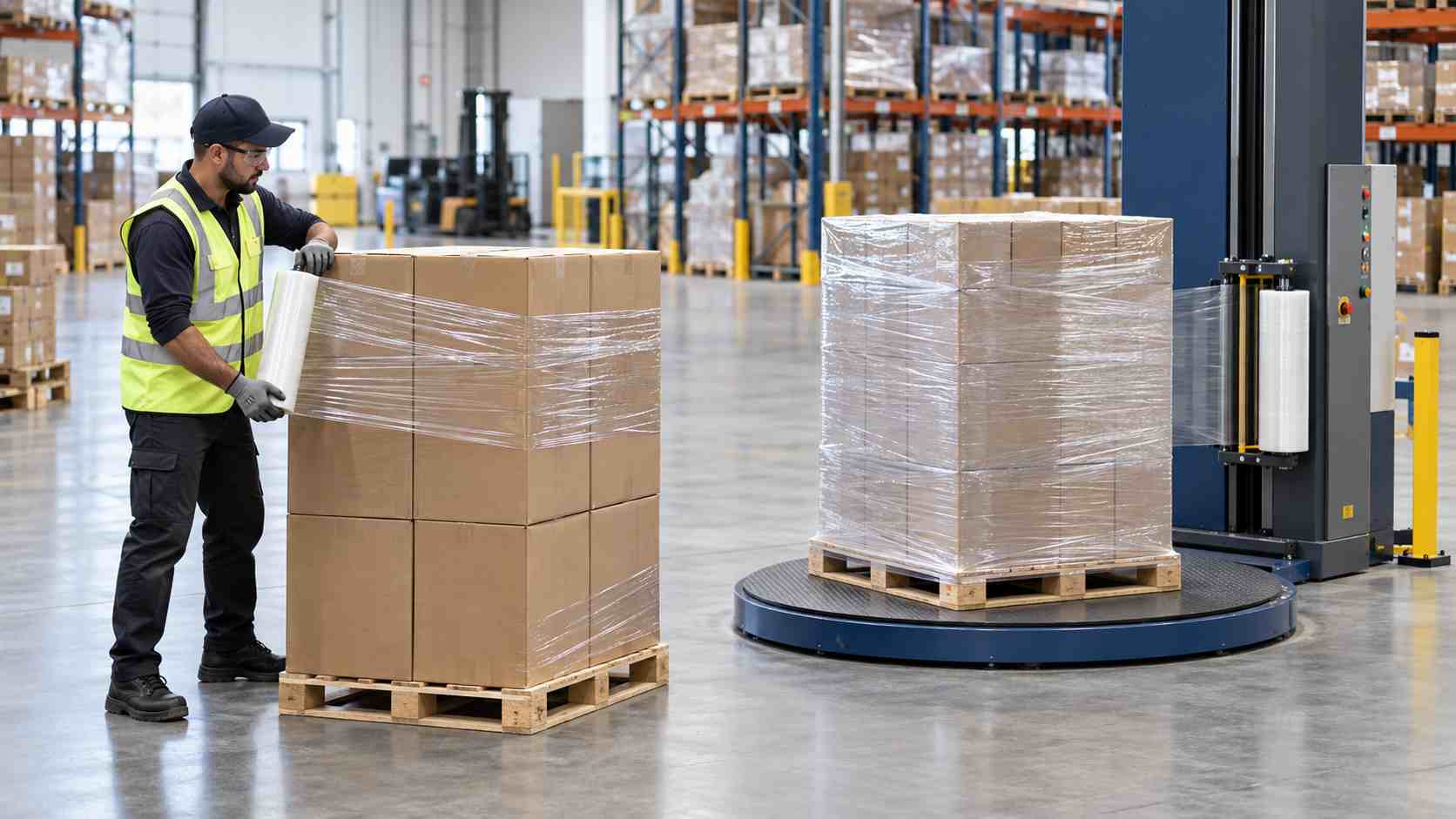
Hand stretch film is usually the better fit when wrapping volume is low, pallet sizes and load shapes change often, or operators need to wrap in different parts of the warehouse. It requires little fixed equipment and handles exceptions easily, but the result depends heavily on operator technique and physical effort.
Machine stretch film is usually the better fit when a suitable stretch wrapper is already available, pallets are repeatable, and the operation values faster flow and more consistent wrap settings. The film must match the wrapper, carriage, core, roll dimensions, and pre-stretch system. A machine also needs enough floor space and a guarded installation supported by trained operators and maintenance staff. For other film types such as pre-stretch, cast and blown film, see the complete stretch film guide.
There is no reliable universal pallets-per-day cutoff that settles the choice. Compare the two methods with your actual loads, during a representative working period, and calculate the cost per accepted pallet. An accepted pallet is one that meets the agreed stability and condition criteria after the handling or transport exposure that matters to your business.
If a load needs a full cover over the top and sides rather than a spiral wrap, compare stretch wrap vs shrink wrap before you choose the method.
Machine vs. hand stretch film comparison table
| Comparison point | Hand stretch film | Machine stretch film |
|---|---|---|
| Application method | Applied manually, with or without a handheld dispenser | Applied by a compatible semi-automatic or automatic stretch wrapper |
| Roll weight | Sized for an operator to carry and control; confirm net film weight because the core is part of the gross roll weight | Commonly supplied in a larger, heavier roll for a machine carriage; the wrapper sets the permitted core, roll weight, and roll diameter |
| Equipment required | Basic dispenser or hand brake; no fixed wrapping station is necessary | Compatible wrapper, film carriage, controls, guarding, power, floor space, and maintenance support |
| Operating consistency | Tension, overlap, wrap count, and coverage can vary by operator and shift | Settings can be documented and repeated, although load presentation and machine condition still affect the applied result |
| Pre-stretch | Created by the operator and dispenser, so the amount may vary | Controlled by the machine’s film-delivery or powered pre-stretch system when fitted and set correctly |
| Labor input | An operator walks, bends, and controls the film throughout the wrap cycle | Operator involvement depends on the wrapper and material flow; loading, starting, cutting, or moving the pallet may still require labor |
| Roll-change frequency | Depends on usable film per roll, film used per pallet, breaks, and waste | A larger usable film quantity may extend the interval between changes, but actual frequency must be measured during the trial |
| Suitable pallets | Low-volume work, mixed pallet sizes, frequent exceptions, and pallets wrapped in several locations | Repeatable loads that can move through a safe, accessible wrapping station without creating a queue |
| Main limitation | Variable application and repeated manual handling | Capital and maintenance cost, equipment compatibility, downtime risk, and less convenient exception handling |
The table describes typical operating differences, not a performance guarantee. Pallet stability depends on the load, pallet, wrapping pattern, environment, and handling method as a complete system. The UK Health and Safety Executive makes the same system-level point in its pallet safety guidance.
Compare cost per pallet, not price per roll
Start by confirming how much usable film each roll contains. Gross roll weight includes the core and any packaging included in the weighing method. Ask the supplier to state net film weight separately so you can calculate a comparable material price.
Film price per kilogram = roll price ÷ net film weight in kilograms
Then measure film consumption for each wrapping method. Weigh each roll before and after the trial with the same core included in both measurements. If you change rolls, add the consumption from every roll used.
Record discarded film separately, but include it in the material cost. Film lost during setup, breaks and rewrapping has still been purchased and consumed. Subtracting that waste would understate the cost of the process.
Compare the complete wrapping cost over the same workload:
Cost per accepted pallet = total wrapping cost during the trial ÷ number of pallets that passed the agreed checks
Include film and direct labor, together with equipment costs allocated to the period. Add maintenance and rework costs where relevant, and count each expense once.
Record active operator time separately from total elapsed process time. A machine cycle, a queue and hands-on wrapping do not necessarily use the same amount of paid operator time.
Agree on the acceptance checks before the trial. Record failed pallets and any work needed to correct them. Calculate different pallet types separately if one difficult load uses much more film than the others.
For the detailed material calculation, see our stretch film usage and cost-per-pallet guide.
When hand stretch film is the better choice
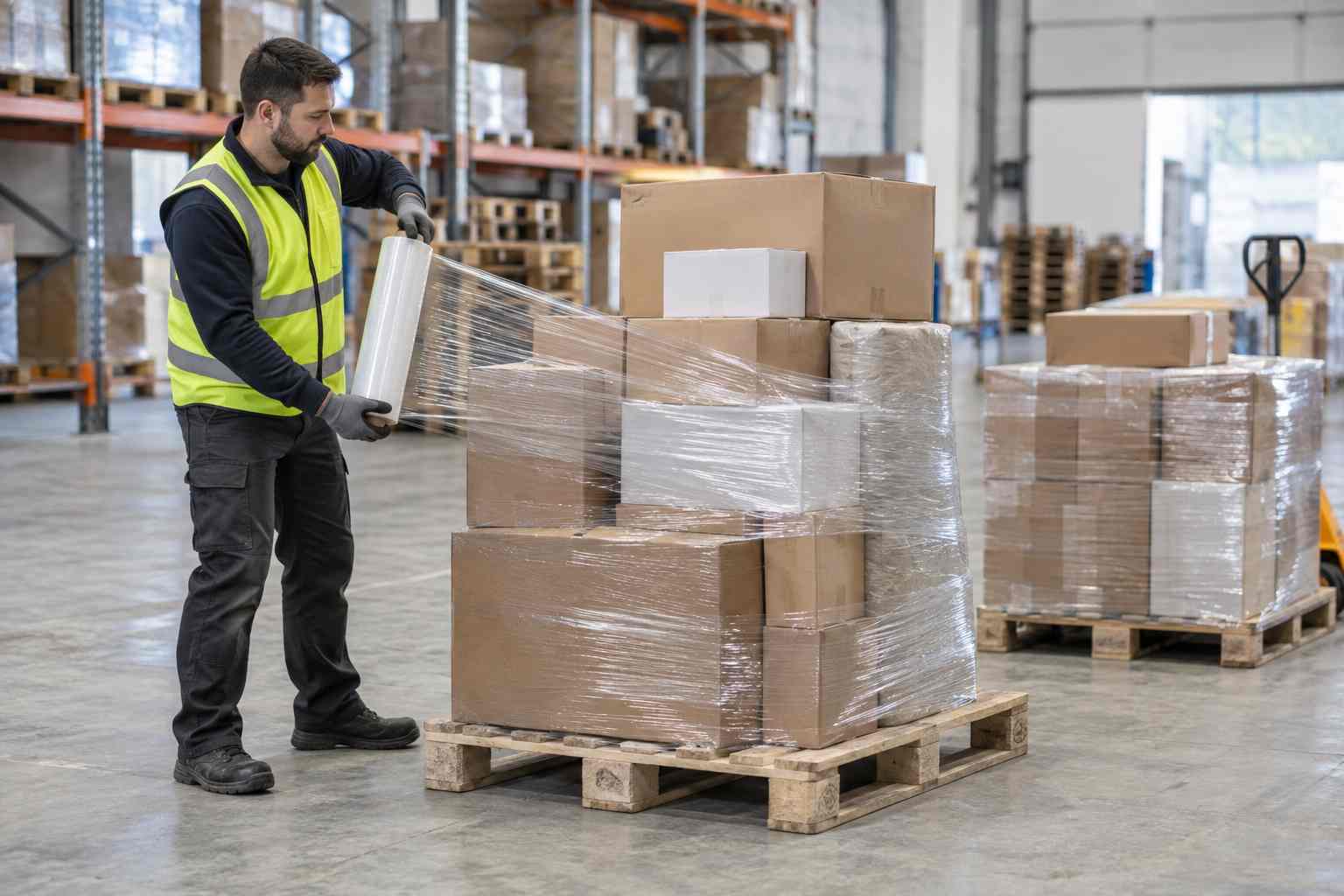
Hand film suits operations where flexibility matters more than a fixed, repeatable wrapping cycle. It is a practical choice when pallets arrive in small batches, loads vary in height or footprint, or the wrapping point changes during the day. It also gives the operator a direct way to add coverage around an irregular top layer, protruding corner, or unstable area.
It can be the better choice when a wrapper would sit far from the packing area or create extra forklift travel and waiting time. The warehouse should compare that travel and queue time with the manual wrapping time instead of assuming that the machine’s cycle time represents the full process.
Hand wrapping can also provide useful backup capacity during machine maintenance or a line interruption. The backup film still needs a defined wrapping pattern and trained operators. Without those controls, the emergency method may apply too little film to one pallet and excessive film to the next.
The trade-off is operator exposure and variation. Manual pallet wrapping can involve repeated bending, walking backward, and working with the arms away from the body. A U.S. NIOSH manufacturing guide identifies awkward trunk and shoulder postures in manual wrapping and describes mechanization as one possible control in the case it summarizes. That is a reason to assess the task at your site, not a universal injury-reduction figure. See the NIOSH manufacturing ergonomics guide.
If hand film remains the preferred route, document the wrap pattern, overlap, number of bottom and top wraps, film tension method, and how the film is tied to the pallet or load. Check the applied result across operators and shifts. Training and a simple dispenser may improve control, but the result still needs to pass the same load-acceptance test used for machine wrapping. If hand-wrapped pallets keep failing, the hand stretch film troubleshooting guide lists the common causes and fixes.
When machine stretch film is the better choice
Machine film makes sense when pallets are sufficiently repeatable to move through a defined station and the wrapper can remove a real production constraint. That constraint may be wrapping time, variable film application, frequent manual handling, or the need to document repeatable settings across shifts.
The decision should use peak flow as well as the daily average. A warehouse may have a modest daily total but a sharp dispatch window when many pallets must be ready together. Another site may wrap more pallets across a long shift without a queue. Measure arrivals at the wrapping point, waiting time, cycle time, and the amount of manual finishing required for the most difficult loads.
Controlled settings are a useful machine advantage. A compatible wrapper can repeat a programmed wrap count, coverage pattern, and film-delivery setting more reliably than an unaided manual process. Repeatability does not prove transport performance. The final load still has to withstand the relevant forklift handling, storage, stacking, vibration, shock, or compression conditions.
Machine safety and uptime belong in the same decision. The HSE’s warehouse risk-assessment example identifies trapping and crushing hazards around a stretch wrapper and lists controls such as guarding, emergency stopping, maintenance, training, and keeping the marked area clear. Exact requirements depend on the machine and local rules. Buyers should also check service access, spare parts, planned maintenance, and the backup process used when the wrapper is unavailable.
If you need to buy a wrapper, assess the equipment investment separately from the film. Keep one-time costs, such as the machine, installation and training, apart from recurring costs such as film, labor, maintenance and energy. Count labor savings carefully: time freed for other tasks adds capacity, but it becomes a cash saving only when it reduces an actual expense, such as paid overtime. If a suitable wrapper is already in place, the decision is simpler: focus on film compatibility and cost per accepted pallet.
A machine route is a strong candidate when the full trial shows a lower cost per accepted pallet, the hardest representative loads meet the agreed stability criteria, and the station fits the real warehouse flow. A pallet count by itself cannot establish those conditions. Buyers who have already selected the machine route can use the machine stretch film selection guide to review wrapper compatibility and the additional specification fields needed for a controlled trial.
Can hand film be used on a wrapping machine?
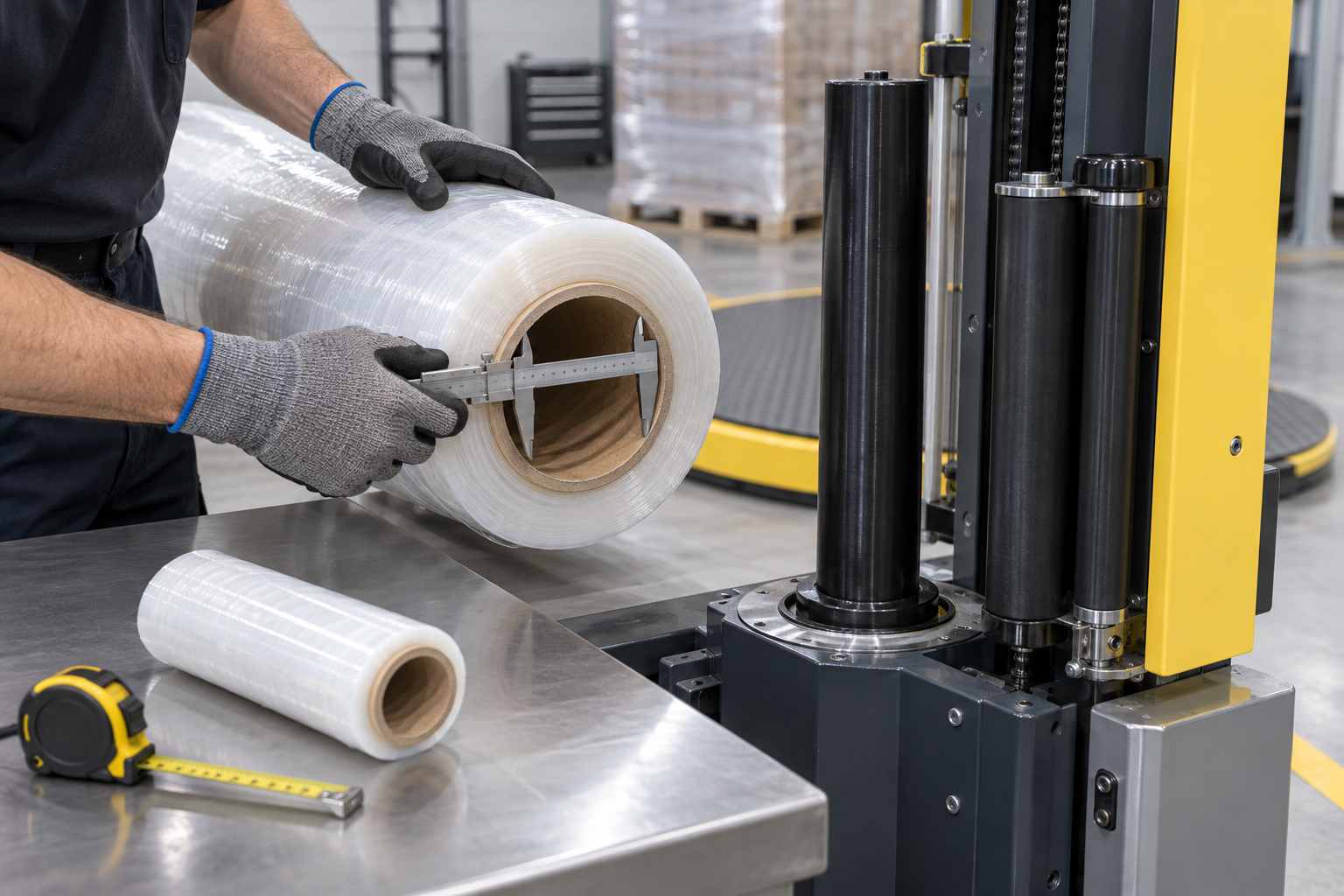
Do not load hand stretch film onto a wrapping machine just because the width and thickness appear to match. Compatibility also depends on:
- core inside diameter, core length, and core strength;
- roll weight and outside diameter allowed by the carriage;
- unwind direction and the way the roll is retained;
- film tension, stretch response, cling, and break behavior;
- the wrapper’s brake or powered pre-stretch system; and
- the required force and coverage on the actual pallet load.
A roll that physically fits may unwind poorly, break repeatedly, telescope, or produce a different applied result from the approved machine film. Conversely, a heavy machine roll is not designed for an operator to carry around a pallet.
Check the wrapper manual and provide the film supplier with the machine model, carriage type, pre-stretch configuration, permitted roll dimensions, and current film label. Treat any substitute as a trial product until it runs through the wrapper and the wrapped pallets pass the agreed acceptance checks. ASTM D4649 treats stretch-film selection, specification, and application as purchase requirements that should be agreed for the intended use and environment.
Run a side-by-side pallet trial
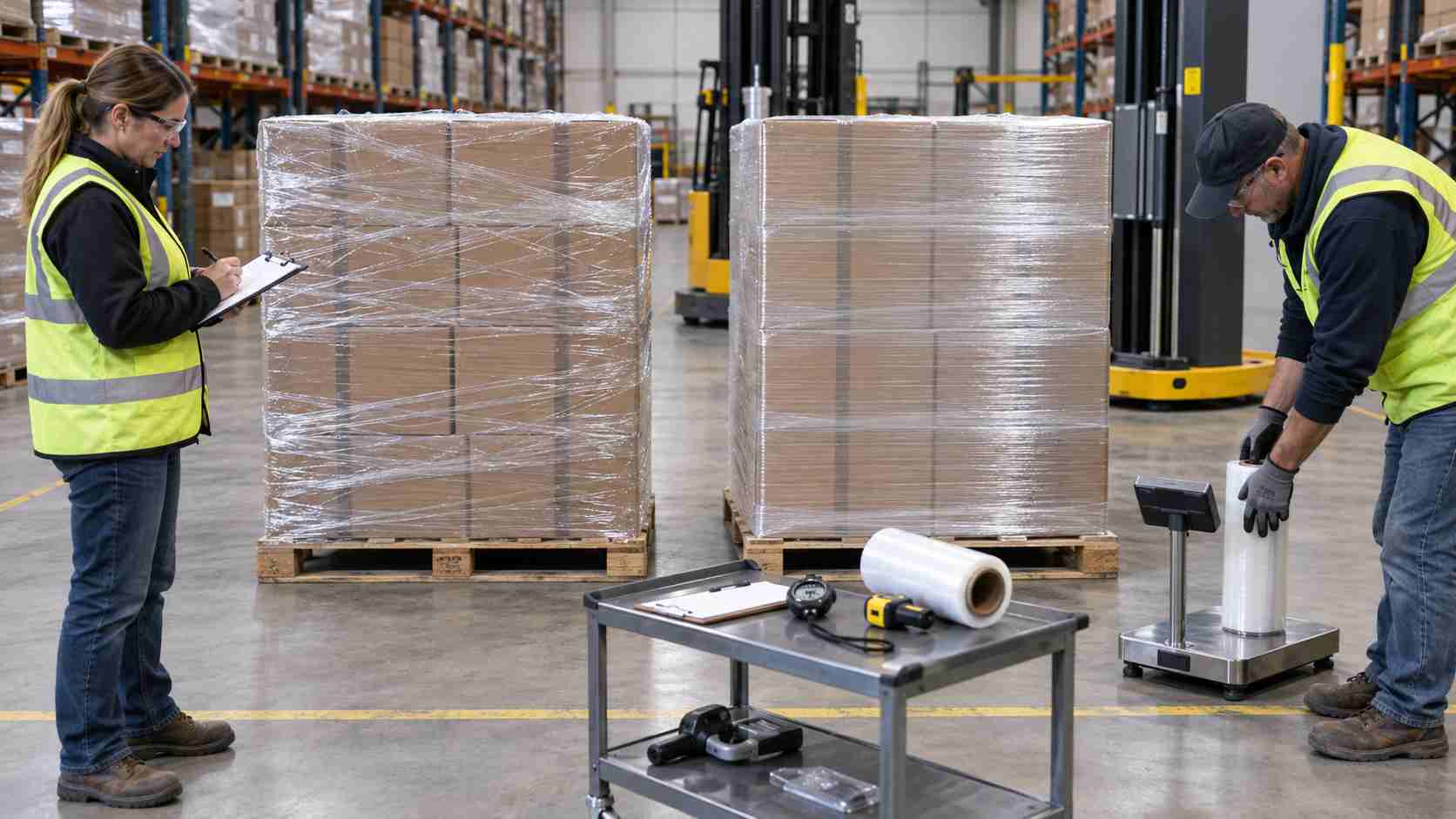
A useful trial compares complete wrapping processes on representative loads. Choose normal pallets and the loads that cause the most trouble, such as the tallest pallet, the lightest unstable pallet, the heaviest load, or a load with an irregular top. Keep the pallet, product, stacking pattern, handling route, and acceptance criteria comparable between methods.
Record at least these five measures for every pallet or trial batch:
- Film consumption: weigh the rolls before and after the batch, accounting for any roll changes. Record discarded film separately and include it in the material cost. Report total film consumed per pallet, and use accepted pallets as the denominator when calculating cost per accepted pallet.
- Wrapping time: record both active operator time and total elapsed process time. Include pallet movement, setup, wrapping, roll changes and manual finishing. Record waiting and machine stops separately so you can identify delays without counting the same labor cost twice.
- Film breaks and stops: record where the break occurred, the likely cause, reset time, and any machine stop.
- Pallet stability: use the same agreed check immediately after wrapping, including load movement, loose corners, crushed cases, or film failure.
- Movement after handling or transport: inspect the load after the relevant forklift moves, storage period, internal route, or distribution test.
Also record the film identity, lot, net roll weight, wrapper settings, pre-stretch setting, wrap count, overlap, operator, pallet type, load weight, load height, and environmental conditions. These details make a repeat test useful instead of leaving the team to guess why the result changed.
ASTM D8314 covers performance testing after stretch film has been applied by hand or machine and leaves success criteria to the user. ASTM D5415 can compare containment under vibration, but it does not include mechanical handling and does not predict field performance by itself. For similar-product full-truckload shipments, the ISTA 3E overview illustrates the value of defining damage criteria before testing, documenting the load, using previously untested samples, and replicating the test. The procedure must match the actual distribution system.
At the end of the trial, calculate cost per accepted pallet for each method and review the rejected pallets separately. Averages are useful, but a small group of difficult loads may justify a mixed process: machine wrapping for the repeatable flow and hand wrapping for defined exceptions.
Information to include in an RFQ
Send the supplier enough information to check film suitability and prepare a sample or quotation:
- Pallet dimensions, loaded weight and photos showing the stacking pattern or difficult areas.
- Your current wrapping method and the number of pallets handled per day, including peak periods.
- For machine wrapping, the wrapper model, carriage type, permitted roll dimensions and pre-stretch setting where fitted.
- Current film specifications, including width, thickness, net film weight and core dimensions. A roll label or data sheet is useful.
- The problem you want to solve, such as frequent breaks, loose loads, crushed cartons or excessive film consumption.
- Expected order quantity, destination and any packaging or documentation requirements.
- The checks the trial pallets must pass after wrapping and handling.
Tuosheng supplies hand stretch film and machine stretch film. Use the quotation form on this page to share your requirements and confirm suitable film options and sample availability.
If some specifications are unknown, start with pallet photos, the current film label and your wrapper model.
Frequently asked questions
Is machine stretch film cheaper than hand stretch film?
Machine film may produce a lower cost per accepted pallet when controlled application reduces excess film or labor. The result depends on the load mix and the complete wrapping process. Compare net film use and labor time, then add equipment cost, downtime, roll changes, rewrap and attributable failed-load cost over the same representative period.
How many pallets per day justify switching to machine wrapping?
No universal daily pallet count decides the switch. Measure peak-hour pallet arrivals, queue time, manual wrapping time, load repeatability, travel to the proposed station, operator exposure, and downtime tolerance. A short dispatch peak can justify a different solution from the same daily volume spread evenly across a shift.
Can hand stretch film be used on a stretch-wrapping machine?
Use it only after the roll and film have been approved for that wrapper. Confirm the core dimensions and strength, roll weight, outside diameter, unwind direction, retention method, brake or pre-stretch system, and film behavior under operating tension. A roll that fits the spindle may still unwind poorly or break during the cycle.
Does machine wrapping always make a pallet more stable?
Machine wrapping can repeat documented settings more consistently, but repeatability alone does not prove load stability. Load stability depends on the film and pallet as well as the stacking pattern. The wrap recipe must suit the environment and handling route. Test representative loads against the acceptance criteria after the relevant exposure.
Can a warehouse use both hand and machine stretch film?
Yes. A mixed process can use machine wrapping for repeatable pallet families and hand wrapping for defined exceptions, remote packing points, or backup during maintenance. Give each route its own approved film and wrapping method. Train operators and set acceptance checks for both processes. Do not assume that the hand process reproduces the machine recipe.
Recommended Tuosheng Packaging Solution
Tuosheng Packaging manufactures hand stretch film and machine stretch film in Suzhou, China, with customizable thickness, width, roll length and export packing.