
Machine stretch film with a compatible pallet wrapping machine is generally the stronger operating choice as pallet throughput, labor pressure, containment consistency, and material-use control increase. Hand stretch film remains practical when volume is low, loads are irregular, work is mobile, or the operation needs to avoid equipment CapEx. As a starting guide, operations below 15 pallets per day generally favor hand film; above 50 pallets per day strongly favor evaluating machine film and a wrapper; and 15–50 pallets per day call for a measured cost and process comparison. These bands are decision heuristics, not universal guarantees: the right answer depends on your load, labor, film use, equipment, and required containment result.
Machine Stretch Film Is the Operational Default When Pallet Volume Is High
Start with the operating system, not the price of one roll
The useful comparison is not the price of one roll of machine stretch film versus one roll of hand film. It is the cost and reliability of an acceptable wrapped pallet. That system includes film consumption, operator time, load containment, rewraps, downtime, equipment ownership, and the operating conditions in which the film is applied. A machine roll may be heavier and more expensive to purchase while still being suitable for a higher-throughput process; a hand roll may require less equipment commitment while consuming more labor per pallet. The comparison should therefore use measured inputs and the same required load outcome.
| Operating factor | Hand application | Machine application |
|---|---|---|
| Throughput | Limited by operator pace and physical effort | Designed for repeatable wrapper cycles |
| Operator effort | Manual tension, walking, bending, and roll handling | Loading and monitoring, with powered film delivery |
| Roll handling | Typically lighter, shorter rolls | Typically heavier, longer industrial rolls |
| Tension consistency | Depends more on the operator | Depends on carriage and program settings |
| Material-use control | Varies with technique and load | Can be measured and controlled through the wrapper system |
| CapEx | Little or no fixed equipment | Requires a compatible wrapper and ownership plan |
The governing unit is total cost per wrapped pallet, not roll price alone.
What machine stretch film is designed to do
Machine stretch film is intended for semi-automatic or automatic pallet wrappers. The wrapper carriage applies powered pre-stretch and controlled tension before the film is placed around the load. Industrial rolls are designed for longer runs and a powered film path, so the film’s thickness, width, core, roll length, stretch profile, and performance data must match the equipment. The Tuosheng Pack catalog reference for machine film is LLDPE + mLLDPE, 15–50 μm, 500 mm standard width, a 76 mm (3-inch) core, 200–400% stretchability, and 800–2,000 m roll length. These are catalog ranges, not universal industry requirements.
Powered carriage, industrial roll, and wrapper compatibility
Film, carriage pre-stretch ratio, tension setting, load geometry, and wrap program should be treated as one matched set. Before ordering, validate the core, width, thickness, roll length, stretchability, and final TDS against the wrapper manual and the intended load.
Why machine film is not simply a larger hand-film roll
The key difference is the delivery method: a powered wrapper controls film extension and application, while an operator applies tension by hand. A larger roll or higher nominal stretch percentage does not by itself prove lower cost, adequate containment, or compatibility with a particular machine.
Where the machine-first recommendation is strongest
The machine-first case is strongest in high-output manufacturing, 3PL distribution centers, cold-chain logistics, and automated lines handling frequent, valuable, fragile, or repeatable loads. It also becomes more relevant when labor is difficult to allocate, multiple shifts repeat the same wrapping task, or inconsistent containment leads to rework. In each case, the recommendation is conditional: the film-and-wrapper system still needs to be tested on the actual pallet mix. Record pallet volume, labor rate, film use, equipment cost, downtime, and required containment before deciding. The later TCO model turns those observations into a comparable cost per wrapped pallet.
How Machine Stretch Film Controls Material Use and Load Containment
Powered pre-stretch turns film extension into a measurable input
Powered pre-stretch is the carriage-driven extension of film before it is applied around the pallet. It makes extension a machine setting that can be recorded, rather than only an operator sensation. Research and strategy materials use 250–300%+ powered pre-stretch as an illustration of the mechanism. In a simple example, 1 metre of incoming film can be extended to approximately 3.5 metres of applied length, subject to the meaning of the stated ratio and the wrapper’s actual behavior. That helps explain why a longer applied coverage can change film consumption, but it is not a guaranteed reduction in film mass, cost, or waste. The real result belongs in a measured pilot and the cost-per-pallet calculation.
The 1-metre-to-3.5-metre example
| Illustrative input | Value |
|---|---|
| Original film length | 1 m |
| Illustrative powered extension | 250% additional stretch |
| Approximate applied length | 3.5 m |
This is an explanation of extension mechanics, not a promised savings percentage or a claim that every load will use less film.
What changes the real result
Film grade, actual carriage ratio, tension settings, load geometry, wrap count, corner behavior, and verified TDS data all affect the result. A buyer should ask for a representative sample and controlled trial. The article does not convert the example into a universal “30% savings” claim or a fixed payback period.
Containment force is the load-control outcome to validate
Containment force is the holding force the wrapped film system applies to keep the load unitized. Machine wrapping is described as offering more uniform and stable containment force because the carriage and program can repeat the application pattern. Manual wrapping is more dependent on operator-applied tension and technique. That difference is an operating advantage to test, not a transport-safety guarantee. The acceptable result depends on the actual film, load, wrap pattern, number of wraps, tension, and required safety margin. Evaluate the wrapped pallet rather than assuming that a label such as “high performance stretch film” is sufficient evidence.
The variables behind a stable pallet
Check film stretch behavior, unwind or carriage tension, wrap count, bottom and top wraps, pallet geometry, corner protection, and load stability. The result depends on correct film selection and machine control. A controlled program can improve repeatability, but the required containment outcome must still be observed and documented on representative loads.
Why manual tension should not be presented as equivalent
The research identifies more uniform machine containment force as a machine-film advantage, while hand application varies more with operator-applied tension. That does not mean hand wrapping can never secure a load, and a machine does not make a pallet safe by itself. The correct comparison is the measured containment result of each film-and-application method on equivalent loads.
Cast vs Blown film: the manufacturing-method context for machine buyers
Cast and Blown are manufacturing-method questions inside a machine-film specification review; they do not replace the machine-versus-hand decision. Compare only properties confirmed by the applicable TDS or test data, such as gauge consistency, clarity, unwind behavior, noise, tear or puncture behavior, and containment performance. A supplier’s data should identify the tested grade and conditions rather than relying on a generic method label.
What the article may compare
| Specification question | Cast stretch wrap | Blown stretch wrap |
|---|---|---|
| What to verify | Gauge consistency, unwind behavior, clarity, and tested containment data | Puncture/tear behavior, unwind behavior, noise, and tested containment data |
| Buyer implication | Use only the properties confirmed for the proposed grade and wrapper | Use only the properties confirmed for the proposed grade and wrapper |
The supplied sources do not provide a verified property-by-property table that establishes one method as universally superior. Request TDS or test evidence for the actual film.
How to keep the context subordinate to the buying decision
Return to the operating question: which film-and-wrapper combination delivers the required containment at the lowest verified cost per pallet? For broader technical selection, use the stretch film selection guide. No unverified Cast-vs-Blown cluster URL is published here.
Hand Stretch Film Is the Alternative for Low-Volume, Mobile, or Irregular Wrapping
When hand stretch film is still the practical choice
Hand stretch film remains a defensible starting point below roughly 15 pallets per day when mobility, zero equipment CapEx, and irregular-load flexibility matter more than automated throughput. It can also suit short production runs, work cells where a wrapper cannot be installed, or teams that move between areas. The Tuosheng Pack catalog reference for hand film is LLDPE, 15–50 μm, 500 mm standard width, a 76 mm (3-inch) core, 150–250% stretchability, and 150–400 m roll length. These are catalog ranges, not a guarantee that every hand-film product has the same properties or total cost.
Low-volume and irregular-load use cases
Representative contexts include low-throughput warehouses, retail back rooms, moving operations, and irregular pipe or furniture loads. In these settings, the ability to carry the film to the load and adapt the application can outweigh the value of a fixed machine cycle. That flexibility should be weighed against observed labor, film use, damage exposure, and containment needs.
The labor trade-off that must be acknowledged
Manual wrapping depends on operator-applied tension and physical effort. The work can involve walking, bending, lifting, and repeated turns, and film use can vary by operator without process controls. Research describes machine wrapping as a way to reduce repetitive operator effort, but this article does not claim a quantified injury reduction or universal labor saving.
Hand-film specifications and machine-film specifications answer different use cases
The two formats may share a standard width and 76 mm core, but they serve different application systems. The catalog reference places hand film at 150–250% stretchability and 150–400 m per roll, while machine film is listed at 200–400% stretchability and 800–2,000 m per roll. Machine film is intended for a powered carriage; hand film is handled directly by the operator. Reconcile all catalog ranges with the final TDS and equipment limits rather than merging conflicting values into one industry “standard.”
The comparison table readers need
| Operating format | Typical roll handling | Stretchability range | Roll length | Operator/equipment requirement | Primary implication |
|---|---|---|---|---|---|
| Hand film | Direct operator handling | Catalog reference: 150–250% | Catalog reference: 150–400 m | Operator-applied tension; no wrapper required | Mobility and irregular-load flexibility |
| Machine film | Powered carriage and industrial roll | Catalog reference: 200–400% | Catalog reference: 800–2,000 m | Compatible semi-automatic or automatic wrapper | Repeatable application and higher-throughput evaluation |
The 15–50 pallet/day middle band needs measurement, not a reflexive switch
Between 15 and 50 pallets per day, the decision should follow the bottleneck. At 15–30, test whether a hand pre-stretch aid or process controls reduce effort, waste, or inconsistency while preserving mobility. At 30–50, compare a semi-automatic wrapper and machine film using observed film consumption, labor minutes, downtime, and load requirements. Above 50, machine film plus a compatible wrapper becomes the leading option to evaluate. The transition question is simple: what is the current cost per wrapped pallet, and what verified machine-film result would justify the change?
15–30 pallets per day
Measure operator time, physical burden, film waste, and load consistency before buying a wrapper. A pre-stretch aid can be considered when the operation needs lower application effort but still needs to move between work areas. Keep the decision tied to observed use and load results.
30–50 pallets per day
Gather a baseline and request compatible machine-film samples, TDS data, and a carriage-setting recommendation. A wrapper trial and TCO comparison are especially relevant here, but no fixed payback period can be stated without the operation’s labor, material, volume, and CapEx inputs.
More than 50 pallets per day
Treat machine film plus a compatible wrapper as the leading option for evaluation. Calculate cost per pallet, annual labor and film impact, equipment cost, and payback using verified inputs before making a conversion claim.
How Do You Calculate TCO and ROI for the Switch?
The right cost per wrapped pallet compares equivalent pallets that meet the same containment and protection requirement. Build the hand baseline first, then model the machine scenario with measured film use, labor, downtime, failures, rewraps, and ownership costs. A price per roll is only an input. Every price, labor rate, and equipment figure should be a customer input, supplier quotation assumption, or measured trial result; there is no universal market price or payback benchmark in this article.
Inputs for a fair hand-versus-machine comparison
Hold the pallet mix, load-protection requirement, wrap pattern, operating days, and acceptable containment result constant. Record annual pallets, film mass or length per pallet, verified film price per kilogram or roll, labor minutes, fully loaded labor rate, and shifts. For a machine scenario, also record purchase and installation cost, maintenance, training, utilities if applicable, downtime, film failures, rewraps, and any damage or claim allowance.
Film usage, roll pricing, and cost per pallet
Measure grams or metres of hand film and machine film per equivalent pallet, then multiply each by its verified price in the matching unit. Catalog stretchability and the powered pre-stretch example provide specification context; they do not prove that one format always uses less film. Include failed wraps and rewrap material when observed.
Labor, downtime, damage, and ownership costs
Calculate labor from observed wrap minutes and the fully loaded labor rate. Research figures of roughly 3–5 minutes for hand wrapping versus roughly 1 minute for machine wrapping are indicative and must be validated by the operation. Add machine ownership, maintenance, training, utilities, downtime, rework, and damage or claim allowances where applicable. Reduced repetitive effort is a potential operational benefit, not a quantified injury-reduction claim.
Cost-per-wrapped-pallet and annual TCO formulas
Use the same acceptable pallet outcome in both columns. Keep one-time purchase and installation separate from recurring operating cost so the payback remains auditable. If film is priced per roll, convert the verified price into a cost per kilogram, metre, or measured pallet before comparing formats.
| Measure | Hand-film baseline | Machine-film scenario |
|---|---|---|
| Cost per wrapped pallet | hand film cost + hand labor cost + hand downtime/damage allowance | machine film cost + machine labor cost + machine maintenance/utility/downtime allowance |
| Annual operating cost | annual pallets × hand cost per pallet | annual pallets × machine cost per pallet |
| Annual TCO | annual operating cost + hand tool costs | annual operating cost + annualized machine ownership costs |
Manual baseline calculation
Multiply measured hand-film quantity per pallet by the verified unit price, then add observed labor and documented downtime, rewrap, or damage allowance. The hand-film catalog range describes a product reference format; it cannot produce a cost without a price and usage measurement.
Machine scenario calculation
Multiply measured machine-film quantity per pallet by the quoted unit price and add machine labor, maintenance, utilities if applicable, downtime, failures, rewraps, and annualized ownership costs. The 1-metre-to-approximately-3.5-metre example explains extension mechanics; actual savings depend on film grade, carriage setting, load geometry, wrap count, and verified TDS or trial data.
Payback, ROI, and sensitivity analysis
Use the calculation as a decision model, not as a promise. Test under 15, 15–30, 30–50, and over 50 pallets per day separately. Stress-test annual pallets, labor rate, film grams per pallet, pre-stretch setting, downtime, failure/rework rate, maintenance, and damage rate. If annual operating savings are zero or negative, payback is not established by the available inputs.
| Measure | Formula |
|---|---|
| Annual operating savings | annual hand operating cost − annual machine operating cost |
| Payback months | upfront machine investment ÷ (annual operating savings ÷ 12) |
| First-year ROI | (annual operating savings − first-year ownership costs) ÷ upfront machine investment |
Test the four pallet-volume bands
Model under 15, 15–30, 30–50, and over 50 pallets per day separately. Labor rate, shifts, load regularity, damage exposure, available CapEx, and required containment can move the decision even when the daily volume is unchanged.
Stress-test film savings and downtime assumptions
Run a conservative case with lower-than-expected material efficiency, higher downtime, additional rewraps, and no unverified damage reduction. Do not turn 250–300%+ pre-stretch into a guaranteed savings percentage, and do not count theoretical extension unless the wrapped load passes the required containment assessment.
What can make a payback estimate misleading
Unequal pallet mixes, different wrap counts, unmeasured labor, omitted changeovers, maintenance, utilities, training, film breakage, rework, or ownership costs can distort a hand-versus-machine comparison. Separate an illustrative calculation from a customer-specific result and record the input date or quotation basis. Tie any efficiency claim to a verified TDS, controlled trial, and acceptable containment outcome. Correct film selection alone does not guarantee a safe pallet or payback.
What Selection Process Should You Use for Hand or Machine Stretch Film?
The question “which stretch film is right for my operation” is best answered in three steps: place the work in a daily-volume band, match the film format to the load and workflow, then document the next action. This approach keeps hand pallet wrap available where flexibility matters and focuses machine stretch wrap and a compatible wrapper on repeatable B2B applications where throughput or consistency is the constraint.
Step 1 — Place the operation in a daily-volume band
Use volume as the first gate, but not the final verdict. The table identifies what to measure next and what evidence should trigger escalation.
| Daily pallets | Leading operating choice | Why | Measure next | Escalation trigger |
|---|---|---|---|---|
<15 | Generally stay with hand stretch film / hand pallet wrap | Low equipment commitment, mobility, and irregular-load flexibility are more likely to matter | Wrap minutes, grams/pallet, operator effort, damage, and load consistency | Labor burden, damage exposure, or containment requirement becomes material |
15–30 | Standardize manual work and test a hand pre-stretch aid or pre-stretch film | The operation may need lower effort or lower usage without fixed equipment | Baseline labor minutes, grams/pallet, film failures, and acceptable containment | Repetitive work, inconsistency, or throughput becomes the bottleneck |
30–50 | Run a like-for-like semi-automatic evaluation | A wrapper and machine stretch film may address labor, consistency, changeovers, or throughput pressure | Pilot cost/pallet, cycle time, containment, breakage, and rewraps | Measured TCO/ROI supports conversion and the wrapper fits the workflow |
>50 | Strongly evaluate machine stretch film with a compatible pallet wrapping machine | Higher throughput and labor pressure make the machine-film system the leading option to test | Film usage, labor, downtime, load mix, and ownership cost | Proceed only after compatibility and acceptable load results are verified |
The cutoffs are decision guides, not guarantees. Loaded labor rate, shifts, load regularity, damage cost, layout, available CapEx, and required containment can move the result.
Fewer than 15 pallets/day: the hand-film boundary case
Keep hand film as the starting choice when mobility, irregular loads, and zero equipment CapEx outweigh automation benefits. Still measure labor strain, film waste, damage, and containment; a low pallet count does not erase an unusual labor or load-risk problem.
15–50 pallets/day: the measured middle band
At 15–30 pallets per day, test process control or a lower-effort manual aid. At 30–50, gather baseline data and evaluate a semi-automatic wrapper with compatible machine film. No fixed pallet count guarantees payback; use the TCO model and a representative-load pilot.
More than 50 pallets/day: the machine-film evaluation gate
Treat machine stretch film plus a compatible pallet wrapping machine as the leading option when volume, repeated loads, labor pressure, or consistency needs are high. Require a measured film-and-load trial and verified ownership inputs before claiming positive ROI.
Step 2 — Match the film format to the load and workflow
Hand stretch film remains a strong fit for low-volume, mobile, seasonal, or irregular work where operators must move between locations or adapt around non-repeatable loads. Machine stretch film is the stronger evaluation candidate for repeated pallet geometry, high-output manufacturing, 3PL distribution, cold-chain logistics, automated lines, and loads where repeatable application control matters. Heavy, unstable, or sharp-edged loads require a controlled film-and-wrapper pilot that checks film grade, puncture resistance, wrap pattern, corner treatment, and containment. Do not infer transport safety from the format alone.
When flexibility and mobility outweigh automation
Prioritize hand film when work is distributed across locations, pallet geometry changes frequently, volume is low or seasonal, and avoiding fixed equipment is important. Catalog reference values are LLDPE, 15–50 μm, 500 mm standard width, a 76 mm core, 150–250% stretchability, and 150–400 m roll length. Confirm the final product data before ordering.
When repeatability and throughput justify a machine trial
Prioritize a machine-film trial when repeated loads, multiple shifts, labor bottlenecks, or containment consistency are the constraints. Confirm wrapper type, carriage behavior, film dimensions, load geometry, wrap count, and TDS data. A machine system still requires correct setup and validation.
Step 3 — Choose the next action and document the decision
Stay manual when the low-volume or high-mobility case remains valid and measured TCO does not show a reason to change. Test an intermediate aid or semi-automatic option when the middle band shows labor, film-use, or consistency pressure but the full automation case is not proven. Request a machine-film TDS, representative sample, wrapper-compatibility review, and quotation when the high-volume gate or measured TCO points toward automation. Record the film format, load profiles, measured cost per pallet, operator time, film failures, containment result, and review date.
Data to include in a supplier request
Send daily pallets, pallet dimensions and weights, load regularity, current film thickness and usage, labor minutes, failure or rewrap observations, desired machine type, width/core limits, target stretch setting, and required containment outcome. Ask for a TDS, compatible sample, trial conditions, and a film-and-equipment quotation tied to those inputs.
The decision record to keep after the pilot
Preserve the final TDS, film lot or sample identity, wrapper settings, wrap count, load profile, grams per pallet, cycle time, breakage rate, rewraps, and containment observations. Mark unresolved items as requiring further validation rather than filling gaps with assumed specifications.
What Film and Wrapper Specifications Should You Validate Before Upgrading?
Before changing from hand pallet wrap to machine film, create a machine stretch film specifications checklist and request a stretch film TDS. The review should cover film construction, thickness tolerance, tensile and puncture behavior, dimensions, roll handling, wrapper settings, load geometry, and acceptance criteria. Cast and Blown are supporting manufacturing-method terms: compare cast stretch wrap and blown stretch wrap only through verified TDS or test data, never as universally superior categories.
Film specification checklist
Request thickness, thickness tolerance, tensile strength, puncture resistance, elongation at break, stretch profile, core, width, roll length, roll weight, and recommended application conditions. The machine-film catalog reference is LLDPE + mLLDPE, 15–50 μm, 500 mm standard width, 76 mm/3-inch core, 200–400% stretchability, and 800–2,000 m roll length. The hand-film baseline is LLDPE, 15–50 μm, 500 mm, 76 mm core, 150–250% stretchability, and 150–400 m roll length. Reconcile both with the final TDS.
Gauge, stretchability, tensile strength, and puncture resistance
Ask the supplier to identify tested thickness, stretch range, tensile behavior, puncture resistance, and elongation at break for the proposed grade. A nominal stretch percentage or thinner gauge does not by itself establish adequate containment or puncture performance for a heavy, unstable, or sharp-edged load.
Width, 76 mm/3-inch core, roll length, and roll weight
Validate width, core, roll length, roll weight, film path, and carriage limits against the intended wrapper. Treat 500 mm width, a 76 mm core, and 800–2,000 m machine-film roll length as catalog references, not universal machine requirements. Reconcile them with the TDS and equipment manual.
Wrapper and pre-stretch compatibility checklist
Confirm machine type, carriage design, roller speed ratio, target pre-stretch, tension range, width/core limits, and supported roll weight. Match the program to pallet dimensions, load geometry, bottom and top wraps, corner behavior, number of revolutions, and required containment. The 250–300%+ range is a research and strategy reference for powered pre-stretch discussion only; actual machine limits require equipment-specific verification.
Machine type, carriage, roller ratio, and the target pre-stretch range
Identify whether the wrapper is semi-automatic, fully automatic, turntable, rotary-arm, or another supported configuration. Confirm carriage and roller settings with the equipment supplier. Do not assume every wrapper can run every film grade at the same pre-stretch ratio.
Load dimensions, wrap program, bottom/top wraps, and tension settings
Document pallet footprint, height, weight, overhang, sharp corners, load stability, wrap count, bottom/top pattern, film tension, and containment assessment. Transport-safety conclusions depend on correct film selection and settings; film alone does not guarantee a safe pallet.
Film-breakage diagnostic path
When film breakage occurs, first check material uniformity, roll condition, edge damage, film-path installation, core fit, and whether the grade matches the application. Then check roller tension, speed differential, pre-stretch setting, load corners, wrap pattern, and load geometry for a mismatch that may overload the film. These are diagnostic branches, not proven causes in every installation.
Check material uniformity, roll condition, and film-path installation
Record visible roll damage, edge defects, tested thickness variation, core condition, threading path, and film contact with corners or hardware. Escalate to the supplier’s TDS or quality review when the observed material does not match the ordered specification.
Check roller tension, speed, pre-stretch, corners, and load geometry
Compare carriage ratio, tension, wrap count, corner treatment, pallet dimensions, and load stability with approved trial settings. Change one controlled variable at a time and record breakage, film use, cycle time, and containment rather than increasing tension until the film fails.
Pilot acceptance criteria before full conversion
Test representative load profiles and compare grams or metres per pallet, cycle time, operator intervention, breakage rate, rewraps, and containment consistency against the hand baseline. Use the same pallet mix, wrap pattern, and protection requirement in both scenarios, and record bottom/top wraps and machine settings. Approve conversion only when the proposed film-and-wrapper combination meets the required load result and the measured TCO/ROI assumptions are documented.
Compare grams/pallet, containment, cycle time, and failures
Compare material use, labor minutes, cycle time, containment observations, film breakage, rewraps, downtime, and damage indicators for equivalent loads. Treat improved consistency as a measured result of the tested system, not an automatic property of machine stretch film.
Record the final TDS, machine settings, and approved load profiles
Retain the final film TDS, sample or lot identity, approved thickness and dimensions, carriage ratio, tension, wrap count, load profiles, and acceptance observations. Mark unknown or untested conditions as requiring further validation.
Machine Stretch Film vs Hand Stretch Film: Final Decision and Next Step
Machine Stretch Film vs Hand Stretch Film comes down to operating fit, not a universal winner. Choose hand stretch film when volume is low, work is mobile or seasonal, and loads are irregular. Evaluate machine stretch film when throughput, labor pressure, repeatability, or containment consistency matters—always with a compatible pallet wrapping machine and a representative pilot.
Choose hand film when…
Choose hand stretch film when low volume, mobility, seasonal work, or irregular loads make avoiding fixed equipment more valuable than automation benefits. Under 15 pallets per day is a useful starting heuristic, not proof of the lowest total cost. Labor burden, damage exposure, and containment requirements can change the answer.
The operation is below the volume gate and flexibility matters most
Retain hand pallet wrap when the operation is generally below 15 pallets per day and values mobility, zero equipment CapEx, and rapid adaptation to irregular loads. Continue tracking film use and labor rather than treating the band as a guarantee.
Loads are too irregular for a repeatable machine cycle
Keep a manual option under consideration when load geometry, work location, or production pattern changes too often for a repeatable machine program. If damage or containment risk is high, run a controlled assessment rather than assuming hand film is adequate.
Choose machine film when…
Choose machine stretch film for evaluation when throughput is high, pallet geometry is sufficiently repeatable, labor is constrained, or containment consistency is a major operating requirement. Pair it with a compatible pallet wrapping machine and approve the change only after a representative pilot confirms film use, cycle time, containment, breakage, and TCO/ROI assumptions.
Throughput, labor, or containment consistency is the constraint
Use the high-volume bands as the evaluation gate, then verify whether machine control changes labor minutes, film consumption, repeatability, or failure rates on the actual load. Equipment alone does not guarantee safe transport.
A compatible wrapper passes the film and load pilot
Proceed only when the wrapper accepts the film dimensions and core, carriage and tension settings are documented, the representative load meets the required containment result, and the measured cost model supports the switch.
What to send a supplier for a useful recommendation
Provide daily pallets, pallet dimensions and weight, load regularity, current hand-film thickness and grams or metres per pallet, labor minutes, failure or rewrap history, available wrapper model or desired machine type, width/core limits, target pre-stretch, and required containment outcome. Ask for the proposed film TDS, a sample or trial protocol, a machine-compatibility recommendation, and a quotation separating film, equipment, installation, and ownership assumptions.
Operating data and current film baseline
Send the load profile, daily volume, current film format and usage, wrap time, wrap pattern, labor basis, film failures, and damage or rewrap observations.
TDS, sample, machine-compatibility, and quotation request
Request a film TDS, representative sample, wrapper-compatibility check, controlled trial recommendation, and film-and-equipment quotation tied to the measured cost per wrapped pallet and required load outcome. Do not imply a guaranteed saving before validation.
Need Help Choosing the Right Stretch Film?
Every packaging application has different requirements. Share your wrapping method, load type and specifications, and Tuosheng Pack can help recommend a suitable stretch film solution for your business.
Suggestions based on product type, wrapping method and performance needs.
Support for thickness, width, roll size, color and packaging requirements.
Working with distributors, wholesalers and industrial packaging buyers.
Recommended Tuosheng Pack Solution
For buyers looking for reliable stretch film solutions, Tuosheng Pack supplies hand stretch film, machine stretch film, pre-stretched film and specialty packaging films with customizable thickness, width, roll length and packaging options.
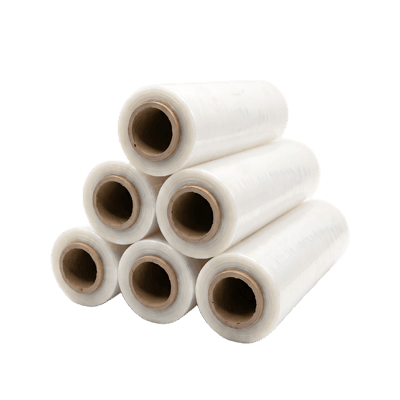
Machine Stretch Film
High-performance film designed for automated pallet wrapping operations with consistent load stability.
Learn More →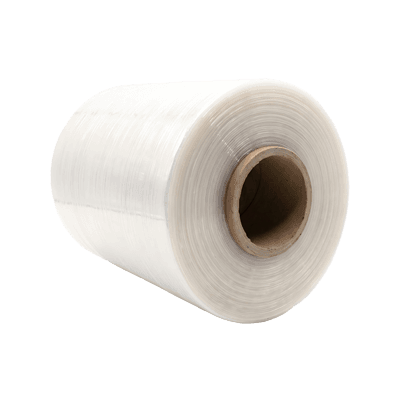
Jumbo Stretch Film
Large-format stretch film rolls designed for high-volume packaging requirements.
Learn More →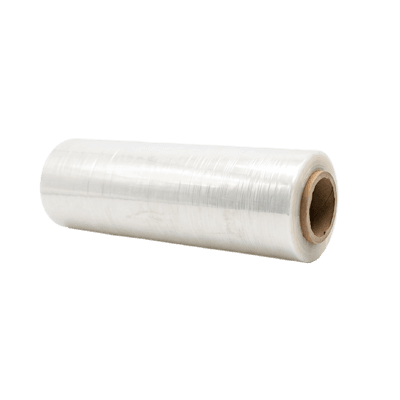
Hand Stretch Film
Flexible manual wrapping solution designed for warehouses, logistics and general pallet applications.
Learn More →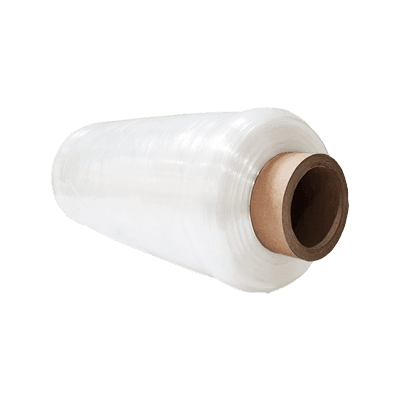
Pre-Stretch Film
Lightweight pallet wrapping solution helping reduce material consumption while maintaining load security.
Learn More →